CD Genomics Blog

banner

CD Genomics Blog

Thank you for visiting the CD Genomics Blog! Here, you will find articles on the latest advances in sequencing technology, biotech research developments, and technical introductions. Our blog helps researchers and professionals deepen their understanding and stay updated on industry trends.

We also share company news, offer insights into daily life at CD Genomics, and provide resources to enhance your knowledge in sequencing and genomics.

Transcriptome Sequencing: Introduction, Advantages, and Applications

Transcriptome Sequencing: Introduction, Advantages, and Applications

The transcriptome is the collection of all RNA transcribed by an individual or a population of cells at a certain biological state. The studies into transcriptome focus on mRNAs and non-coding RNAs (ncRNAs), which encode various proteins and act as cellular regulators respectively. Transcriptomic studies interpret gene function and gene structure in a holistic view, […]
Virus Sequencing: Technologies, Features, and Significance in Outbreaks

Virus Sequencing: Technologies, Features, and Significance in Outbreaks

Emerging infectious diseases have the potential to impose enormous mortality, morbidity, and economic burdens on humans. Tracking the spread of infectious diseases to help control them has traditionally relied on the analysis of case data collected during the course of an epidemic or pandemic. Over the last few decades, there has been a few cases […]

Sanger Sequencing: Introduction, Principle, and Protocol

Sanger Sequencing: Introduction, Principle, and Protocol

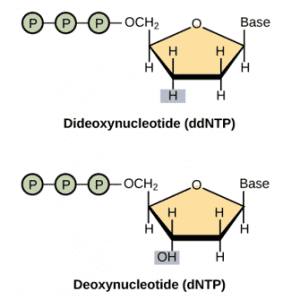
What Is Sanger Sequencing? Sanger sequencing, also known as the “chain termination method,” was developed by the English biochemist Frederick Sanger and his colleagues in 1977. This method is designed for determining the sequence of nucleotide bases in a piece of DNA (commonly less than 1,000 bp in length). Sanger sequencing with 99.99% base accuracy […]

mRNA Fact Sheet: Definition, Structure, Function, and Association with Disease

mRNA Fact Sheet: Definition, Structure, Function, and Association with Disease

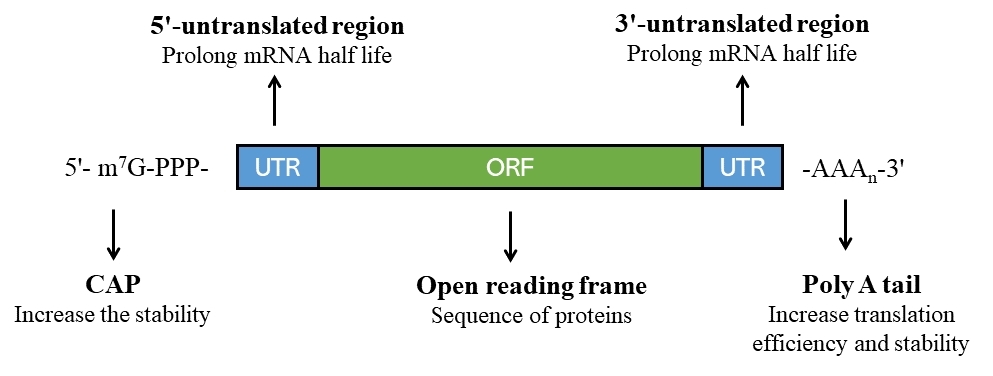
What Is mRNA? Messenger RNAs (mRNAs) are single-stranded molecules in cells that transfer genetic information from the DNA in the nucleus to the cytoplasm, where proteins are synthesized (in the ribosomes). mRNAs are a group of RNAs that can be translated into proteins, while other RNAs cannot. Because nearly every function in the organisms is […]

Ribosomes and Ribosome Profiling

Ribosomes and Ribosome Profiling

What Is Sanger Sequencing? Sanger sequencing, also known as the “chain termination method” was developed by the British biochemist Frederick Sanger and his colleagues in 1977. This method is designed for determining the sequence of nucleotide bases in a piece of DNA (commonly less than 1,000 bp in length). Sanger sequencing with 99.99% base accuracy […]

Mitochondria Fact Sheet: Definition, Structure, Function and Genome

Mitochondria Fact Sheet: Definition, Structure, Function and Genome

Mitochondria are recognized as the powerhouse of the cell since they help convert oxygen and nutrients into adenosine triphosphate (ATP), the energy currency of the cell. Mitochondria are small organelles (usually 0.75~3 micrometers), found in nearly all types of human cells except mature red blood cells, as well as cells of other eukaryotes (such as […]

Plasmid Fact Sheet: Definition, Structure and Application

Plasmid Fact Sheet: Definition, Structure and Application

What is a plasmid? Plasmids are the small circular or linear double-stranded DNA molecules (ranging from a few to several hundred kilobases) found in bacterial cells but also present naturally in archeae and eukaryotes. The plasmids are not packaged inside a chromosome, and have no distinct 5’ or 3’ beginning or end. They can autonomously […]

Introduction to DNA Microarray Technology

Introduction to DNA Microarray Technology

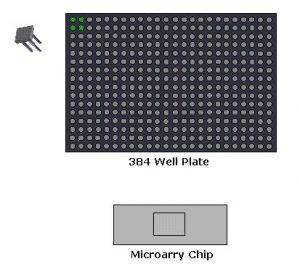
What is a DNA Microarray? Microarray is a common laboratory tool for detecting gene expression or gene mutations in a high throughput manner. These slides are also known as gene chips or DNA chips. Thousands of probes (with known identity) are immobilized on a microscope slides or silicon chips or nylon membrane, with thousands of […]

What Is DNA Methylation

What Is DNA Methylation

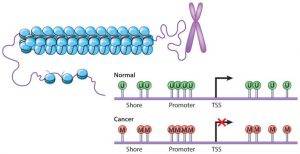
Not all genes are active at all times. DNA methylation is a common epigenetic modification used by cells to regulate gene expression. In recent decades, researchers have discovered that methylation is involved in many cellular processes, including genomic imprinting, embryonic development, gene suppression, carcinogenesis, X-chromosome inactivation, and preservation of chromosome stability. And abnormal DNA methylation […]

Fact Sheet: Genome, DNA, RNA

Fact Sheet: Genome, DNA, RNA

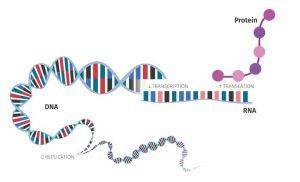
What is a genome? A genome is the complete set of DNA (or RNA in RNA viruses) of an organism. It is sufficient to build and maintain that organism. Each nucleated cell in the body contains this same set of genetic material. In humans, a copy of the entire genome consists of more than 3 […]

Copyright © CD Genomics. All rights reserved.
Share
Top