

 Sample Submission Guidelines
Explore CRISPR Editing Analysis with NGS: From Edit Validation to Functional Screening
From single-edit confirmation to genome-scale discovery—sequencing meets gene editing with purpose-built precision.
The growing complexity of CRISPR experiments demands more than basic validation. Whether you're engineering targeted edits, screening gene libraries, or mapping off-target effects, how you measure outcomes is just as important as the edits themselves. At CD Genomics, we provide CRISPR editing analysis and NGS services designed to make your results unambiguous, reproducible, and deeply informative.
Our platform supports three core capabilities:
- Edit Verification with Base-Level Resolution – Capture precise indels, knock-ins, and substitutions through optimized amplicon sequencing.
- Off-Target Profiling That Doesn't Miss the Unexpected – Reveal unintended edits using targeted or genome-wide strategies.
- Functional Screening with Analytical Depth – Decode sgRNA representation and link perturbations to phenotype with confidence.
Why Combine CRISPR and NGS
Precision editing demands precision measurement.
CRISPR has made it possible to manipulate the genome with remarkable control. But editing is just the beginning—understanding what actually happened in your cells requires equally precise tools. That's where next-generation sequencing (NGS) becomes indispensable.
Here's why researchers increasingly rely on NGS to support CRISPR workflows:
1. Not All Edits Are What They Seem
Even well-designed guides can result in diverse outcomes: small indels, unexpected frameshifts, or mosaicism. NGS enables base-by-base analysis at the targeted site to verify the intended change—and uncover what else may have occurred.
2. Off-Target Events Are Subtle But Significant
Low-frequency, off-target edits may not be obvious but can alter experimental readouts or biological conclusions. NGS provides sensitive and scalable ways to detect unintended modifications across predicted or genome-wide sites.
3. Screens Generate Data, Not Answers
Pooled CRISPR screens using sgRNA libraries offer powerful insights into gene function—but only if the data are correctly interpreted. NGS quantifies sgRNA abundance across experimental conditions, while advanced analytics (e.g., MAGeCK) reveal which perturbations truly matter.
4. Scalability Meets Complexity
Whether you're validating a handful of targets or screening thousands of genes, NGS scales to match your experimental ambition—without sacrificing resolution.
CRISPR and NGS aren't parallel tools—they're complementary.
Together, they form a complete feedback loop: design → edit → measure → interpret → refine. This integration is what makes CD Genomics' platform not just a sequencing service, but a foundation for confident genome engineering.
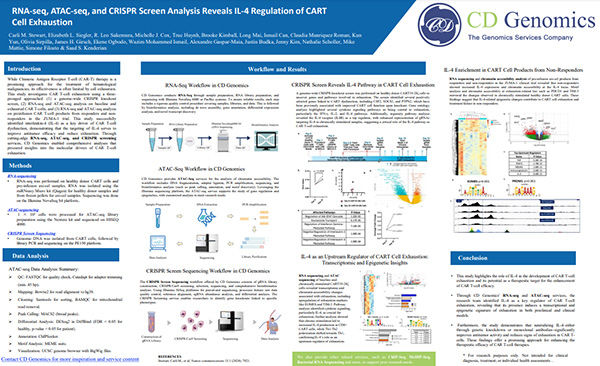
CRISPR Editing Analysis Workflows: NGS Strategies for On-Target, Off-Target, and Functional Screening
Three experimental goals. One integrated NGS platform.
CRISPR research isn't monolithic—your questions vary, and so should your sequencing approach. Whether you're confirming an edit, mapping off-target effects, or exploring gene function at scale, we offer tailored workflows that align with your scientific objectives.
A. Edit Confirmation – Trust What You Engineered
You designed the guide. Now, did the cells respond as expected?
Using targeted amplicon-based NGS, we provide a detailed view of the edit locus, capturing indels, base substitutions, and even knock-in events with base-level clarity. Our pipelines quantify mutation frequencies across alleles, assess zygosity, and help distinguish true edits from background noise.
Use it when you need to:
- Confirm CRISPR/Cas9, Cas12a, or base editor efficiency
- Verify on-target precision in knock-out or knock-in systems
- Compare editing outcomes across different conditions or cell types
B. Off-Target Profiling – When Specificity Matters
CRISPR is powerful—but not always perfectly specific. Identifying unintended edits is critical, especially in sensitive systems or when downstream functional assays are involved.
We offer two levels of off-target detection:
- Panel-based targeted sequencing of predicted sites
- Unbiased genome-wide detection using high-resolution NGS strategies optimized for identifying rare off-target events across the genome
Results include annotated variant tables, mutation frequencies, and positional context—so you can separate genuine biology from off-target noise.
Use it when you need to:
- Evaluate guide specificity or compare gRNA designs
- Assess genome stability in engineered cell lines
- Conduct quality control for gene-editing pipelines
C. Functional CRISPR Screens – Read the Biology, Not Just the Barcode
When studying gene function at scale, CRISPR screens paired with NGS give you the power to track thousands of perturbations simultaneously.
We sequence guide RNA (sgRNA) abundance across conditions to determine which genes are enriched or depleted, then use analytical tools to pinpoint functionally relevant hits.
Optional enhancements:
- Dual-condition or time-course designs
- Integration with transcriptome or chromatin accessibility data (e.g., Perturb-seq or ATAC-seq)
Use it when you need to:
- Identify essential genes in cancer or immune models
- Discover pathway vulnerabilities
- Prioritize targets for downstream validation
Each of these workflows is modular—but can be seamlessly combined. For example, confirm edits in a pilot cohort, profile specificity, then scale to full-screen experiments—all under one data infrastructure.
CRISPR Gene Editing NGS Services – Functional Overview
Not sure which workflow suits your study? Here's how our CRISPR NGS services compare in terms of goals, technologies, and analytical depth.
| Feature | CRISPR Sequencing | Off-Target Validation | Screen Sequencing |
|---|---|---|---|
| Primary Purpose | Confirm intended edits | Detect unintended edits | Analyze gene function at scale |
| NGS Technologies | Amplicon-based NGS, CRISPResso | Multiplexed targeted panels | Pooled sgRNA libraries, MAGeCK |
| Applications | Mutation detection, knockout/knock-in QC | Specificity assessment, QC in engineered lines | Target discovery, pathway mapping |
| Bioinformatics | Indel calling, allele frequency analysis | Variant annotation, off-target scoring | sgRNA quantification, statistical enrichment |
| Scalability | From single targets to multiplexed panels | Dozens to hundreds of predicted loci | Whole-genome scale screens |
NGS Data Analysis Services for CRISPR Editing and Functional Screens
From raw reads to research-grade insights—your data deserves more than alignment.
CRISPR-based experiments generate complex, often high-throughput datasets. But sequencing is only half the equation. Without a robust bioinformatics framework, even high-quality reads can leave questions unanswered. That's why every service we offer is backed by integrated data analysis pipelines, curated for scientific clarity and interpretability.
For Edit Confirmation
Our analysis workflow begins with alignment to your reference genome, followed by precise quantification of insertions, deletions, and substitutions at the target site.
- Indel profiling & frequency analysis using CRISPResso2
- Zygosity assessment for distinguishing heterozygous vs. homozygous edits
- Allelic distribution plots for visualization of editing outcomes
- Batch analysis support for multiple targets or samples
Deliverables include both numerical data and intuitive graphs that allow you to see—at a glance—what happened post-editing.
For Off-Target Analysis
We map reads across either user-defined regions or genome-wide loci, annotate all detected variants, and flag potential off-target events.
- Variant calling + filtering against known SNP databases (optional)
- Off-target enrichment analysis by mutation type and read depth
- Customizable site ranking based on mismatch proximity and guide homology
- Integrated visual summaries including lollipop plots and genome browser tracks
The output isn't just a list—it's a structured report designed to help you prioritize and interpret.
For Functional CRISPR Screens
Here, bioinformatics is not a final step—it is the experiment.
We use established tools like MAGeCK, edgeR, and DESeq2 to quantify sgRNA abundance, identify statistically significant hits, and connect those perturbations to known or novel biological pathways.
- sgRNA count normalization and statistical modeling
- Differential sgRNA enrichment/depletion between experimental arms
- Volcano plots, heatmaps, and enrichment diagrams for clear result interpretation
- Optional pathway enrichment analysis (e.g., KEGG, GO) for target annotation
For large-scale pooled screens, we also offer replicate concordance checks and batch-effect diagnostics.
Applications of CRISPR Editing Analysis and Sequencing in Research
Where CRISPR meets sequencing—research questions answered with resolution and rigor.
Our CRISPR NGS platform is built to serve researchers working across diverse fields of functional genomics, molecular biology, and cell engineering. Whether you're developing a novel gene therapy strategy or dissecting pathway dependencies in cancer models, our solutions align with your experimental logic.
Here are some common research-driven applications where our services make a critical difference:

Functional Genomics & Target Discovery
Use pooled CRISPR screens to systematically knock out genes across the genome, then identify hits through high-throughput NGS and statistical analysis.
- Identify essential genes in cancer or stem cell models
- Map gene interactions and synthetic lethal pairs
- Prioritize candidates for therapeutic development
Validation of Engineered Cell Lines
Confirm that edits in CRISPR-modified cell lines occurred as intended and that no unintended variants were introduced.
- Verify homozygous or heterozygous knockouts
- Assess knock-in fidelity and edit purity
- Compare editing efficiencies across gRNAs or transfection methods
Specificity Testing of CRISPR Systems
Measure the editing precision of CRISPR nucleases or base editors across target and off-target loci.
- Benchmark different guide RNAs for off-target propensity
- Compare Cas9 variants or alternative editors
- Profile editing behavior in different cell types or genomic contexts
Pathway Interrogation in Disease Models
Integrate functional CRISPR screens with phenotypic readouts to dissect signaling pathways or resistance mechanisms.
- Identify genes modulating immune evasion or drug response
- Combine sgRNA analysis with RNA-seq or ATAC-seq
- Explore transcriptional consequences of gene perturbation (e.g., via Perturb-seq)
These aren't abstract use cases—they reflect real scientific questions that researchers bring to us every day. Our goal is to ensure that, regardless of your CRISPR system or biological model, your sequencing data tells the story you set out to test.
What You Receive from Our CRISPR NGS Services
Designed for researchers who need more than just raw data.
Every CRISPR project is different, and so are its data requirements. Whether you're confirming edits, screening targets, or profiling off-target effects, we deliver a complete data package tailored to your experimental goals.
Here's what you can expect as standard deliverables across our gene-editing sequencing services:🔹 Raw Sequencing Data
High-quality FASTQ files generated from Illumina (short-read) or PacBio (long-read) platforms, ready for independent analysis or archival.
🔹 Variant Detection Outputs
Depending on your application, we provide:
- Edit validation reports focused on insertions, deletions, and substitutions at CRISPR target sites
- Off-target mutation summaries detailing variant frequency and distribution across predicted or discovered loci
All variants are annotated and organized for easy downstream use.
🔹 Visualizations & Summary Plots
- Mutation heatmaps and indel distribution plots for edit-focused studies
- Genome browser snapshots and lollipop plots for off-target detection
- Volcano plots, rank plots, and heatmaps for screen-based analysis
🔹 Aligned Sequence Files
BAM or SAM files with clean, annotated alignments to your reference genome—applicable to on-target analysis, off-target detection, or sgRNA quantification.
🔹 sgRNA Abundance & Screening Results
For CRISPR screen experiments, we supply:
- sgRNA count matrices
- Differential abundance tables
- Enrichment scores and statistical hits
These datasets are ready for interpretation or integration into pathway analysis.
🔹 Comprehensive Analysis Report
Every project is delivered with a clear, structured report that includes:
- Methods used
- Key findings
- Quality metrics
- Result interpretation notes
These documents are designed to support publication prep, presentations, or team discussions.
Why Choose Us
A sequencing partner that understands CRISPR as more than just a technique.
When you're working with CRISPR, you're not just making edits—you're building systems, testing hypotheses, and defining biology. At CD Genomics, we've built a service platform around that mindset: technically rigorous, biologically aware, and research-first.
Here's what sets us apart from generic sequencing providers:
Precision by Design
Our workflows are engineered specifically for genome editing research—from single-locus indel detection to pooled sgRNA tracking across whole-genome screens. Every protocol, platform, and pipeline is validated for CRISPR compatibility.
Deep Bioinformatics Integration
We don't bolt bioinformatics on at the end. It's integrated into every project from the beginning. Whether you're mapping rare off-target events or interpreting screen-level phenotypes, we deliver not just data—but meaning.
Modularity Meets Scalability
You can start small or scale up. Our platform is flexible enough to handle focused validation or genome-wide discovery—without forcing you into rigid service packages.
Scientist-to-Scientist Support
We know what it's like to run a complex CRISPR experiment. That's why you'll work directly with technical experts who understand your research, speak your language, and help design solutions—not just process samples.
Reproducibility You Can Rely On
From quality-controlled wet lab workflows to version-tracked bioinformatics pipelines, we prioritize transparency, consistency, and documentation—so you can reproduce and defend your findings.
Genome Editing with CRISPR: How to Effectively Minimize Off-Target Effects
FAQs About Genome Editing Sequencing Services
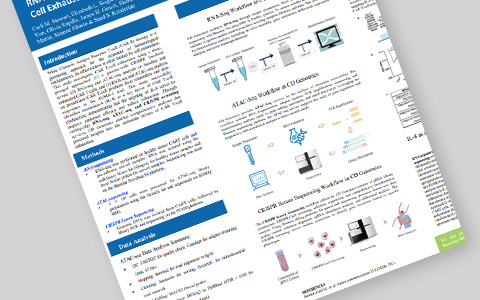
Interested in seeing a sample project report? Complete the form below and our team will send the requested demo report to your email.