

 Sample Submission Guidelines
Cappable-seq: Precision Mapping of Bacterial Transcription Start Sites
Tired of ambiguous or biased transcription start site data from standard RNA-seq? Cappable-seq is the gold-standard method specifically designed to accurately capture the true 5' ends of primary transcripts in bacteria and archaea. This technique directly targets the unique 5'-triphosphate (5'-PPP) signature found only on nascent prokaryotic RNAs, providing unparalleled specificity for TSS discovery.
Why Cappable-seq Solves Your Problem
- Targets True Starts: Enzymatically caps only 5'-PPP RNAs, selectively enriching primary transcripts while minimizing background noise from degraded fragments or processed RNAs.
- Reduces Reliance on rRNA Kits: Streptavidin enrichment effectively depletes rRNA during capture, reducing biased removal steps.
- Delivers High-Confidence TSS Calls: Clean sequencing data focused solely on transcription initiation points.
- Enables Critical Insights: Precise TSS mapping reveals promoters, regulatory motifs, operons, and gene regulation mechanisms.
CD Genomics delivers optimized workflows for precise primary transcript capture and high-confidence TSS mapping.

When to Use Cappable-seq Over RNA-seq
Cappable-seq provides distinct advantages over traditional RNA-seq, especially when it comes to identifying transcription initiation sites and exploring gene regulation. Here's a comparison to highlight its unique benefits:
| Feature | Cappable-seq | Traditional RNA-seq |
|---|---|---|
| TSS Mapping | High-resolution, precise TSS mapping (single-base) | Limited or no focus on TSS mapping |
| Detection of Non-Coding Regions | Includes non-coding and regulatory regions | Often biased toward coding regions |
| Bias Reduction | No rRNA interference, cleaner data | Requires rRNA depletion, potential biases |
| Resolution | Single-base resolution for TSS mapping | Dependent on read length, lower resolution |
| Transcript Detection | Focused on identifying novel transcription initiation sites | Identifies known transcripts, misses novel TSS |
| Quantification | Gene expression and TSS quantification | General gene expression profiling |
Cappable-seq ensures unbiased and comprehensive coverage of gene expression, including regulatory regions and alternative promoters that might be overlooked in RNA-seq. This precision makes it a more insightful tool for transcriptional research, especially in understanding gene regulation.
Cappable-seq Service Workflow
Our streamlined Cappable-seq workflow ensures a smooth experience from sample submission to final results:

High-quality total RNA (≥2 µg; RIN ≥ 7)

Label 5'-PPP transcripts with biotin

Remove rRNA and processed RNA via streptavidin pulldown

Illumina-compatible small RNA library (15 PCR cycles)

Illumina sequencing; TSS mapping and promoter analysis
Bioinformatics Analysis for Cappable-seq
At CD Genomics, we provide comprehensive bioinformatics support to help you make the most of your Cappable-seq data. Our expert team uses advanced analysis techniques to deliver valuable insights into gene expression and transcriptional regulation.
Key Services:
- TSS Mapping & Gene Expression Quantification
We identify and map transcription start sites (TSSs) at single-nucleotide precision, enabling accurate quantification of gene expression across your samples. - Data Quality Control & Filtering
Our team ensures your raw sequencing data is clean, reliable, and ready for analysis by applying rigorous quality control measures.
Advanced Analysis Options:
- Alternative TSS Detection
Explore novel transcription initiation sites and understand how gene expression is regulated across different conditions. - Promoter Activity & Regulatory Analysis
We analyze promoter activity to identify regulatory elements that drive gene expression, including stress responses and regulatory pathways. - Differential Gene Expression Analysis
Compare gene expression across your samples to detect significant variations linked to experimental conditions, treatments, or time points. - Integration with Epigenetic Data
We can combine your TSS data with epigenetic information (such as DNA methylation) to offer deeper insights into gene regulation mechanisms. - Pathway & Gene Network Exploration
Dive deeper into the biological processes driving your findings by identifying gene networks and pathways associated with your data.

What's Included in Your Project Delivery
Our Cappable-seq service includes comprehensive outputs to support both data interpretation and publication:
- Raw sequencing data (FASTQ format)
- BED files with high-resolution TSS coordinates
- Annotated gene expression matrices
- Genome browser-ready read coverage tracks
- Interactive visualizations and figures
- PDF report summarizing methodology, QC metrics, and results

Sample Requirements for Cappable-seq
To ensure optimal results, please adhere to the following sample guidelines:
| Parameter | Requirement |
|---|---|
| RNA Quantity | > 3 µg recommended, minimum: ≥ 2 µg |
| Concentration | ≥ 50 ng/µL |
| Purity | OD260/280 = 1.8–2.0 |
| Integrity (RIN) | ≥ 7 |
For more details on sample preparation or assistance, please contact us.
Applications of Cappable-seq
High-Resolution Promoter Mapping
Understanding how genes are regulated in bacteria starts with identifying transcription start sites (TSSs). Cappable-seq offers the precision to:
- Detect primary TSSs at single-nucleotide resolution
- Distinguish between constitutive and condition-specific promoters
- Improve bacterial genome annotations with accurate regulatory features
Operon Structure Analysis
Many bacterial genes are organized in operons, and Cappable-seq helps clarify their structure:
- Identify polycistronic vs. monocistronic transcripts
- Define operon boundaries with high precision
- Discover internal TSSs that govern the regulation of gene clusters within operons
Detection of Leaderless Transcripts
Leaderless mRNAs, which lack 5' untranslated regions (UTRs), are common in many bacterial systems. With Cappable-seq, you can:
- Capture 5' ends of leaderless RNAs
- Uncover non-canonical transcription mechanisms
- Gain insights into translation initiation and stability of these unique mRNAs
Microbiome Transcription Profiling
In complex microbial communities, mapping transcriptional activity is often challenging. Cappable-seq excels at:
- Species-specific TSS mapping in metatranscriptomic samples
- Comparing transcriptional activity across different microbial species
- Exploring regulatory differences across bacterial taxa in diverse environments
Studying Stress and Drug Responses
Cappable-seq can reveal how bacteria adapt to changing environments, especially under stress or drug pressure:
- Identify promoters activated under stress conditions
- Monitor transcriptional changes in response to antibiotics or other treatments
- Explore adaptive regulatory pathways in pathogenic bacteria
Why Choose CD Genomics for Cappable-seq
- Deep Expertise in Prokaryotic Transcriptomics
Specializing in bacterial transcription research, our team brings hands-on experience to every project—whether you're exploring TSS (transcription start site) discovery, operon analysis, or other prokaryotic gene expression questions. We get the unique challenges of studying bacterial systems and tailor our approach to fit your specific research goals.
- Proven Protocols for Reliable Results
Our Cappable-seq workflows are optimized for precision: we prioritize high-efficiency 5'-triphosphate capture to target genuine TSSs, while minimizing rRNA contamination and background noise. This attention to detail means cleaner, more trustworthy data—so you can analyze results without sifting through artifacts.
- High-Quality, Ready-to-Use Data
We deliver sequencing-ready RNA with robust read depth and precise TSS annotations—no extra purification or quality checks needed. Our data is designed to be actionable from day one, letting you focus on what matters most: interpreting findings and advancing your research.
- Actionable Insights, Not Just Raw Data
We don't stop at providing files. Our deliverables include genome browser tracks for visualizing TSS locations, promoter motif analysis to identify regulatory elements, and clear, interpretable biological insights. Our goal? To help you turn raw data into meaningful conclusions—so you can make informed decisions and drive your research forward.
Demo Results

Transcriptional Context Analysis of Genes (Yan, Bo, et al. Nature communications, 2018)

Condition-Dependent Changes in Gene Transcriptional Contexts (Yan, Bo, et al. Nature communications, 2018)

TSS identification (Ettwiller, Laurence, et al., BMC genomics, 2016)
References
- Yan, Bo, et al. "SMRT-Cappable-seq reveals complex operon variants in bacteria." Nature communications 9.1 (2018): 3676. https://doi.org/10.1038/s41467-018-05997-6
- Ettwiller, Laurence, et al. "A novel enrichment strategy reveals unprecedented number of novel transcription start sites at single base resolution in a model prokaryote and the gut microbiome." BMC genomics 17.1 (2016): 199. https://doi.org/10.1186/s12864-016-2539-z
Cappable-seq FAQs
1. How does Cappable-seq compare to traditional RNA-seq in terms of data accuracy?
Cappable-seq provides unbiased, high-resolution data that is not influenced by rRNA interference, unlike traditional RNA-seq. By capturing the 5'-PPP group of primary RNA transcripts, it ensures that only unprocessed RNA is analyzed, leading to more accurate and precise TSS mapping and gene expression profiling, especially for genes with alternative promoters.
2. Can Cappable-seq detect alternative transcription start sites?
Yes, Cappable-seq excels at identifying alternative transcription start sites (TSSs). The technique's precision in TSS mapping allows for the discovery of alternative promoters and different initiation points for the same gene, helping to uncover the complexity of gene regulation, including tissue- or condition-specific transcriptional variations.
3. What are the key benefits of using Cappable-seq over standard RNA-seq in gene expression studies?
The main benefits of Cappable-seq over traditional RNA-seq are:
- Higher precision in identifying TSSs, which allows for more accurate transcriptional profiling.
- Unbiased data that avoids interference from rRNA, providing clearer results, especially for complex genomes.
- The ability to detect novel transcription initiation sites, which are often missed by conventional methods.
4. What should I consider when choosing between Cappable-seq and other transcriptomics techniques?
When choosing between Cappable-seq and other methods, consider your research goals:
- If your focus is on precise transcription start site mapping and gene regulation, Cappable-seq is the best choice.
- If you're interested in studying alternative promoters or RNA modifications, Cappable-seq offers unmatched accuracy.
- For broad gene expression profiling, standard RNA-seq might be more suitable, though it lacks the fine resolution provided by Cappable-seq.
5. How does Cappable-seq contribute to functional genomics research?
Cappable-seq plays a critical role in functional genomics by enabling the identification of novel transcription start sites, understanding promoter dynamics, and uncovering gene regulatory mechanisms. This technique helps researchers explore the functional role of uncharacterized genes and regulatory regions, contributing to the understanding of gene function, disease mechanisms, and cellular responses.
Cappable-seq Case Studies
A novel enrichment strategy reveals unprecedented number of novel transcription start sites at single base resolution in a model prokaryote and the gut microbiome
Journal: BMC Genomics
Published: 08 March 2016
DOI: https://doi.org/10.1186/s12864-016-2539-z
Background
In recent years, understanding gene regulation has become increasingly important in fields like microbiome research, cancer biology, and infectious diseases. Traditional RNA sequencing (RNA-seq) methods often struggle with accurately identifying TSSs due to the complexity of processed RNA, such as ribosomal RNA (rRNA). Cappable-seq, a novel method developed by New England Biolabs, specifically addresses this challenge by capturing primary RNA transcripts through selective enrichment of the 5' triphosphorylated end (5'-PPP) of RNA.
Methods
Sample Preparation
- RNA extraction from various biological samples
- RNA quality and concentration assessment
- RIN value ≥ 7 for optimal results
Sequencing
- High-throughput sequencing
- 5'-PPP capture for primary RNA transcripts
- TSS mapping and gene expression quantification
- Differential expression analysis across samples
- Integration with epigenetic data (e.g., DNA methylation)
Results
1. TSS Mapping in E. coli:
Cappable-seq identified 16,539 TSSs in the E. coli genome, providing an unprecedented view of transcription initiation. This high-resolution mapping revealed novel promoters, especially within intergenic regions. TSS identification at single-base resolution significantly improved compared to traditional RNA-seq, where many TSSs were often missed.
 Cappable-seq pipeline for TSS identification.
2. Microbiome Profiling:
In addition to E. coli, Cappable-seq was applied to a mouse gut microbiome, revealing novel TSSs across several bacterial species. Key findings included:
- Leaderless Transcripts: A significant proportion of identified TSSs in species like Akkermansia muciniphila and Bifidobacterium pseudolongum were associated with leaderless transcripts, a unique feature often overlooked by other methods.
- Ribosomal RNA Depletion: Cappable-seq successfully reduced rRNA content to less than 5%, enabling more focused analysis of gene expression in microbial communities.
- TSS Identification Across Multiple Phyla: TSSs were identified in species from various bacterial phyla, highlighting the broad applicability of Cappable-seq in diverse microbiomes.
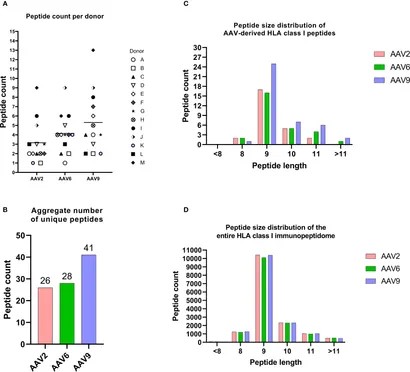 TSS of mouse gut microbiome.
Conclusion
This study demonstrated the unique capabilities of Cappable-seq for genome-wide TSS identification with single-base resolution. Unlike traditional RNA-seq, Cappable-seq specifically targets primary RNA transcripts, overcoming the challenge of rRNA interference and providing highly accurate, comprehensive TSS data. The ability to map TSSs in complex microbiomes for the first time opens up new avenues for understanding gene regulation in microbial ecosystems, with potential applications in human health, disease research, and industrial microbiology.
Reference
-
Ettwiller, L., Buswell, J., Yigit, E. et al. A novel enrichment strategy reveals unprecedented number of novel transcription start sites at single base resolution in a model prokaryote and the gut microbiome. BMC Genomics 17, 199 (2016).