

 Sample Submission Guidelines

Building a Research-Grade Organoid Biobank: Molecular Annotation, Passage Tracking, and Freeze–Thaw QC
Meta Intent: A practical framework for turning a cryovial collection into a traceable, molecularly annotated organoid biobank that supports reproducible research use.
An organoid collection becomes a biobank only when a researcher can answer four questions for every vial: what biological material it represents, how it reached its current state, what evidence supports its identity and fitness, and what should happen if it is thawed again. A freezer inventory with a donor code and a passage number cannot answer those questions. It stores material, but it does not preserve the evidence needed to interpret that material later.
This distinction matters because organoids are living, renewable models. They branch during expansion, experience changes in matrix, medium, handling, and cryopreservation, and can be distributed as multiple related but non-identical aliquots. A research-grade bank therefore needs more than a successful freezing protocol. It needs a lineage-aware record, an annotation strategy that can be updated without overwriting history, and a release system that separates a viable vial from a suitable experimental model.
This guide focuses on that operational architecture. It does not re-teach model qualification, tumor purity analysis, or drift attribution as stand-alone topics. Instead, it shows how those evidence streams become controlled records within a bank. For teams establishing new models, an organoid model development workflow can be planned around the same identity, banking, and metadata fields that will later support downstream sequencing.
A Cryogenic Collection Is Not Yet a Research-Grade Biobank
The most common design error is to treat cryopreservation as the endpoint. In a conventional specimen repository, a stored sample is finite and its condition is largely determined before storage. In a living organoid bank, one frozen vial can be thawed, expanded, re-banked, profiled, shipped, or used to seed a new experimental branch. The material is therefore part of an evolving lineage rather than a static accession.
A useful bank has three linked layers. The material layer records physical objects: tissue, digest, culture vessel, cryovial, and storage location. The process layer records what happened to each object: derivation, passage, matrix or medium change, split, freeze, thaw, and deviation. The evidence layer records the measurements that support a defined use: identity, contamination status, morphology, growth behavior, molecular profile, and any restrictions. If any one layer is missing, the bank may still be usable for exploratory work, but it becomes difficult to compare results across users, timepoints, or vial generations.
Start with the intended use. A bank supporting routine morphology studies does not require the same molecular annotation cadence as one intended for genomic subgroup discovery or long-running perturbation studies. The right question is not "What is the biggest QC panel we can run?" It is "What evidence must remain attached to this vial for its intended research use to be interpretable?" That framing prevents both under-documentation and unnecessary testing.
 Figure 1: Research-Grade Organoid Biobank Evidence Architecture.
Define the Banked Unit and Its Intended Research Use
Before creating labels, define what one banked unit means. A vial may contain dissociated cells, small organoid fragments, or matrix-associated aggregates. Those formats can behave differently after recovery, even when they share the same donor and nominal passage. The unit definition should state the biological source, culture type, harvest state, dissociation state, cryoprotectant workflow, intended recovery format, and the amount of material represented by the vial.
Next, classify the intended use. A simple three-tier system is usually enough. Discovery stock is suitable for early feasibility work and may carry incomplete molecular annotation. Characterized research stock has passed the bank's defined identity, contamination, and recovery gates. Restricted stock remains traceable but cannot be used for certain endpoints until a concern is resolved. Restriction is more informative than a binary pass/fail label. A vial can be fit for histology, for example, yet unsuitable for an experiment whose interpretation depends on stable tumor content or RNA integrity.
Write a concise "use claim" into the record: "Suitable for reseeding and morphology-based research after recovery," or "Suitable for DNA-based comparison at the documented passage window." Avoid generic statements such as "validated model." A use claim should name the evidence behind it and should expire when a defined event occurs, such as extended expansion, a medium change, unexpected morphology, or a failed thaw.
Build a Lineage-Aware Identifier System Before the First Freeze
A donor identifier alone is not enough. The identifier system must express relationships without exposing sensitive donor information in bench-facing labels. A practical structure has a permanent model family ID and separate event-level identifiers. For example, the family ID can refer to the donor-derived model, while a culture-branch ID marks a split created on a particular date, and a vial ID identifies one physical cryovial in one storage position.
The key design principle is immutability. An ID should never be recycled or silently edited after a correction. If a culture is split, each child branch receives a new branch identifier and points back to the parent. If two branches are intentionally pooled, the record should preserve both parent identifiers. If a vial is moved, its physical location changes, but its vial ID does not. This lets a researcher reconstruct the chain from a distributed vial back to source tissue and forward to all sibling vials.
Use a machine-readable barcode as the physical key, but do not put every data field into the label. A short human-readable code plus barcode, passage event, freeze date, and a controlled storage locator are usually sufficient. The digital record should hold the full lineage. This approach also supports a future organoid sequencing analysis request because sequence files can be linked to the exact biological branch and vial rather than only to a model nickname.
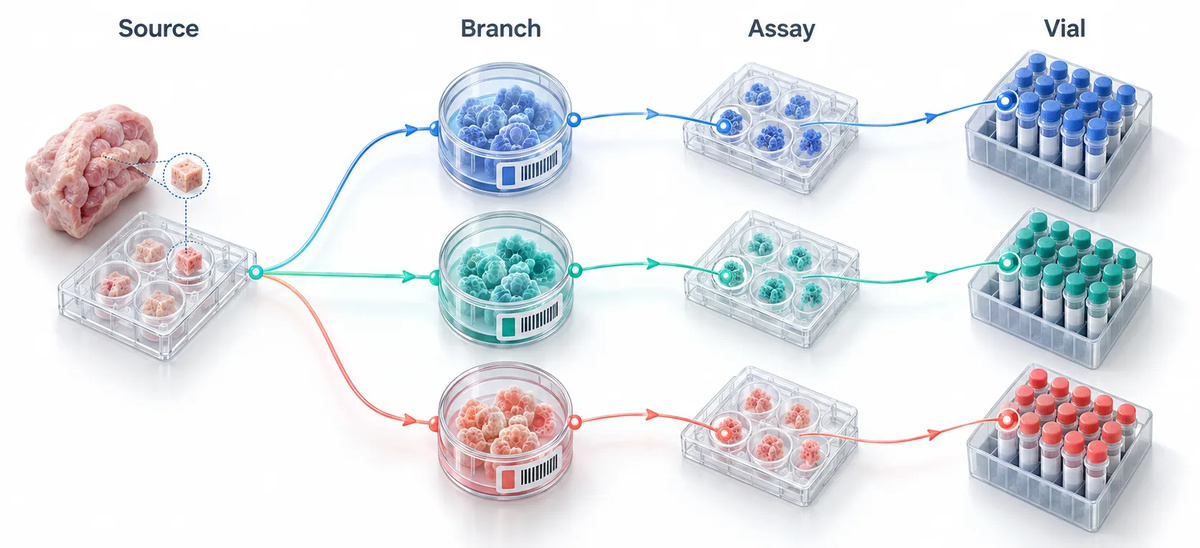 Figure 2: Donor-to-Cryovial Lineage and Identifier Tree.
Create a Minimum Molecular and Operational Annotation Dictionary
An annotation dictionary is the controlled list of fields that every model or vial must carry. It is more useful than a free-text notebook because it makes records comparable across projects. Build the dictionary in layers so that essential fields are captured even when sample amount or project budget limits deep profiling.
Layer 1: provenance and derivation
Record the specimen type, anatomical source, collection-to-processing interval, consent or use-code reference where applicable, derivation method, initial culture format, matrix, medium formulation version, and the first successful growth date. Store reagent lot identifiers for components that are likely to influence recovery or phenotype. The goal is not to create a laboratory diary. It is to retain variables that could explain a future difference between otherwise related lines.
Layer 2: identity and biological composition
Document the identity method, its comparator, result date, and acceptance status. Depending on the model and context, this may include STR or SNP comparison, targeted variants, or another suitable genetic identity signal. For complex cultures, a morphology or histology-based organoid characterization record can complement sequence-based evidence by confirming that the recovered structure is consistent with the intended model type. It should not be used as a substitute for identity testing.
Layer 3: molecular evidence
Record which assay was run, which physical branch it represents, sample preparation date, sequencing batch, analysis version, and a concise interpretation. Molecular annotation might include targeted variants, copy-number patterns, exome-level findings, transcriptomic profiles, or a targeted epigenetic check. The assay should answer a specific question. An organoid exome sequencing approach may be appropriate where coding variation and clonality are central. A transcriptomic layer may be more useful when a bank needs to document recovery-associated state changes. The record must specify what "match," "stable," or "different" means for that assay.
Layer 4: operational history and restrictions
Capture passage events, split ratios, matrix or medium changes, freeze–thaw cycles, deviations, contamination investigations, re-tests, and distribution history. Also record restrictions explicitly. A line with a pending identity check should never look identical in the database to fully released stock. Status fields should be controlled terms, not ad hoc comments: released, hold, restricted, re-test required, retired, or archived.
For banks that want a broad molecular overview without treating every vial as a separate omics project, an organoids sequencing service can be designed around representative sentinel material at defined lifecycle points. That design is usually more informative than sporadic assays selected only when a problem is suspected.
Separate Source Stock, Master Bank, Working Bank, and Sentinel Vials
A robust bank separates roles rather than treating every frozen vial as interchangeable. Source stock is the earliest bankable material nearest to derivation. A master bank is the controlled reference collection from which new work should be restarted. A working bank supports routine experimental use and can be replenished from the master bank. Sentinel vials are reserved for future verification, comparability studies, or recovery troubleshooting.
The distinction is operationally powerful. If a working branch develops an unexplained phenotype, a master-bank vial provides a defined restart point. If an updated sequencing pipeline changes an interpretation, a sentinel vial can be profiled without consuming the whole collection. If a freezer event occurs, distributed work does not need to be halted while the entire bank is reconsidered; the event can be traced to the affected physical and lineage subset.
Define the transition criteria between tiers. For instance, promotion from source stock to master bank may require identity evidence, negative contamination status, acceptable recovery behavior, and a completed minimum record. These four elements are the operational minimum, not a claim that every model has identical molecular depth. Deep DNA, RNA, or epigenetic characterization should be triggered by model type, evidence gap, intended research use, or a documented change event. The bank should therefore assign the smallest evidence package that supports the intended use and flag models that require a deeper characterization route.
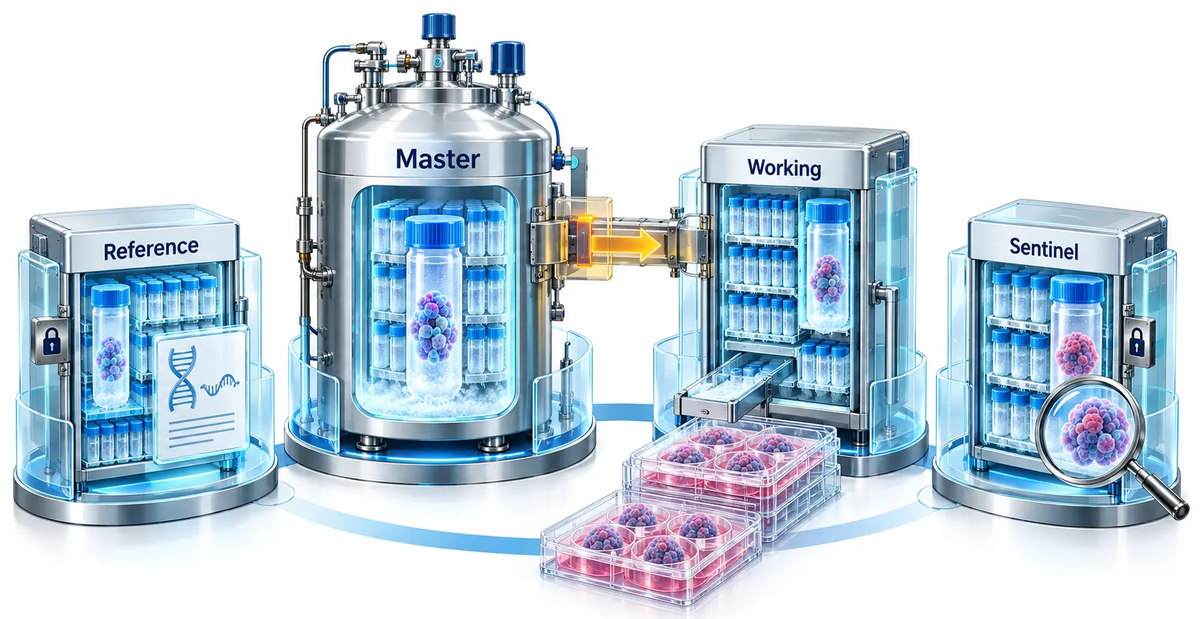 Figure 3: Master, Working, Reference, and Sentinel Bank Architecture.
Passage Tracking Is an Event History, Not a Single Number
Passage number is useful, but it is an incomplete surrogate for culture history. "P8" does not reveal whether the culture underwent one routine split every week, an extended recovery period after thaw, an unusually aggressive expansion, a matrix swap, or a medium reformulation. Two branches labeled P8 may therefore have very different cumulative exposures.
Track each passage as an event with date, parent branch, split ratio, dissociation method, approximate starting material, matrix and medium version, operator or instrument record, morphology note, and any deviation. A passage event should also record whether it generated a frozen bank vial, an analytical sample, a working plate, or a daughter branch. This creates an event ledger that can be queried later when a model's growth behavior or molecular readout changes.
Do not infer a fixed passage limit from another organoid type. Use early observations to establish a provisional monitoring window, then revise the window as the bank accumulates evidence. The companion guide on passage, matrix, and culture-medium effects on organoid drift explains how to investigate a suspected change. In biobanking practice, the immediate requirement is simpler: preserve enough event detail to make that investigation possible.
A useful addition is an exposure score, not as a biological truth but as a triage flag. The score can increase when a branch crosses a defined expansion window, changes matrix or medium version, experiences repeated thaw cycles, or records an atypical recovery. A high score triggers review or requalification; it does not automatically prove that the model is unsuitable.
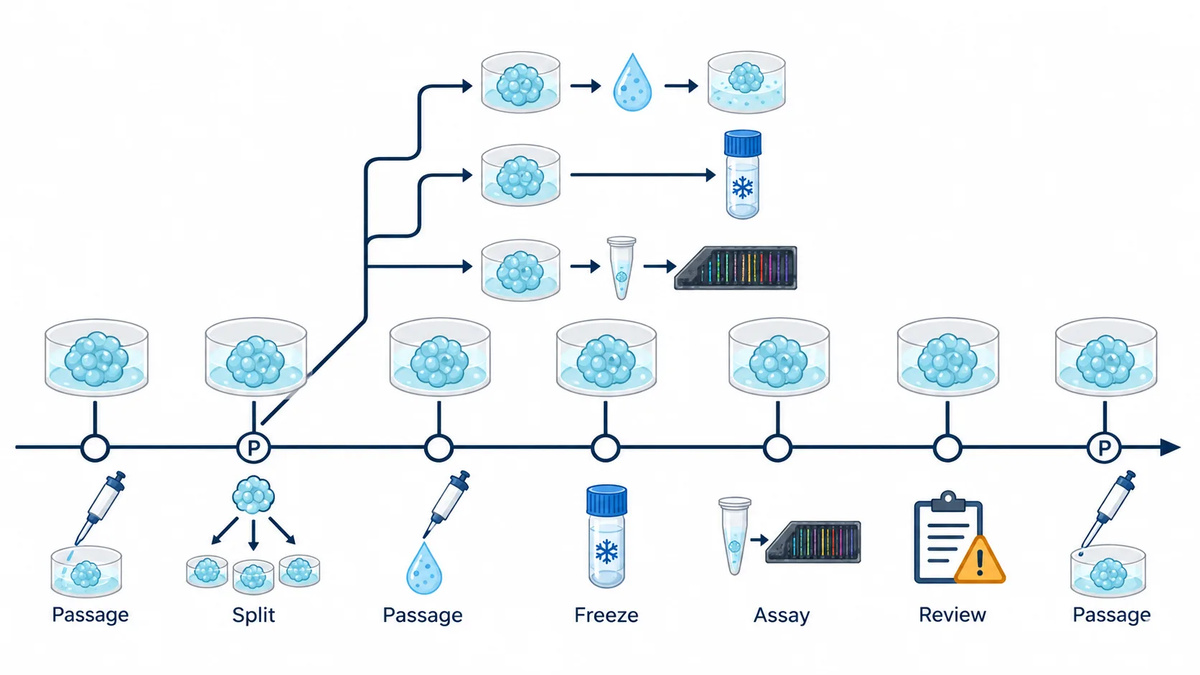 Figure 4: Event-Based Passage History with Culture Branching.
Treat Molecular Annotation as Versioned Evidence
Molecular annotation is often stored as a PDF, a spreadsheet, or a single sentence in an inventory field. That makes it difficult to know whether a result still describes the vial being used. Instead, create an annotation object with a version number. Each version should identify the material tested, assay and analysis pipeline, comparator, result summary, interpretation, reviewer, and the specific bank status that the result supports.
Versioning prevents a frequent error: replacing an old result with a newer one and losing the evidence trail. An early exome result and a later RNA-seq result are not competing records. They answer different questions on different branches. Both should remain visible. If a pipeline is rerun, retain the original result and link it to the revised analysis rather than silently replacing values.
This is especially important for models used in multi-study programs. A multi-omics analysis plan can integrate DNA, RNA, and epigenetic layers, but the integration is only interpretable if every input can be traced to a documented bank event. For targeted epigenetic questions, organoid epigenetics analysis can be added as a distinct layer with its own comparator and release relevance rather than being treated as a generic "omics complete" checkbox.
 Figure 5: Versioned Molecular Annotation Record.
Keep Identity, Contamination, Purity, and Fidelity as Separate Gates
These terms are related but not interchangeable. Identity asks whether the material belongs to the expected model family. Contamination asks whether unwanted biological material is present. Purity asks about the relative representation of intended and non-intended cell populations. Fidelity asks whether the model retains features relevant to a defined comparator or research question. A sample can pass one gate and fail another.
Keeping the gates separate makes a release decision defensible. A culture can have an acceptable identity result while showing evidence that normal epithelial cells have become dominant. Conversely, a culture can be free of detectable contamination but carry a transcriptomic state shift that matters for the proposed experiment. The bank should show each gate's evidence date, method, outcome, and expiration trigger rather than collapse all results into a single green label.
For tumor-derived models, a purity-related concern should trigger an explicit branch review. The matrix article on detecting normal-cell overgrowth before sequencing offers the appropriate interpretation framework. In the bank, the operational response may be to hold specific working stock, designate a low-purity restriction, re-test a sentinel vial, or restart from a more suitable master-bank vial.
Design Freeze–Thaw Qualification as a Paired Experiment
"The vial thawed" is not a freeze–thaw qualification result. A meaningful assessment compares pre-freeze and recovered states for the use claim that matters. The paired design begins by recording the pre-freeze condition: branch identity, passage event, morphology, cell or organoid amount, matrix and medium version, and any selected molecular or functional baseline. The post-thaw record then captures recovery time, re-embedding or seeding format, early morphology, outgrowth trajectory, contamination screen, and a defined endpoint after recovery.
The endpoint should match the intended use. For a bank supporting reseeding, recovery morphology and growth kinetics may be a sensible primary endpoint. For an RNA-based study, an organoid RNA stability assessment may be needed after a defined recovery interval. For a model entering a molecular comparison study, the paired design may include targeted genotype, copy-number, or transcriptomic checks on selected sentinel vials. Immediate post-thaw viability alone does not establish that the recovered culture is suitable for all of those uses.
Use paired experiments strategically. A bank does not need to sequence every vial before and after every freeze. Instead, define sentinel events: first master-bank generation, introduction of a new cryopreservation reagent, major format change, unexpected recovery behavior, or a high-value model scheduled for external distribution. The article on when organoids should be sequenced across their lifecycle can help set those evidence points without turning routine bank handling into unnecessary testing.
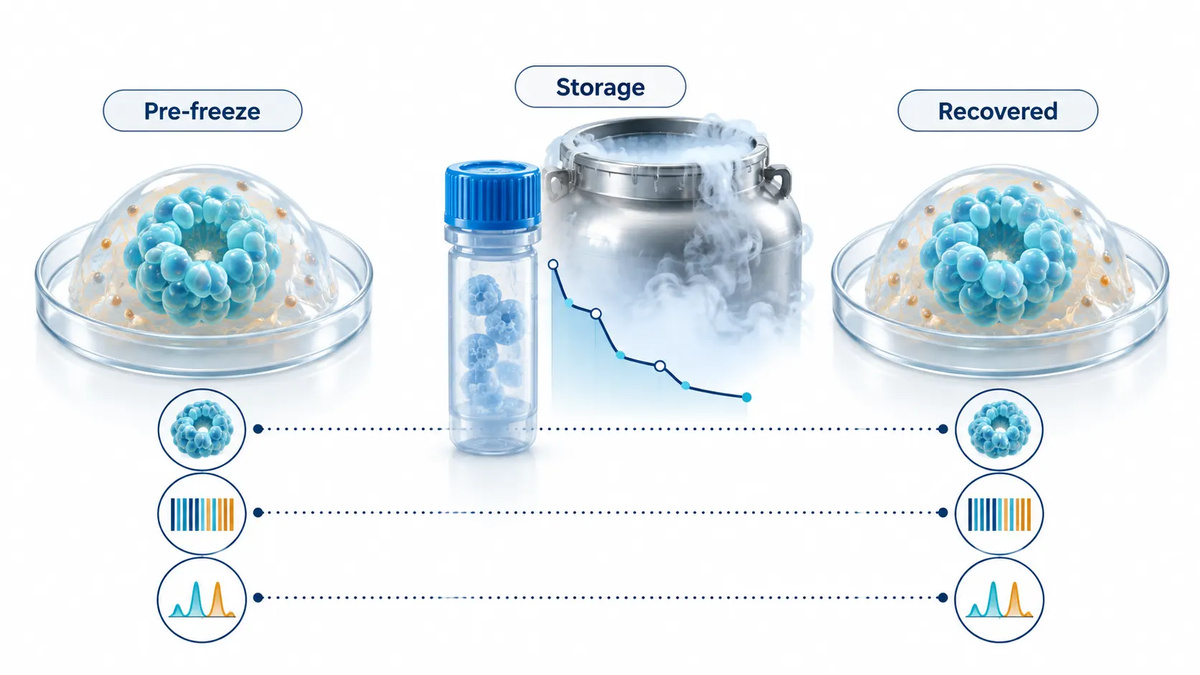 Figure 6: Paired Pre-Freeze and Recovered-State QC Design.
Build a Context-of-Use Freeze–Thaw Release Panel
A release panel is a compact, predefined set of checks used to decide whether a vial can enter a stated research workflow. It should be designed backward from the use claim. For routine culture maintenance, the panel might include correct identity record, current contamination status, documented storage location, and recovery evidence from an equivalent vial. For DNA-based characterization, the panel may add adequate nucleic-acid quality and a suitable comparability record. For phenotype-sensitive work, it may add a morphology or expression-state checkpoint after recovery.
Set empirical thresholds within the bank and disclose their basis. A universal percentage for viability, growth, or molecular concordance is tempting but often misleading because recovery behavior depends on organoid type, freeze format, matrix, and assay. What matters is that the criterion is predefined, measured consistently, connected to the intended use, and reviewed after relevant process changes.
Release decisions should be granular. "Released for expansion only" is not the same as "released for sequencing comparison." "Restricted pending contamination re-test" is not the same as "retired because provenance is unresolved." Granularity protects downstream teams from using an appropriate vial for an inappropriate question.
Before adopting a release panel, test it on a small set of historical models. Ask whether each field would have changed a past decision, whether staff can record it consistently, and whether the evidence can be retrieved for an individual vial in minutes rather than days. Remove fields that are never used and add fields that were repeatedly reconstructed from notebooks. The purpose of a bank record is operational recall under real conditions, not an idealized checklist. A well-designed panel should support a rapid, documented answer when a collaborator asks which vial was used, what it experienced, and what evidence supports the planned assay.
Control Storage, Distribution, and Change Events
Physical location is a data field, not a handwritten freezer map. Record storage vessel, rack, box, position, freeze date, and the dates of any transfer. Use one scanable handoff step when a vial leaves storage and another when it reaches its next controlled location. If a shipment, freezer alarm, or unplanned temperature event occurs, the system should identify the possibly affected set without requiring staff to reconstruct movements from memory.
Not every operational change requires a full requalification. Define triggers in advance. A new master-cell source, new matrix formulation, change in culture medium version, extended unplanned holding period, storage incident, change in dissociation process, repeated recovery issue, or switch in molecular analysis pipeline may each require a different action. The action can be documentation only, comparison on sentinel material, temporary restriction, or re-testing of a defined subset.
Change control is most useful when it is light enough to be followed. Use a short form: what changed, why, which branches or vials are affected, what evidence is needed before release, who reviewed it, and whether the change altered the intended use. This is more reliable than expecting staff to decide anew, weeks later, whether a difference was meaningful.
Change-event action matrix
| Triggering event | Record scope to review | Minimum next action | Interim status |
|---|---|---|---|
| Matrix or medium version changes | Active culture branches and the next planned bank aliquot | Document the change; compare a sentinel branch if the intended use is phenotype-sensitive | Released with change note or restricted pending comparison |
| Unexpected post-thaw recovery | The thawed vial, sibling vials from the same freeze event, and the parent branch | Review recovery record; repeat the defined recovery check before distribution | Hold or re-test required |
| Storage or transfer deviation | All vials in the affected location and time window | Quarantine the affected set, reconstruct movements, and assess sentinel material where appropriate | Hold |
| New sequencing or analysis version | Annotation records that support the relevant use claim | Version the analysis; compare material and pipeline provenance before changing a release interpretation | Released with updated annotation or restricted |
Release, Hold, Restrict, Re-Test, or Retire
The final bank decision should be visible at both model and vial levels. A model-level status describes the overall family; a vial-level status describes the specific physical object and its branch. A master-bank family may remain released while one thawed working branch is placed on hold after an unexpected event. Conversely, a new source-stock vial may remain restricted until the minimum record is complete.
Use five simple states. Release means the available evidence supports the stated research use. Hold means a time-sensitive question is under review. Restrict means the vial may be used only for named low-risk purposes. Re-test means a defined assay or recovery study is required before the next decision. Retire means the bank will not distribute or expand the material, although its records remain preserved. None of these labels should be interpreted as a clinical or diagnostic determination.
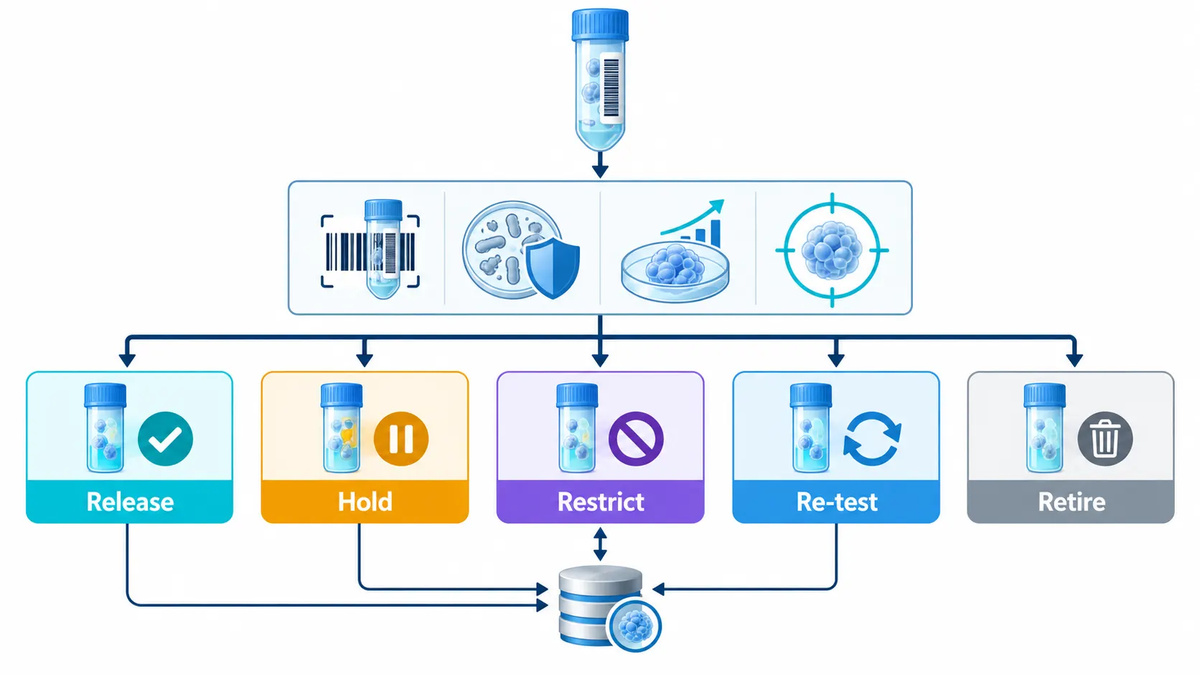 Figure 7: Organoid Bank Release and Deviation Decision System.
One-Page Organoid Biobank Record and Release Worksheet
The following worksheet is deliberately compact. It is a starting point for a bank-specific electronic record, not a replacement for detailed methods or raw data.
| Record block | Minimum controlled fields | Decision it supports |
|---|---|---|
| Model provenance | Model family ID, source type, derivation date, intended research use | What this model is expected to represent |
| Lineage | Parent branch, event IDs, passage events, split ratios, freeze–thaw cycles | How the current vial relates to source and siblings |
| Culture configuration | Matrix and medium version, critical reagent lots, recovery format | Whether a process change needs review |
| Evidence snapshot | Identity, contamination, purity, morphology, molecular annotation versions | Which use claims are supported |
| Physical inventory | Vial ID, barcode, storage locator, transfer and distribution record | Where the material is and which vials may be affected |
| Status and action | Release state, restrictions, reviewer, next re-test trigger | Whether the vial may enter a named workflow |
The worksheet becomes more powerful when linked to the other articles in this model-quality matrix. A sequencing-based model qualification framework informs the initial evidence package; the bank record preserves how that package applies to each later branch. In this way, quality is not a one-time report but a controlled, interpretable history.
Frequently Asked Questions
Is a passage number sufficient for selecting a bank vial?
No. Passage number is one useful field, but it does not show branch history, split ratios, matrix or medium changes, freeze–thaw exposure, or deviations. Select vials using the lineage record and intended-use status as well.
Should every vial receive whole-exome sequencing and RNA-seq?
Usually not. Use representative sentinel material and context-specific triggers. The bank should define when deeper profiling changes a release decision rather than treating comprehensive assays as a universal storage prerequisite.
What is the minimum post-thaw QC?
There is no universal minimum that fits every organoid type. At a minimum, connect the check to the proposed use and document recovery behavior, contamination status, and the relevant identity or molecular evidence for that use.
Can morphology replace molecular identity testing?
No. Morphology can be a useful complementary record, especially when reviewed with histology, but it does not establish genetic identity or rule out all biological composition problems.
When should a frozen vial be restricted rather than retired?
Use restriction when the issue is defined and the vial still has a low-risk, clearly stated research use. Retire when provenance is unresolved, contamination cannot be managed, or the bank cannot support a meaningful use claim.
How often should a bank requalify a model?
Requalify at predefined lifecycle events or after meaningful changes, not only by calendar time. Relevant triggers include creation of a new master bank, unusual recovery, medium or matrix changes, extended expansion, and a planned use that requires stronger evidence.
Reference:
- Perrone F, et al. (2021). Biobanking of human gut organoids for translational research. Experimental & Molecular Medicine, 53, 1451–1458. DOI: 10.1038/s12276-021-00606-x.
- Herranz-Ors C, Bhosle SG, Beck AE, et al. (2026). A tumour-derived organoid biobank maps cancer gene dependencies. Nature, 657, 765–774. DOI: 10.1038/s41586-026-10830-y.
- Nemati N, Boeck N, Lamberti G, Lisandrelli R, and Trajanoski Z. (2024). Protocol for functional profiling of patient-derived organoids for precision oncology. STAR Protocols, 5, 102887. DOI: 10.1016/j.xpro.2024.102887.
- Calandrini C, et al. (2020). An organoid biobank for childhood kidney cancers that captures disease and tissue heterogeneity. Nature Communications, 11, 1310. DOI: 10.1038/s41467-020-15155-6.
- Beumer J, et al. (2021). A CRISPR/Cas9 genetically engineered organoid biobank reveals essential host factors for coronaviruses. Nature Communications, 12, 5498. DOI: 10.1038/s41467-021-25729-7.
- Cabré EJ, Cobo-González S, Sánchez Valle L, Martínez S, Ramos-Álvarez MDP, and Sáez-Álvarez Y. (2026). Biobanked Liver Organoids: A Roadmap for Precision Hepatology. BioEssays, 48, e70156. DOI: 10.1002/bies.70156.
For research use only. Not for use in diagnostic procedures, clinical decision-making, patient stratification, therapeutic selection, or clinical trials.