

 Sample Submission Guidelines

Suspension vs ECM-Embedded Organoids: How Culture Format Changes Drug Response and Gene Expression
Meta Intent: A practical experimental-design guide for determining whether differences in organoid drug response and gene expression reflect culture format, altered biological state, unequal drug exposure, or analytical bias.
A culture format is not merely a way to hold an organoid in a well. It defines the immediate physical environment in which cells receive matrix cues, organize their polarity, exchange nutrients, encounter a compound, and are recovered for a molecular assay. That is why two cultures from the same source can appear to give different drug-response or RNA-seq results even when the compound, nominal concentration, and endpoint are unchanged. The critical question is not whether suspension culture or ECM embedding is universally superior. It is whether the chosen format is appropriate for the biological question, and whether the comparison is designed well enough to show what the difference means.
The answer is rarely binary. A fully matrix-free organoid suspension, a low-viscosity matrix suspension, and a suspension of intact ECM hydrogel beads are all commonly described as suspension culture, but they preserve very different cell-matrix relationships. Conversely, two ECM-dome protocols may differ in ECM concentration, geometry, lot, gas exchange, and local diffusion paths. Treating all of those conditions as interchangeable can turn a culture-format experiment into an uninterpretable mixture of several variables.
This resource provides a format-aware framework for in vitro organoid studies. It explains how to define the format being compared, establish a matched baseline, measure drug response without relying on one readout, and use RNA-seq to distinguish a baseline culture effect from a true format-specific treatment response. It is intended to support research design and evidence-based data interpretation.
For workflow-specific controls around automated dispensing, imaging, timing, and data traceability, see the companion resource Automating 3D Organoid Culture and Drug Screening: Where Variability Enters the Workflow. The focus here is narrower: what the biological and analytical consequences are when the culture architecture itself changes.
Culture Format Is an Experimental Variable, Not a Handling Detail
ECM contact can influence adhesion signaling, cell shape, polarity, proliferation, and differentiation. Culture geometry can alter the path that nutrients, oxygen, secreted factors, and drugs take before reaching the cells. These effects are not necessarily artefacts. They may be the biology that a study intends to model. The problem arises when they are present but undocumented, or when a format change is treated as a harmless technical substitution.
Published comparisons show why the interpretation needs to be conditional. Cancer organoids grown in a low-percentage ECM suspension have been reported to retain broadly similar genomic, transcriptomic, and drug-screening properties to counterparts maintained in conventional ECM droplets. However, that low-ECM approach is not equivalent to a matrix-free system, and the drug assay itself may use a common downstream assay format.1 In a separate intestinal-organoid study, suspended intact basement membrane extract (BME) hydrogels supported similar growth and differentiation capability to surface-attached domes, while baseline RNA-seq still identified differences consistent with altered culture gradients and cell-state balance.2
The practical implication is straightforward: a result can be robust across formats, sensitive to format, or impossible to interpret because format was confounded with another factor. A strong design aims to classify the result, not to prove a preferred culture format in advance. Before a culture route is selected or changed, organoid model development services can help frame the intended tissue feature, required scale, controls, and downstream sequencing or functional readout around one research question.
Define What "Suspension" Means Before Comparing Results
Many disagreements about suspension versus ECM-embedded organoids begin with terminology. A useful report should name the material surrounding the organoid, its physical state, its concentration, whether it is attached to the plate, and whether the organoid itself is in direct contact with an ECM network. "Suspension culture" alone does not provide that information.
Matrix-free suspension
In a matrix-free system, organoids or cell aggregates are cultured in medium without a supporting exogenous ECM network. This can permit direct access to the outer epithelial surface, but it can also alter cell-matrix signaling, aggregation, and polarity. In gastrointestinal organoids, removal from BME and placement in low-attachment suspension can trigger apical-out polarity. The same intervention can therefore change which cell surface is exposed to a compound or stimulus.3 Matrix-free does not mean biologically neutral.
Low-viscosity matrix suspension
Low-viscosity systems contain a small amount of solubilized ECM in the culture medium. Organoids may grow while associated with small matrix fragments rather than enclosed by a fully polymerized dome. These systems can support scalable expansion and screening-oriented handling, but they retain some ECM-derived biochemical context. A 5% Matrigel or BME condition should be described as low-ECM or low-viscosity matrix suspension, not as matrix-free culture.1, 4
Suspended intact ECM hydrogels
Here, cells remain embedded in a cured hydrogel, but the gel is formed as beads, fragments, or filaments suspended in medium rather than as a surface-attached dome. The material context is still ECM-rich, while the geometry, exposed surface area, sampling access, and diffusion path change. This format can be particularly useful when scale-up or repeated sampling is needed, but it should not be interpreted as a test of ECM removal.
Surface-attached ECM domes
Conventional dome culture provides sustained ECM contact in a spatially fixed geometry. It can preserve model-specific organization, but large domes may contain unequal microenvironments between the core, edge, and plate-contact surface. The appropriate comparison is not "normal dome" versus "abnormal suspension." It is a comparison between explicitly defined culture architectures.
 Figure 1. Four organoid culture architectures differ in extracellular matrix contact, geometry, polarity, and diffusion paths.
What Changes Before a Drug Is Added
Culture format can change at least four upstream conditions before treatment begins. These conditions should be measured or held constant before an observed response is assigned to a compound mechanism.
Matrix engagement and mechanics
ECM composition, ligand presentation, stiffness, pore structure, and viscoelasticity can influence integrin-mediated signaling and cytoskeletal tension. These signals may alter proliferation, epithelial differentiation, survival pathways, and transcriptional programs. Naturally derived basement-membrane extracts also have lot-dependent composition and limited mechanical tunability. Their importance will depend on the organoid type and question, so an ECM change should be treated as a defined experimental variable rather than a generic replacement.5
Polarity and surface accessibility
For epithelial organoids, polarity determines whether a molecule first meets an apical or basolateral surface. That distinction can matter for transporter access, receptor localization, microbial exposure, and barrier-related assays. A format change that reverses polarity is not a minor culture adjustment. It changes the exposure route. Polarity should therefore be checked with model-appropriate structural or marker evidence, rather than inferred from the format name alone. Organoid histology and immunostaining services can provide an orthogonal way to document lumen orientation, epithelial organization, and selected localization markers.
Geometry, aggregation, and transport
Freely suspended organoids may merge or form large aggregates. In ECM domes, the local position of an organoid can influence the distance to fresh medium and the accumulation of secreted factors. Suspended hydrogel beads may shorten the diffusion path by exposing more gel surface to the medium. None of these effects automatically produces a better model. They change the physical conditions that must be considered when interpreting a drug response or a gene-expression shift.
Baseline cell state and composition
Bulk RNA-seq measures an average signal across the harvested cells. A higher epithelial differentiation signature may mean that individual cells changed state, that a differentiated subpopulation became more abundant, or that one format recovered particular organoids more efficiently. These interpretations are biologically different. The baseline state should be characterized before drug-induced changes are discussed. Organoid characterization services can be used to plan a proportionate baseline evidence set that combines morphology, selected markers, and molecular profiling when appropriate.
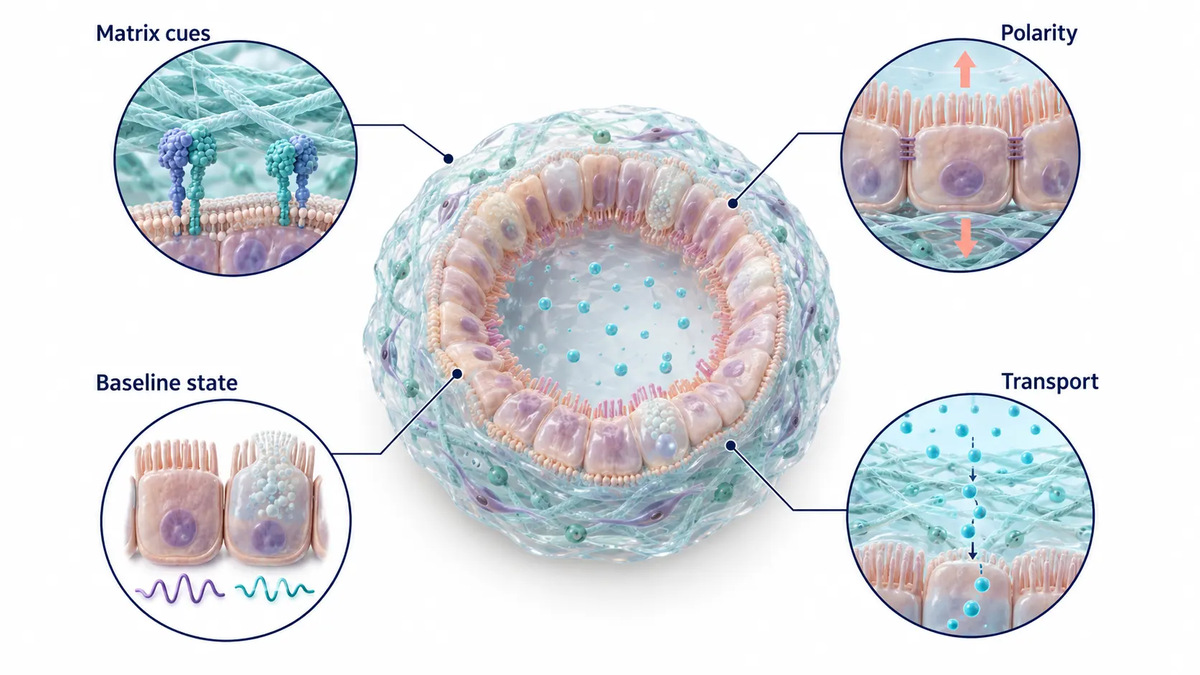 Figure 2. Culture format can affect matrix signaling, polarity, transport, and baseline cell state before treatment begins.
The Same Nominal Dose May Not Create the Same Effective Exposure
A well may receive the same compound concentration while the cells experience a different concentration-time profile. Matrix partitioning, organoid size, aggregate density, accessibility of the outer surface, and media volume can influence how rapidly the compound reaches the relevant cell population. This matters especially for short treatments, compounds with strong protein or matrix interactions, and endpoint assays that are sensitive to the timing of stress or growth arrest.
A response difference should therefore be investigated in a logical order. First ask whether the baseline organoid population was comparable. Next ask whether the exposure route, treatment duration, and recovery interval were actually matched. Then ask whether an orthogonal endpoint supports a biological difference. Only after those checks should a culture-format-dependent response be interpreted as evidence of ECM-mediated protection, altered target biology, or a genuine state-specific mechanism.
Drug response should also be separated from general growth behavior. A format that supports faster baseline expansion can make a terminal ATP signal appear higher after treatment, even if the fractional effect of the compound is unchanged. Dose-response curves and complementary endpoints are more informative than a single treated-versus-control comparison. For studies that need to connect assay design with a research-stage screen, organoid drug screening services can help align the format, plate strategy, control structure, dose range, and endpoint with the intended question.
Design a Fair Head-to-Head Culture-Format Comparison
The most defensible study begins with one biological source and assigns it to both formats before divergence occurs. The aim is not simply to grow two cultures in parallel. It is to ensure that source, passage, starting viable biomass, medium formulation, intended treatment window, and downstream handling are not completely confounded with format.
Use a split-source design
Start with the same organoid line, donor-derived culture, passage window, or recovery batch. Dissociate and allocate material to the compared formats using a prespecified input definition. Depending on the model, this may be viable cell count, standardized fragment range, object number, or an image-based biomass measure. Multiple wells from one culture can improve measurement precision, but they do not replace independent culture replicates.
Separate maintenance format from assay format
Maintenance and treatment format answer different questions. A study may compare long-term growth in low-ECM suspension and dome culture, then transfer both into one common assay format before dosing. That asks whether prior culture history changes a later common assay. Alternatively, a study may treat the organoids in their original formats. That asks whether the full physical exposure context changes the response. Both designs are useful, but they should not be described as equivalent.
Include every cell of the factorial design
At minimum, both culture formats require vehicle and drug conditions. This creates a 2 × 2 structure: suspension-vehicle, suspension-drug, ECM-vehicle, and ECM-drug. If one format receives only the drug and the other only vehicle, culture format and treatment are inseparable. Biological replicate, preparation day, ECM lot, plate, and extraction batch should be balanced as far as practical.
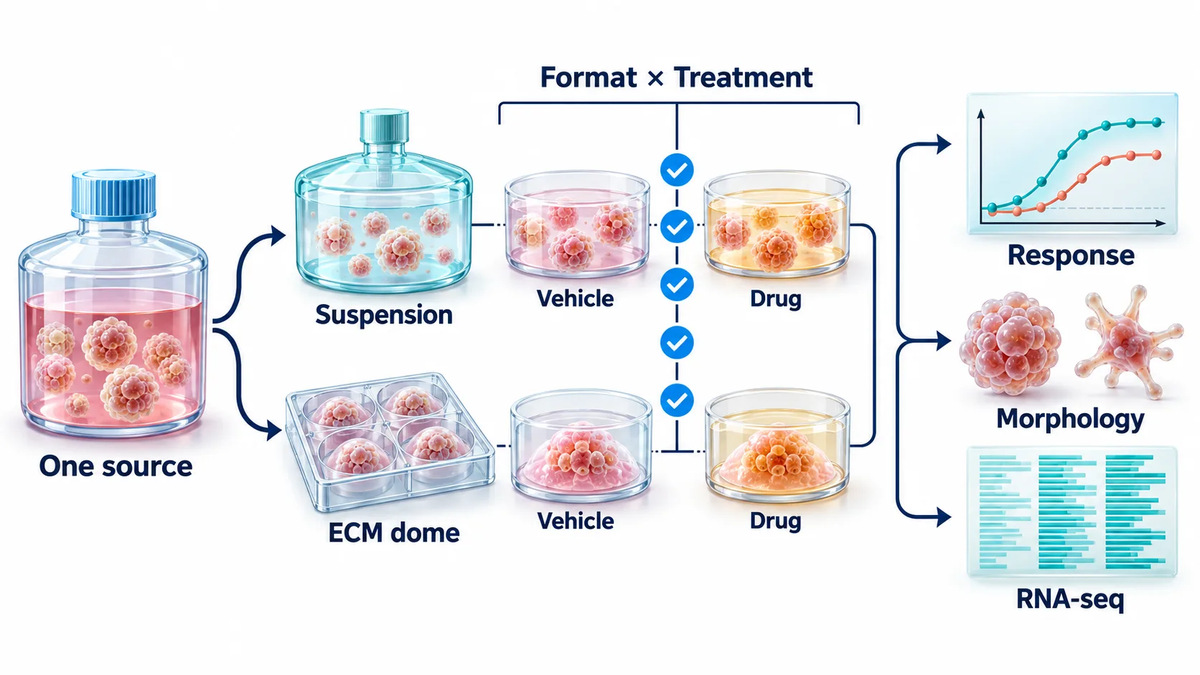 Figure 3. A matched split-source design separates culture-format effects from drug-treatment effects in a 2 by 2 experiment.
The sample map should also identify which cultures are intended for imaging, functional response, histology, and RNA collection before the experiment starts. Late allocation often creates avoidable mismatches, such as one format being harvested by direct lysis while the other requires prolonged matrix removal. For a study that needs connected molecular and functional evidence, organoid sequencing and analysis services can help define compatible handling routes and comparison groups before samples are committed.
Establish Baseline Comparability Before Interpreting Drug Response
Baseline comparability is not a single pass-or-fail statistic. It is a set of observations that establishes whether the two cultures are sufficiently similar to answer the proposed question. The required evidence depends on whether the study asks about generic cytotoxicity, epithelial barrier behavior, molecular mechanisms, or format-dependent tissue biology.
| Baseline layer | What to compare | Why it matters | What a mismatch may mean |
|---|---|---|---|
| Growth and viability | Viable biomass, recovery, growth trajectory | Defines whether treated endpoints start from comparable populations | Different expansion or survival conditions |
| Geometry | Size range, lumen, aggregation, density | Influences exposure and endpoint behavior | Transport or handling differences |
| Structure and polarity | Organization and selected localization markers | Defines accessible cell surfaces and tissue context | Format-specific architecture |
| Cell state | Proliferation, differentiation, stress markers | Prevents baseline state from being mislabeled as drug response | Real biological adaptation or selection |
| RNA quality | Yield, integrity, extraction route, processing time | Protects downstream expression comparisons | Pre-analytical bias rather than biology |
The outcome should be stated explicitly. A pair of cultures can be baseline-equivalent, baseline-shifted but still interpretable, or biologically non-equivalent for the proposed comparison. The third outcome is useful information. It means that the format is changing the model to an extent that should be studied directly or controlled more tightly before a drug-response conclusion is made.
Measure Drug Response with More Than One Endpoint
No single endpoint captures every kind of organoid response. ATP-based viability, total nuclear area, object count, membrane integrity, morphology, and a tissue-specific functional assay may each answer a different question. A practical minimum is one measure of overall viability or biomass and one orthogonal observation that helps distinguish cell death, growth arrest, structural collapse, and altered organization.
Use full dose-response curves where the question requires relative sensitivity. Consider the shape of the curve, maximum effect, and the behavior of vehicle controls, rather than treating one fitted IC50 value as a complete biological explanation. If a format changes baseline growth strongly, growth-rate-aware or baseline-normalized interpretations may be more appropriate than a terminal signal alone. The method used to normalize and fit the response should be applied consistently across formats.
Imaging can make the endpoint more interpretable, but it should not be used to overclaim a mechanism. A reduction in occupied area can reflect loss of organoid number, reduced size, compaction, fragmentation, or an image-segmentation failure. Preserve representative raw images and define exclusion criteria before reviewing treatment groups. For complex studies, organoid drug response transcriptomics services can connect a phenotypic response design with a matched molecular sampling strategy, instead of treating RNA-seq as a disconnected follow-up.
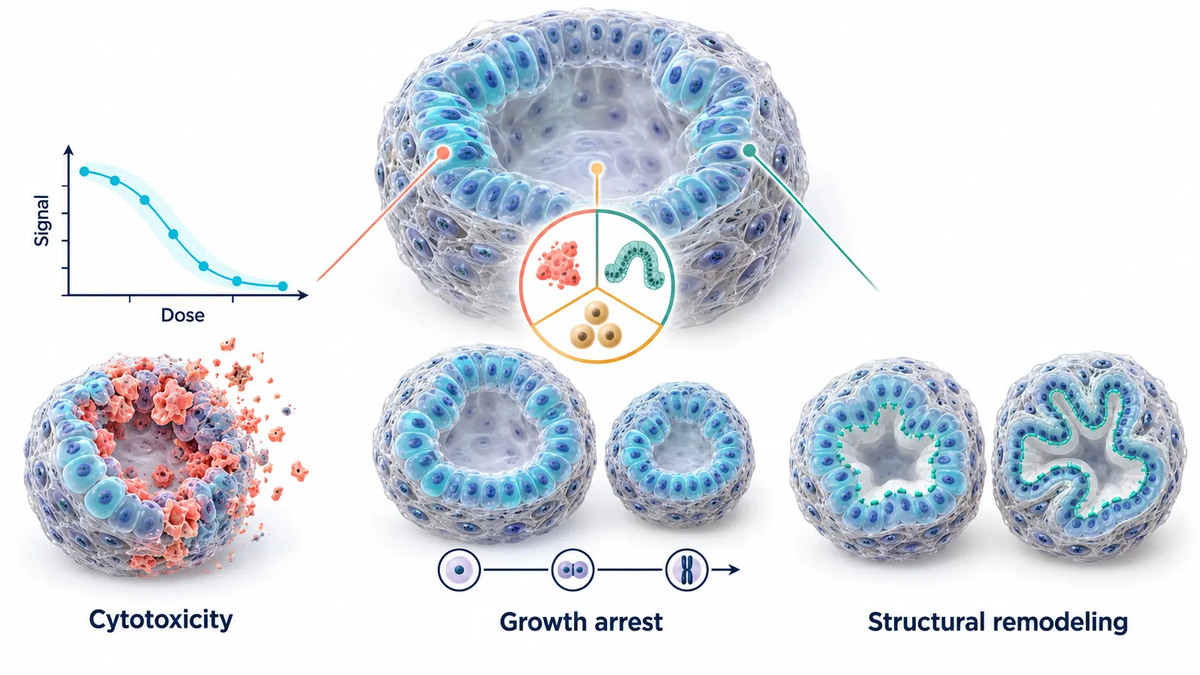 Figure 4. Orthogonal organoid endpoints help separate cytotoxicity, growth arrest, and structural remodeling across culture formats.
Use RNA-seq to Separate Baseline Format Effects from Drug-Induced Programs
RNA-seq can answer a culture-format question only when the experimental design preserves the relevant contrasts. The first contrast is baseline: suspension-vehicle versus ECM-vehicle. It asks what culture format has changed before treatment. The next two contrasts are within-format responses: suspension-drug versus suspension-vehicle, and ECM-drug versus ECM-vehicle. A fourth comparison asks whether the treatment response differs between formats.
That final question is an interaction question. In a factorial design, an analysis can include factors for donor or culture batch, format, treatment, and a format-by-treatment interaction. The interaction term identifies genes whose treatment-associated change differs by culture format. It is more informative than generating two independent differential-expression lists and comparing their overlap. Established RNA-seq frameworks support multi-factor designs with interaction terms when every cell of the design has adequate replication.6
Interpret the resulting genes and pathways in layers. ECM-receptor interaction, focal adhesion, cytoskeletal signaling, hypoxia, oxidative stress, cell cycle, epithelial differentiation, apoptosis, and transport-related programs may each be relevant. However, a pathway enrichment result does not by itself prove that the matrix altered drug target engagement. It should be interpreted alongside exposure conditions, structural evidence, and phenotype.
A planned RNA-seq study should keep the biological unit visible: donor, line, independent culture preparation, passage, matrix condition, treatment, and harvest time. After sequencing, transcriptomic data analysis can organize the predeclared contrasts, batch covariates, pathway analysis, and visual checks around that study structure.
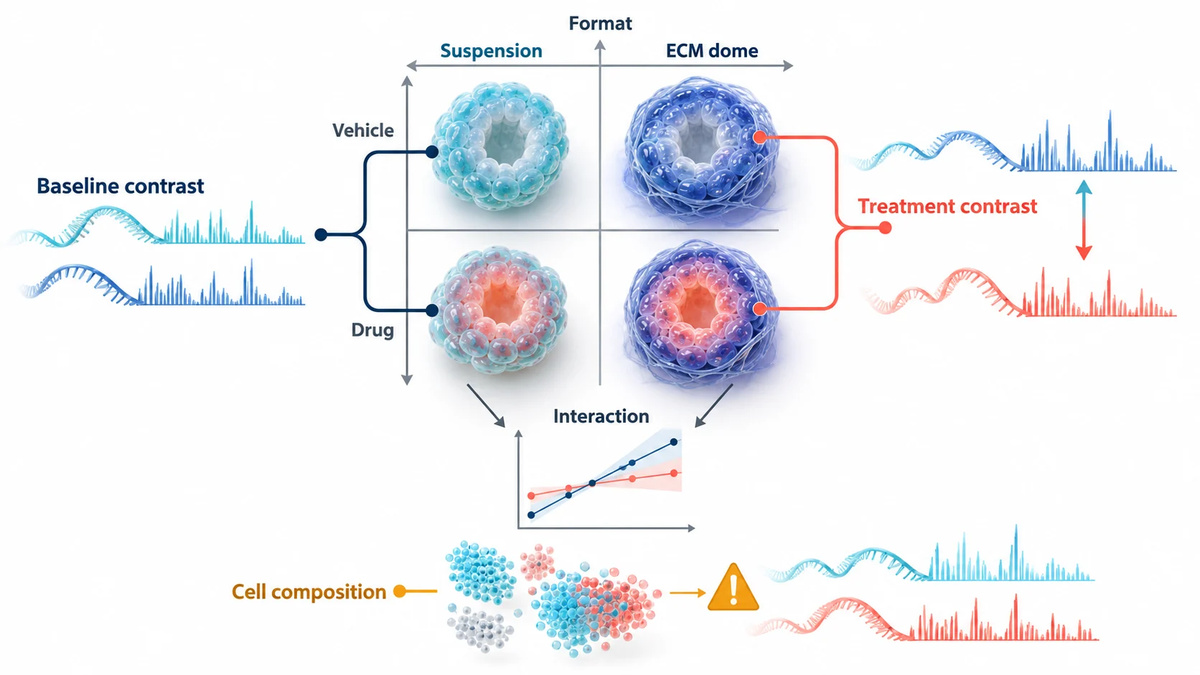 Figure 5. Baseline culture differences and format-specific drug responses require separate RNA-seq contrasts and an interaction test.
Distinguish Cell-State Reprogramming from Cell-Composition Change
Bulk RNA-seq is often the right first molecular readout because it can test an adequately replicated, format-by-treatment experiment efficiently. Its limitation is that the average expression profile cannot fully distinguish a transcriptional change within cells from a change in which cell populations contribute to the sample. That distinction is important when one format favors differentiated cells, another enriches proliferating cells, or the recovery process selectively loses a fragile population.
Single-cell RNA sequencing is justified when cell composition is central to the mechanism, when bulk results are dominated by a small population, or when the study must determine whether a format change alters cell states within the same lineage. It is not automatically necessary merely because organoids are heterogeneous. If the question is a reproducible, global response program across several biological replicates, bulk RNA-seq may be the more direct and statistically balanced design. If the question is whether the response arises from selective enrichment or depletion of specific populations, single-cell RNA sequencing may be the appropriate escalation.
Whichever method is used, dissociation and collection should be treated as part of the format comparison. Prolonged enzymatic release from one ECM format but not the other can produce stress-associated expression changes that look biological. A small bridge experiment can test whether the harvest route itself shifts selected stress or epithelial markers before the full sequencing study is run.
Control Matrix Removal, Harvest, and RNA Pre-Analytics
Culture-format studies often fail at the point of collection. Direct lysis in one condition and extended matrix digestion in another do not represent comparable pre-analytical workflows. Differences in harvest temperature, time to stabilization, wash number, recovery efficiency, and residual matrix can alter RNA quality and the observed expression profile.
Document the collection route for every sample. Specify whether organoids are directly lysed, mechanically recovered, chelator-released, or enzymatically dissociated. Balance the time from culture removal to lysis or stabilization. Record the operator or instrument run, reagent lot, and extraction batch. If only one format requires a lengthy recovery procedure, include a pilot that separates the effect of the culture format from the effect of the recovery method.
For studies with low biomass, variable recovery, or prolonged handling, organoid RNA stability analysis services can help examine whether the selected collection and storage route preserves a sample state suitable for the intended RNA readout. This is a sample-fitness question, not a guarantee that two formats are biologically equivalent.
Decide What Transfers Across Culture Formats
The end of the study should not be a binary statement that formats are "the same" or "different." A more useful result classifies the degree and type of transferability.
- Format-invariant response: baseline state and treatment response are sufficiently aligned across formats for the specific endpoint tested.
- Baseline-shifted but response-aligned: the formats differ before treatment, but the direction and magnitude of treatment-associated change remain comparable.
- Format-specific response: a biological or analytical interaction indicates that the treatment response changes with format.
- Unresolved response: unequal exposure, recovery, geometry, polarity, or assay performance prevents a confident interpretation.
Only the first class supports a straightforward statement that the finding was robust to the tested format change. The second and third classes may be scientifically valuable, but they call for focused validation. The unresolved class should lead back to the experimental design, not to stronger claims based on a larger sequencing run.
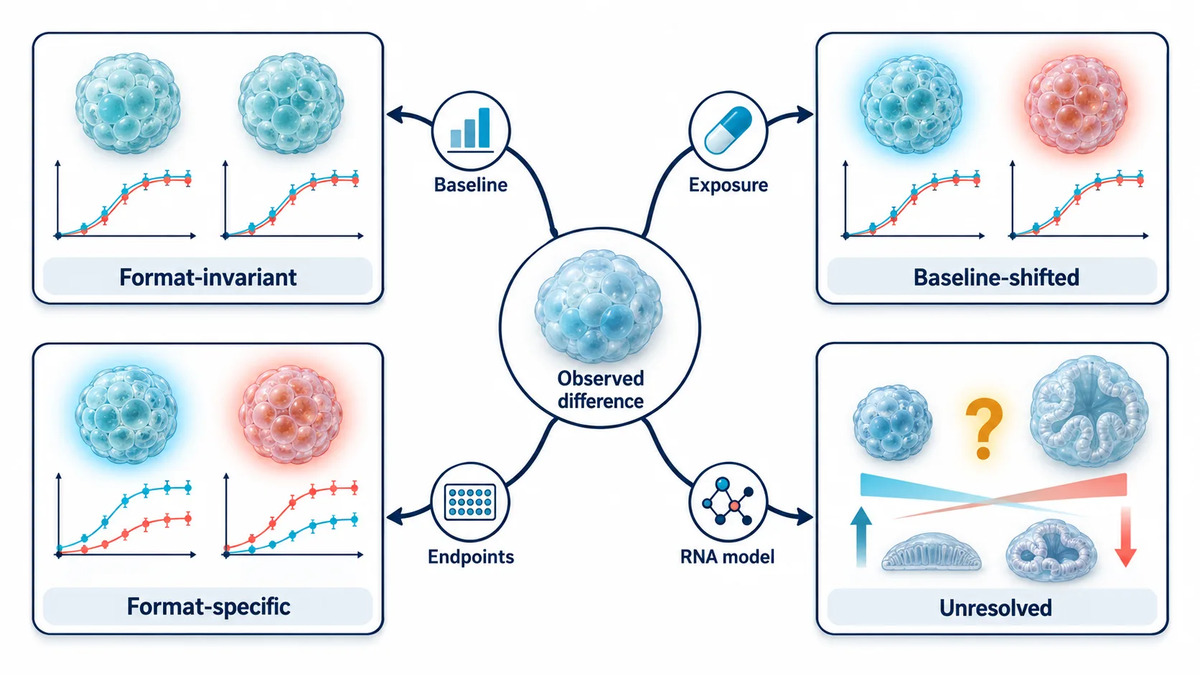 Figure 6. A decision framework classifies organoid findings as format-invariant, baseline-shifted, format-specific, or unresolved.
Choose the Format That Matches the Research Question
| Research objective | Format worth considering | Essential validation question |
|---|---|---|
| Scalable expansion or perturbation screening | Low-viscosity ECM suspension or suspended ECM hydrogels | Does the model retain the baseline and response properties needed for the intended screen? |
| ECM signaling or mechanobiology | Defined or controllable ECM-embedded culture | Which matrix variable is being tested: ligand, stiffness, architecture, or degradation? |
| Apical-surface exposure research | Polarity-controlled suspension systems | Has polarity been demonstrated and is the exposure route appropriate? |
| Long-term maintenance of a validated line | Established model-specific route | Does the proposed alternative preserve the required biology through the relevant passage window? |
| Cross-format drug-response comparison | Matched split-source design with common or explicitly distinct assay format | Are baseline, exposure, and endpoint conditions interpretable enough for an interaction analysis? |
For projects that require a combined plan for culture, sequencing, functional assays, and downstream interpretation, organoids sequencing services can help define sample allocation and analytical evidence around the specific comparison. The format should be selected because it exposes the relevant biological question, not because it is assumed to be more advanced or more convenient in every setting.
A One-Page Project Checklist
- State the exact culture architecture, ECM material, concentration, and vessel geometry for each condition.
- Specify whether the comparison concerns maintenance format, treatment format, or both.
- Use a matched source, passage window, medium formulation, and input definition before format assignment.
- Include vehicle and treatment conditions in every culture format.
- Assess baseline growth, geometry, polarity or structure, and sample quality before interpreting treatment results.
- Measure response with at least one viability or biomass endpoint and one orthogonal structural, imaging, or functional endpoint.
- Prespecify RNA-seq contrasts, including the format-by-treatment interaction when treatment response is the question.
- Document matrix removal, harvest timing, RNA stabilization, extraction route, and sequencing batch.
- Classify findings as robust, baseline-shifted, format-specific, or unresolved.
- Use follow-up validation to test the specific explanation supported by the data.
Frequently Asked Questions
Is a 5% Matrigel or BME condition a matrix-free organoid culture?
No. It is better described as a low-ECM or low-viscosity matrix suspension. It may reduce the extent of a solid matrix environment, but it still includes matrix material and can preserve matrix-associated effects.
How long should organoids adapt after moving to a different format?
There is no universal interval. The required adaptation period depends on tissue type, growth rate, polarity, intended endpoint, and whether the study asks about the immediate transition or a stabilized culture state. The interval should be predefined, documented, and supported by baseline checks rather than selected after response data are observed.
If two formats produce different IC50 values, does that prove ECM-mediated resistance?
No. First assess baseline growth, organoid geometry, polarity, actual exposure duration, endpoint behavior, and curve quality. A difference may reflect ECM signaling, but it can also arise from unequal access, altered state, or measurement bias.
Can bulk RNA-seq still be useful if the formats have different cell composition?
Yes. Bulk RNA-seq can establish reproducible global differences and test a format-by-treatment interaction. It cannot by itself determine whether a signal comes from state change within a cell type or a shift in the abundance of cell populations. Use single-cell profiling when that distinction is central to the research question.
Should the two formats be assayed in the same drug-screening plate?
When their handling and matrix compatibility permit it, balancing both formats across the same plate or run can reduce procedural confounding. When they require different plate architectures, use a design that balances batches, controls, treatment timing, and endpoint acquisition, then state that the assay format differs.
Can a suspension format be used for expansion and an ECM format for the final assay?
Yes, if the study question is whether prior maintenance format alters the result in a common final assay. Document the transition and recovery period, and include the proper controls. This design does not answer whether the compound behaves differently when exposure occurs within the original suspension versus ECM context.
References:
- Price S, Bhosle S, Gonçalves E, et al. A suspension technique for efficient large-scale cancer organoid culturing and perturbation screens. Scientific Reports. 2022;12:5571.
- Co JY, Klein JA, Kang S, Homan KA. Suspended hydrogel culture as a method to scale up intestinal organoids. Scientific Reports. 2023;13:10412.
- Kakni P, López-Iglesias C, Truckenmüller R, Habibović P, Giselbrecht S. Reversing Epithelial Polarity in Pluripotent Stem Cell-Derived Intestinal Organoids. Frontiers in Bioengineering and Biotechnology. 2022;10:879024.
- Hirokawa Y, et al. Low-viscosity matrix suspension culture enables scalable analysis of patient-derived organoids and tumoroids from the large intestine. Communications Biology. 2021;4:1067.
- Kim D, Youn J, Kim J, Lee J, Yoon J, Kim DS. From organoid culture to manufacturing: technologies for reproducible and scalable organoid production. npj Biomedical Innovations. 2026.
- Love MI, Huber W, Anders S. Moderated estimation of fold change and dispersion for RNA-seq data with DESeq2. Genome Biology. 2014;15:550.
Related Services
- Organoid Model Development Services
- Organoid Characterization Services
- Organoid Histology and Immunostaining Services
- Organoid Drug Screening Services
- Organoid Drug Response Transcriptomics Services
- Organoid Sequencing and Analysis Services
- Organoids Sequencing Service
- RNA-Seq
- Transcriptomic Data Analysis