

Metatranscriptomics
Service Overview
Our Metatranscriptomics platform offers a comprehensive analysis of microbial communities by evaluating gene activity diversity, expression abundance, and differential gene expression. Utilizing cutting-edge next-generation and third-generation sequencing technologies alongside integrated bioinformatics, we can pinpoint genes with significant changes in expression across various conditions. This enables the identification of potential biomarkers and expression signatures, providing valuable insights into microbial gene function and regulation.
Our Advantages:
- Reveals True Microbial Diversity: Provides in-depth analysis of microbial communities, accurately reflecting sample diversity.
- Cost-Effective and Broad Coverage: Offers high cost-efficiency, wide coverage, and short turnaround time.
- Automated Workflow: Utilizes commercial kits, cutting-edge instruments, and integrated bioinformatics pipelines for efficient automation.
- Wide Range of Applications: Suitable for fundamental research, ecological applications, environmental monitoring, and industrial applications.
- Efficient Sample Handling: Handles challenging samples effectively, maximizing the use of valuable specimens.
- Strict Data Quality Control: Maintains a rigorous quality control system to ensure data accuracy.
 Request a Quote
What is Metatranscriptomics
Metatranscriptomics, also known as environmental transcriptomics, focuses on the comprehensive analysis of microbial community transcripts within specific samples at the transcriptional level. It delves into the gene expression and regulatory mechanisms of these communities. By circumventing the need for microbial isolation and cultivation, metatranscriptomic sequencing offers researchers an efficient tool for studying the genomic transcription and regulatory dynamics of microbial communities in specific environments and at particular times. This technique finds application across diverse fields, including human microbiomes, environmental studies, industrial processes, and agriculture.
Difference Between Metatranscriptomics and Transcriptomics
The distinction between metatranscriptomics and transcriptomics lies in their focus, sample types, and goals:
Scope:
- Transcriptomics: Studies the complete set of transcripts in isolated cells or organisms at specific conditions.
- Metatranscriptomics: Analyzes all RNA transcripts in mixed microbial communities within a particular environment.
Sample Types:
- Transcriptomics: Uses pure culture samples from individual organisms.
- Metatranscriptomics: Utilizes total RNA from environmental samples like soil or water.
Analytical Objectives:
- Transcriptomics: Aims to understand gene expression patterns of a single species or cell type.
- Metatranscriptomics: Focuses on the gene expression and diversity of microbial communities in an environment.
In essence, transcriptomics looks at individual organisms, while metatranscriptomics explores broader microbial communities.
Metatranscriptomic and Metagenomic Comparison
Metatranscriptomic sequencing focuses on analyzing gene expression within microbial communities in specific environments. Unlike metagenomics, which provides a comprehensive genomic overview of all microorganisms present, metatranscriptomics not only identifies species but also examines the composition of active strains and highly expressed genes. It reveals how microorganisms adapt to environmental factors and explores the regulatory mechanisms of gene expression.
However, the genes assembled through metatranscriptomic sequencing reflect only those actively expressed. In contrast, metagenomic sequencing captures the entire genomic content of the microbial community, offering a more complete genetic reference. This extensive genomic information from metagenomics enhances the interpretation of gene expression data from metatranscriptomics, thereby improving the accuracy of species composition and differential expression analyses.
Table 1: Comparison of Metatranscriptomic and Metagenomic Sequencing.
| Metatranscriptomic Sequencing | Metagenomic Sequencing | |
|---|---|---|
| Sequencing Target | mRNA of microbial communities | Genomic DNA of microbial communities |
| Read Length | PE100bp/PE125bp/PE150bp | PE100bp/PE125bp/PE150bp |
| Recommended Data Volume | 5-10G | 5-10G |
| Analysis Content | Species Annotation Species Abundance Phylogenetic Analysis Gene Abundance Functional Gene Annotation and Analysis Differential Expression Analysis |
Species Annotation Species Abundance Phylogenetic Analysis Gene Abundance Functional Gene Annotation and Analysis |
| Advantages and Disadvantages | Advantages: Allows for gene expression analysis Disadvantages: Assembled genes represent only expressed sequences |
Advantages: Comprehensive genomic information Disadvantages: Cannot analyze gene expression |
| Notes | Can be combined with metagenomic sequencing for complementary insights | |
Applications of Metatranscriptomics
The applications of metatranscriptomics include, but are not limited to, the following areas:
- Environmental Microbial Ecology
- Host-Microbiome Interactions
- Biotechnological and Industrial Applications
- Wastewater Treatment and Environmental Monitoring
- Drug Discovery and Development
Service Specifications
Introduction to Our Metatranscriptomics Platform
Metatranscriptomics investigates the functions and activities of the complete set of transcripts derived from environmental samples. This method reveals the transcripts present within a metagenome and elucidates the rules of transcriptional regulation under specific conditions or during particular periods at a holistic level. A significant advantage of metatranscriptomics is that it circumvents the need for isolating and culturing individual microbial species, thereby broadening the scope of accessible microbial resources.
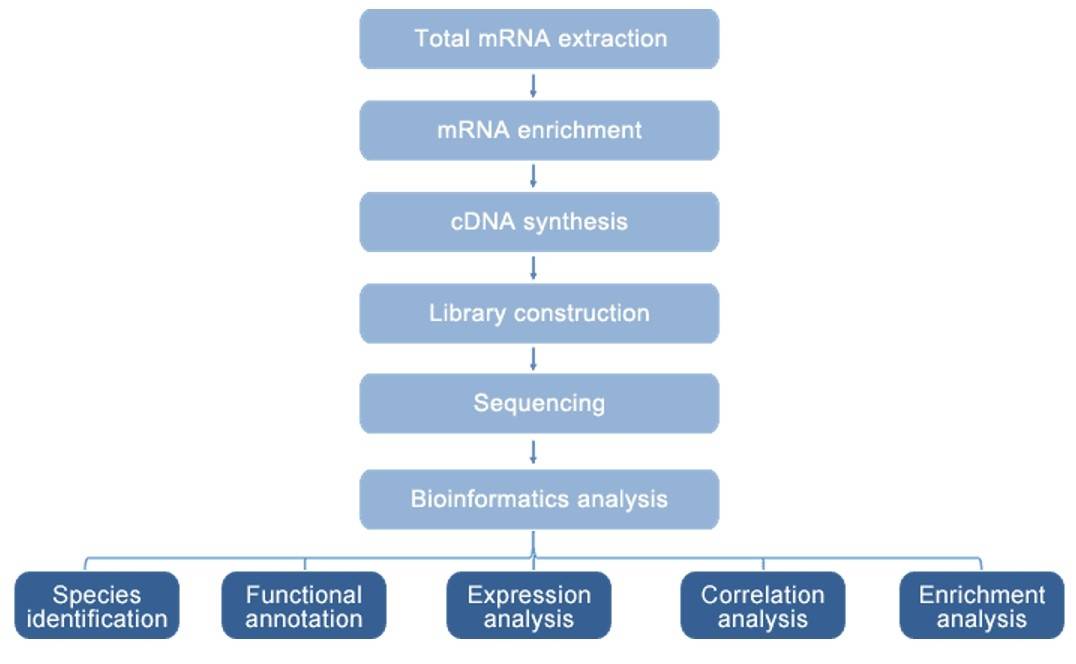
Metatranscriptomics Workflow
Our workflow for metatranscriptomic studies encompasses four main stages: sample preparation, library preparation, high-throughput sequencing, and integrated bioinformatics analysis. We employ a variety of sequencing platforms, including Sanger sequencing, Illumina MiSeq/HiSeq, Roche 454, and PacBio SMRT systems. The selection of an appropriate sequencing strategy is tailored to the specific sample type and research objectives. Comprehensive and customized bioinformatics analyses are then performed by our team of experienced experts, ensuring robust and insightful interpretations of the data.
Technical Parameters
| Sequencing Platform | Sequencing Strategy | Data Volume |
|---|---|---|
| Illumina Hiseq | PE150 | Depending on the specific project requirements, not less than the contracted data volume |
| Hiseq | 4000 | - |
Note: We design appropriate sequencing strategies based on your plan and objectives, utilizing suitable sequencing platforms. Please feel free to contact us directly.
Bioinformatics Analysis
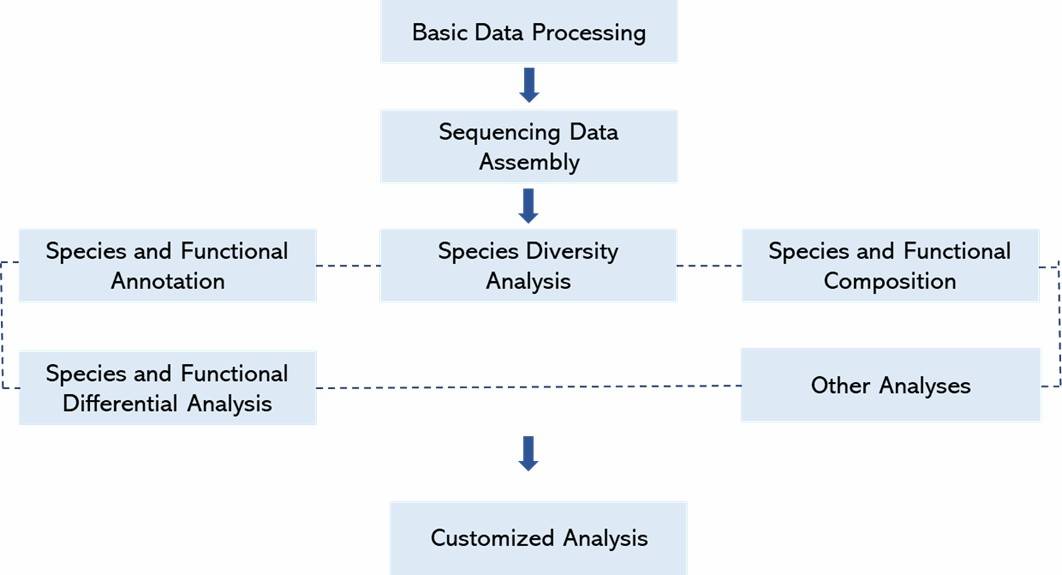
The raw data of sequencing will have a certain proportion of low-quality data. So, the raw data need to be pre-processed to obtain clean data. Our bioinformatics Analysis primarily includes functional annotation, expression analysis, taxonomic analysis, enrichment analysis, comparative analysis.
| Bioinformatics analysis | Problems to be solved | |
|---|---|---|
| Raw data preprocessing | Filter low-quality data and remove adapter sequence to get clean data | |
| Expression analysis | Gene expression profiling of a certain population | |
| Enrichment analysis | KEGG pathway | Gene-enriched signaling pathway, linking genomic information with higher order functional information. |
| GO analysis | Gene product annotations in the areas of molecular function, biological process and cellular component | |
| eggNOG/COG | Annotation of orthologous groups of genes, prediction of evolutionary genealogy of genes | |
| Multi-sample comparative analysis | Clustering | Discover classifications within complex data sets |
| PCoA | Differences in functional distribution between different samples, explore the functional composition of multiple samples | |
| Functional comparison | ||
| Correlation analysis | Network analysis | Study the relationships between microbes and environmental factors |
Note: The above content includes only a portion of the bioinformatics analysis. For more information or to customize the analysis, please contact us directly.
Sample Requirement
| Sample Type | Quantity | Concentration | OD260/OD280 |
|---|---|---|---|
| Total RNA | ≥ 4 μg | 50 ng/μL | ≥1.8 |
| Cells | ≥ 5×10⁶ | - | - |
| Environmental Samples | ≥ 1.5g | - | - |
Note:
- RIN ≥ 7.0, 28s/18s ≥ 1.5
- Transport samples with sufficient ice packs or dry ice.
- If you wish to obtain more accurate and detailed information regarding sample requirements, please feel free to contact us directly.
Deliverables
- Raw sequencing data (FASTQ)
- Clean data
- Trimmed and stitched sequences (FASTA)
- Quality-control dashboard
- Sample contamination report
- Statistic data
- Your designated bioinformatics result report
Demo
Demo
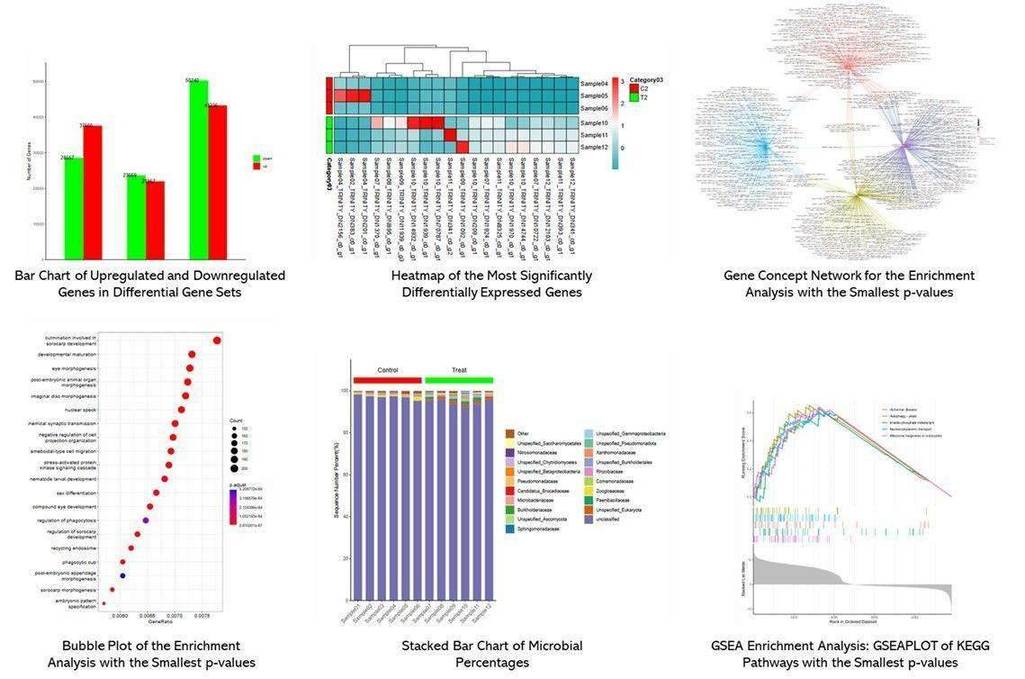
Partial results of our Metatranscriptomic Sequencing service are shown below:
FAQs
Metatranscriptomics FAQ
- 1. For small animals, if it is not feasible to separate the gut from its contents during sampling, the host can significantly influence the metatranscriptome. How can this issue be addressed?
- 2. Is validation required after completing metatranscriptomic sequencing? If so, should qPCR be used for validation?
Case Study
Case Study

Metatranscriptomics Unravel Composition, Drivers, and Functions of the Active Microorganisms in Light-Flavor Liquor Fermentation
Journal: Microbiology spectrum
Impact factor: 9.043
Published: 31 May 2022
Background
The microbial communities within fermentation pits are crucial determinants of the quantity and quality of light-flavor Baijiu. Typically, genetic diversity and the potential functions of these microbial communities are analyzed using DNA genomics sequencing. However, the characterization of active microbial communities has not been systematically explored. In this study, we employ metatranscriptomic analysis to elucidate the composition, driving factors, and roles of active microorganisms during the fermentation process of light-flavor Baijiu.
Materials & Methods
Sample preparation:
- Distillery
- RNA extraction
Method:
- cDNA library construction
- Metatranscriptomic sequencing
- IlluminaHiseq 4000
Data Analysis:
- De novo assembly
- Functional annotation
- Statistical analysis
Results
Metatranscriptomic sequencing produced 387.99 Gbp of raw data from 2,751,785,770 reads, with 377.27 Gbp of clean data used for analysis. The sequencing had high accuracy, with Q20 values exceeding 98.21%. Assembly results showed contig lengths ranging from 5,686 to 54,864 bp, and unigene numbers averaged 36,834 with lengths of 1,304 bp. The predominant active microorganisms were identified, with 421 genera annotated. The top 20 genera accounted for over 95% of the community, showing significant shifts during fermentation stages.
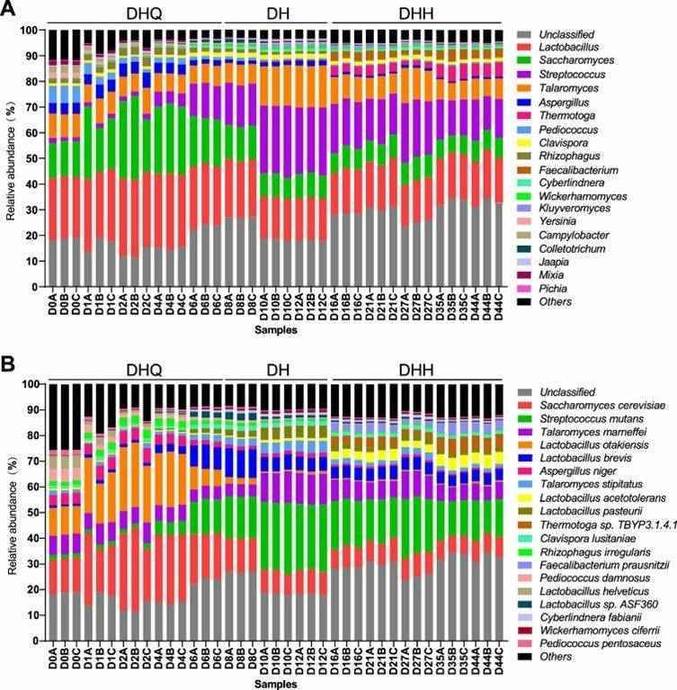 Figure 1. Composition of the active microbial community in light-flavor liquor fermentation.
Environmental factors such as pH, temperature, and ethanol production influenced microbial succession. Redundancy analysis showed that pH, ethanol, moisture, and starch were key drivers of microbial changes.
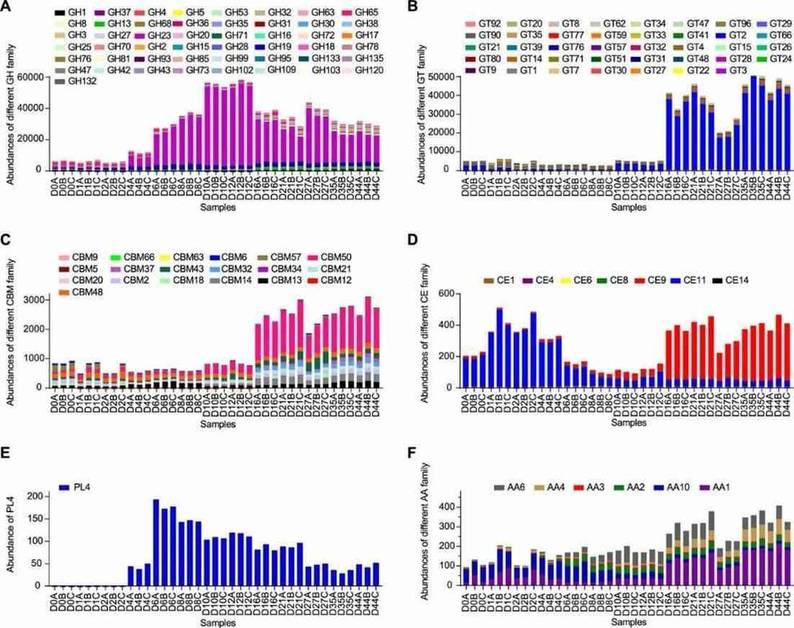 Figure 2. Abundances of the different carbohydrate-active enzyme families in light-flavor liquor fermentation.
Carbohydrate-active enzymes (CAZy) showed varying abundances, with glycoside hydrolases (GH) and glycosyltransferases (GT) being the most prominent.
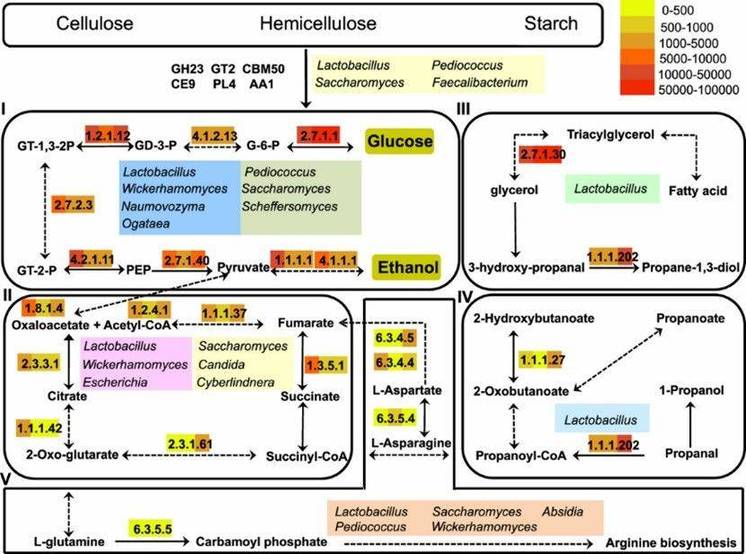 Figure 3. Functional model of carbohydrate hydrolysis, ethanol production, and flavor generation in light-flavor liquor fermentation.
Conclusions
This study used metatranscriptomics to identify active microbes in LFL fermentation, finding Faecalibacterium as a major but poorly understood player. It revealed key microbes responsible for flavor compounds and emphasized the need for improved sampling and fungal genomic resources.
Reference
- Pan Y, Wang Y, Hao W, et al. Metatranscriptomics unravel composition, drivers, and functions of the active microorganisms in light-flavor liquor fermentation. Microbiology spectrum, 2022, 10(3): e02151-21.
* For research purposes only, not intended for clinical diagnosis, treatment, or individual health assessments.











Please submit a detailed description of your project. We will provide you with a customized project plan to meet your research requests. You can also send emails directly to for inquiries.
Please fill out the form below: ×