Designing G4 CUT&Tag Experiments for G-Quadruplex Stabilizing Ligands: Controls, Replicates, and Read Depth
G4 CUT&Tag can support ligand-response work only when it is designed for comparison, not just for signal detection. For any G4 CUT&Tag ligand treatment, the experimental logic must prioritize matched controls, replicate balance, and realistic G4 CUT&Tag sequencing depth appropriate to your intended claim. This article focuses on the design decisions that determine whether differential G4 CUT&Tag signal is interpretable and comparison-ready.
Key takeaways
- Design for comparative interpretation from the start; detection-only designs rarely support ligand claims.
- Minimum control structure for G-quadruplex stabilizing ligands: IgG negative control, matched vehicle control, and a matched untreated baseline.
- Replicates and depth should track your claim strength: exploratory survey, robust group comparison, or locus-oriented directional evidence.
- More reads cannot rescue weak structure; matched conditions and batch consistency matter more.
- Deliverables should include replicate-aware peak sets, transparent QC, and differential tables with documented normalization.
Why Ligand-Response G4 CUT&Tag Needs a Different Design Logic
Ligand studies ask whether G4-associated signal changes in a reproducible, interpretable way across matched conditions. That is a harder question than "is there G4 signal?" and it requires a different design mindset.
Detection and comparison are not the same objective
Baseline G4 mapping asks whether peaks exist and where they localize. Ligand-response studies ask whether the presence or intensity of signal shifts between treated and control groups in a way that is reproducible across replicates and robust to analytic choices. That means your upstream design must optimize comparative validity, not only sensitivity. Studies that treat comparison as an afterthought often struggle to distinguish true ligand effects from routine technical variation.
Why treatment-associated studies are more sensitive to design flaws
When the goal is comparative interpretation, small inconsistencies propagate into big interpretability problems. Treatment timing, solvent exposure, handling, culture state, and batch context can all reshape apparent signal. Matched vehicle controls and timepoint-matched untreated samples help separate the effect of a G-quadruplex stabilizing ligand from treatment context. Work such as Li and colleagues' vehicle-controlled ligand stabilization study demonstrates how short treatments and careful matching enable causal interpretation of G4-relevant changes in chromatin features and transcriptional machinery, with explicit vehicle contrasts and biological replication (Genome Research, 2021; see Li et al., "Ligand-induced native G-quadruplex stabilization impairs transcription initiation" (PMC)).
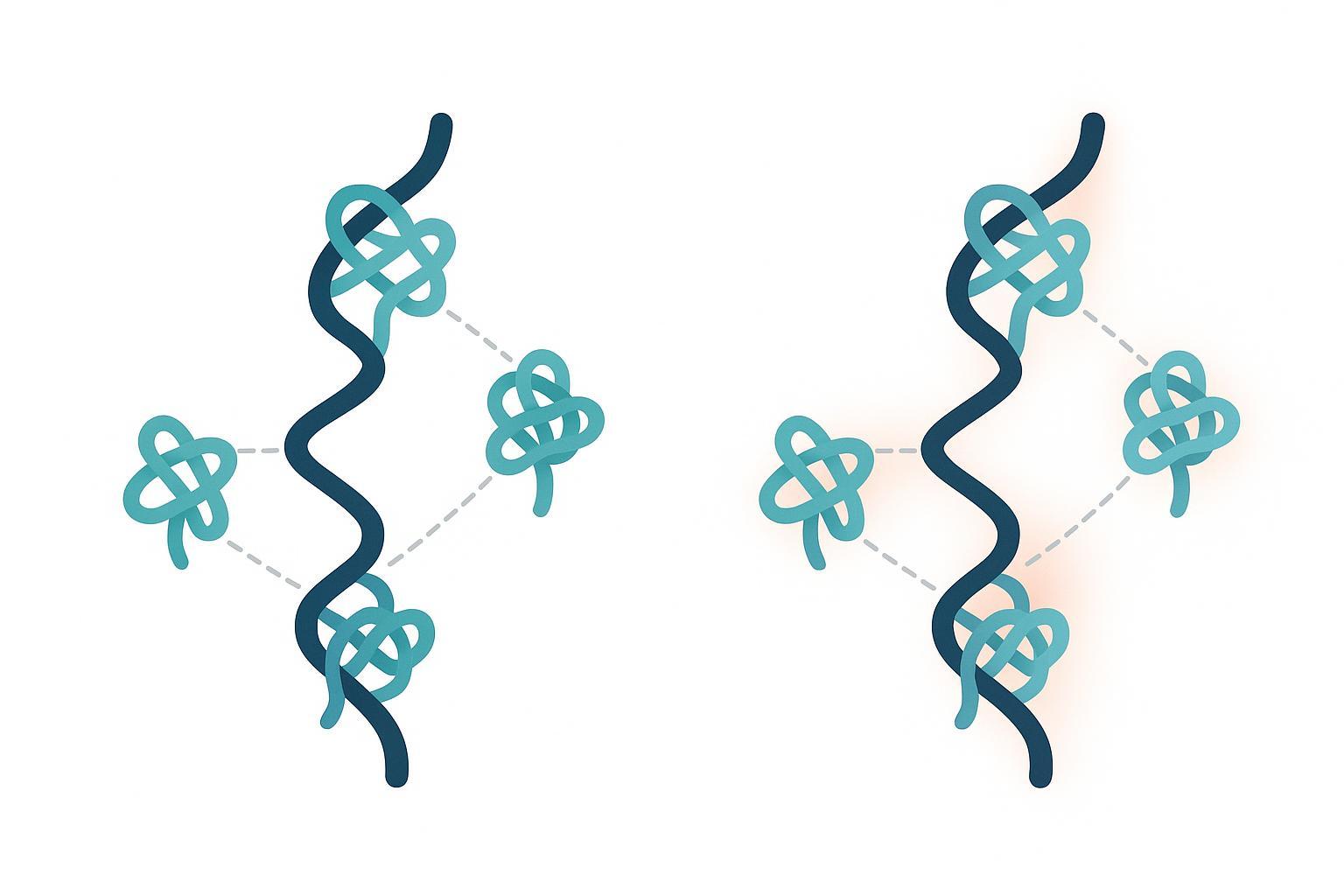
 Ligand-response G4 CUT&Tag is designed to compare signal patterns across conditions, not just to detect G4-associated regions.
Start with the Biological Question Before You Choose the Experimental Structure
Protocol templates are helpful, but your biological question should drive the structure. The more precisely you define what the ligand is expected to do, the easier it becomes to design a comparison-ready study.
Are you testing stabilisation, redistribution, or treatment-associated enrichment?
Clarify the hypothesized mechanism. If stabilization at promoter-proximal G4s is expected, plan for promoter-focused interpretation and consider orthogonal readouts of transcription initiation. If redistribution is plausible—e.g., a shift from enhancers to promoters—your replicate strategy and peak-calling rules should support genome-wide differential analysis with effect-size estimates. Recent native G4 CUT&Tag work shows promoter- and enhancer-associated G4s that provide context for how such changes might appear in maps; see Lyu et al., "Genome-wide mapping of G-quadruplex structures with CUT&Tag" (Nucleic Acids Research, 2022).
Is the expected effect broad or locus-specific?
Genome-wide shifts favor robust group comparisons with balanced biological replication. Locus-specific hypotheses (for example, a set of defined promoters) can prioritize directional change at targeted regions, but they still require matched sample logic and careful normalization. Think of it this way: breadth of effect dictates how much you rely on statistics across the genome versus hypothesis-guided checks at sentinel loci.
What counts as a meaningful readout in your system?
Define the readout you care about before launch. Examples include peak intensity distributions, the number of peaks, genomic distribution shifts (promoter vs enhancer), or concordance with orthogonal assays. Align control structure, replicate counts, and depth with that primary readout. The design choices that are "good enough" for a presence/absence map often are not sufficient for comparative interpretation.
The Most Important Controls in a G4 Ligand Study
This is where comparison-ready design either stands or falls. IgG alone is not enough. Vehicle and matched untreated conditions are commonly essential to parse compound effects from context effects.
Why IgG is necessary but not sufficient
IgG defines assay-level background—tagmentation that occurs independently of your target antibody. It helps you gauge non-specific signal and adjust peak thresholds. However, IgG does not help you attribute changes to a ligand because it lacks treatment context.
Why a vehicle control is often essential
If your ligand is delivered in solvent, a matched vehicle control separates solvent exposure and handling from the ligand's action. This is not a nice-to-have—it's often the only way to attribute differential G4 chromatin profiling to the compound rather than to the exposure context. The 2021 study by Li et al. used explicit vehicle contrasts to link changes in chromatin features and initiation factors to G4 stabilization; those design decisions are what made comparative claims possible.
When a positive control strengthens confidence
A known G4-stabilizing compound can help confirm that your assay is responsive before you scale up. It can be especially valuable in early-stage or risk-averse settings. Still, treat it as an enhancement layer, not a minimum requirement.
Why untreated and matched-condition groups matter
A matched untreated baseline (aligned in time, culture state, and batch) frames your true comparative baseline. Without it, you risk interpreting time-on-plate or handling differences as ligand effects. Process treated, vehicle, and untreated samples in balanced batches to reduce technical variance.
How to use the control table: start by selecting the minimum comparison-ready baseline (IgG + vehicle + matched untreated), then add optional layers only if they reduce a specific uncertainty in your hypothesis (for example, specificity or assay responsiveness).
| Control type | What it helps control | When it is most useful | What it does not solve |
|---|---|---|---|
| IgG negative control | Assay/background tagmentation and non-specific antibody binding | Always; provides background reference | Does not account for treatment context or vehicle effects |
| Vehicle control | Solvent and handling effects independent of the active compound | Ligand-delivery settings requiring solvent exposure | Does not replace untreated baseline; cannot correct mismatched timing or batches |
| Matched untreated baseline | True biological baseline for treated vs control comparisons | Any comparative design; critical for short treatments | Does not address assay background by itself; requires IgG |
| Positive control ligand | Confirms assay responsiveness to G4 stabilization | Early-stage risk reduction; assay qualification | Not mandatory in every study; not a substitute for matched controls |
| Structural specificity assay | Validates that peaks reflect structured DNA such as G4 | When specificity is debated; complements antibody controls | Not a treatment control; does not replace vehicle or baseline |
 In ligand studies, matched treatment controls are usually as important as the assay-specific negative control.
For structural specificity, some groups include nuclease-sensitivity probes that diminish signal at structured DNA features; while informative, these are complements—not replacements—for treatment-matched controls. For methodological specifics and replicate-aware mapping of G4s with structural controls, see the 2022 Nucleic Acids Research article by Lyu and co-authors titled "Genome-wide mapping of G-quadruplex structures with CUT&Tag."
Replicates and Sequencing Depth for G4 CUT&Tag Ligand Treatment
The priority you assign to biological replicates and read depth should mirror the strength of the claim you want to support. Depth cannot compensate for missing or mismatched controls.
If the goal is robust group-level comparison
Plan for balanced biological replication across treated and matched control groups. Three biological replicates per condition is a common target for differential peak testing and effect-size estimation, with a fourth replicate considered when you anticipate subtle effects or higher variability. Depth bands around the upper single-digit to low tens of millions of usable reads per sample often support genome-wide comparisons for challenging targets. Reviews of CUT&Tag data properties emphasize its lower background relative to ChIP-seq, which helps power comparative analyses at moderate depths when replication and normalization are soundly planned; see Fu et al., "CUT&Tag: a powerful epigenetic tool for chromatin profiling" (2023, PMC).
If the goal is directional change at selected loci
For a predefined set of loci, the design can flex depth somewhat while keeping replication logic intact. Directionality at targeted promoters or enhancers should be demonstrated across biological replicates with consistent normalization. If signals at your loci of interest are weaker or rarer, raise depth rather than trimming replicates.
Why more reads do not rescue weak experimental structure
Sequencing cannot correct for mismatched timing, missing vehicle controls, or cross-batch processing. Extra reads may inflate peak counts but leave you with ambiguous attribution. Comparative validity is earned in experimental structure first and then supported by depth.
How to think about enough depth without overpromising
Adequate depth depends on background complexity, expected effect sizes, replicate counts, and whether your study is exploratory or comparison-driven. CUT&Tag can operate efficiently at lower depths for strong, histone-like targets; TF-like or challenging epitopes, or studies that need precise effect sizes, typically require more. For context on general CUT&Tag depth, see Fu et al. (2023) on CUT&Tag performance and background and Xiong et al. (2024) on CUT&Tag development and applications.
How to use the replicate-versus-depth table: pick the row that matches the strongest claim you want to make, then treat the replicate recommendation as your non-negotiable baseline and adjust depth upward only when replicate concordance or locus-level signal suggests you need more power.
| Study goal | Replicate priority | Depth priority | Main interpretation strength | Main limitation |
|---|---|---|---|---|
| Exploratory detection | Medium: 2–3 biological replicates per condition | Medium: roughly low to mid single-digit millions of usable reads | Efficient discovery mapping and feasibility checks | Limited statistical power for small effects |
| Robust group comparison | High: 3–4 biological replicates per condition | High: roughly high single-digit to low tens of millions of reads | Strong differential analysis and effect-size estimates | Higher cost and stricter control demands |
| Locus-oriented directional | High: 3 biological replicates per condition | Variable: scale with signal rarity and strength | Confirms consistent direction at predefined loci | Limited generality; sensitive to locus selection |
For a concise technology orientation that contrasts expected depths for CUT&Tag versus related methods, see the resource comparing CUT&RUN, CUT&Tag, and ChIP-seq on the CD Genomics site, which outlines why lower background can reduce required depth in many applications.
What Usually Creates False Confidence in Ligand-Response Data
Stronger signal is not always stronger biology
Higher counts in a treated group can result from technical variation—antibody performance, tagmentation efficiency, library complexity, or subtle handling differences. Without matched vehicle and untreated baselines processed in balanced batches, you can overinterpret these drifts as ligand effects.
Peak count differences can be misleading
Treated samples sometimes produce more called peaks due to global thresholding, saturation, or normalization inconsistencies. Use replicate-aware consensus rules and model-based normalization for differential testing. Focus on effect sizes and adjusted p-values in replicate-consistent peak sets.
Cross-batch comparisons often weaken conclusions
Processing treated and control groups in different runs or batches inflates technical variance. Balance batches and, when possible, multiplex conditions within runs to minimize drift. When batch-balancing is impossible, document it and temper claims accordingly.
A Practical Pre-Launch Framework for Designing the Study
Define the treatment question
Be explicit: exploratory survey of G4 presence under treatment, robust treated-versus-control comparison, dose-response mapping, or mechanism-focused stabilization at promoters. Your claim dictates your design.
Build the minimum control structure
Include IgG to bound assay background, a matched vehicle control to isolate treatment context, and a matched untreated baseline to establish the comparative frame. Consider a known stabilizing ligand or structural specificity probe as an enhancement layer to boost confidence if risk is high.
Minimal viable design example (MVD)
If your goal is a defensible treated-versus-control comparison without overbuilding the study, a practical starting point is a three-arm structure run in a balanced batch: matched untreated baseline, vehicle control, and ligand-treated, each with the same number of biological replicates, plus an IgG control to bound assay background. In analysis, you would typically expect (i) a replicate-aware consensus peak set, (ii) a per-peak count matrix spanning all arms, (iii) differential tables for ligand vs vehicle (and optionally vehicle vs untreated) with the chosen normalization documented, and (iv) normalized tracks so you can visually sanity-check representative loci across all replicates before interpreting fold-changes.
Match replicate logic to the expected claim
Exploratory surveys can start with fewer replicates but pay for it in limited comparative power. Robust comparisons benefit from three or more biological replicates per arm. Locus-focused designs still need replication to show consistent direction.
Set realistic expectations for sequencing depth and output
Select conditional depth bands that align with the study goal and target difficulty. Commit early to a normalization strategy and differential-testing framework so that the delivered outputs match your claim.
Decide what outputs will be actionable
Agree on whether the useful outcome is a comparative signal summary, a shortlist of candidate loci, a group-level trend, or a follow-up hypothesis. This choice should inform both your wet-lab design and your bioinformatics plan.
Pre-launch checklist (copy/paste)
Use this as a quick internal gate before starting sample processing:
- The primary comparison is explicitly stated (e.g., ligand vs vehicle, vehicle vs matched untreated).
- Treatment timing, media changes, and handling steps are matched across arms.
- Vehicle composition and final concentration are identical across relevant groups.
- Biological replicates are balanced across all comparison arms (no "extra treated, fewer controls").
- Batch plan is defined (ideally multiplex conditions within the same run where possible).
- The intended readout is defined (peak intensity, genomic redistribution, peak counts, or locus-level directionality).
- A replicate-aware peak strategy is chosen (consensus rules defined before looking at results).
- Normalization and differential-testing approach is pre-committed (and documented).
- Minimum QC metrics to accept/reject libraries are agreed (mapping metrics, library complexity, enrichment, replicate concordance).
- Track-file expectations are stated (normalized bigWigs for treated, vehicle, and untreated across replicates).
- Deliverables and file formats are agreed (peaks, count matrix, differential tables, methods notes, metadata sheet).
- Interpretation boundaries are written down (what the data will and will not support at the planned replication/depth).
 A strong ligand-response study starts with a clear treatment question and a design that matches the intended claim.
What Good Deliverables Look Like in a Comparative G4 CUT&Tag Project
Technical outputs that support confidence
Expect transparent QC: mapping and alignment metrics, library complexity and duplicate rates, enrichment metrics akin to fraction-of-reads-in-peaks, replicate correlations, and peak-saturation checks. You should also receive normalized visualization tracks (for example, read-depth or genome-coverage-scaled bigWigs) so you can inspect treated versus vehicle versus untreated across replicates.
Comparative outputs that support interpretation
Request a replicate-aware consensus peak set, a per-peak count matrix, and differential peak tables with log2 fold-changes and adjusted p-values. The normalization method should be documented and used consistently across samples. Expect group-aware plots that make comparison natural—MA and volcano plots, clusterable heatmaps, and browser snapshots highlighting representative loci under matched conditions. As you review these outputs, look for explicit statements of the normalization approach (for example, consistent size-factor scaling across all samples) and replicate-aware confidence metrics so that interpretations remain comparable across arms.
Why re-analysis-ready files matter
Re-analysis-ready tables, methods notes, and reusable outputs accelerate internal review and follow-up validation. Files like BAM/BAI, narrowPeak or BED, normalized bigWigs, count matrices, and a simple metadata sheet reduce friction and improve reproducibility. Over time, these standardized artifacts also make it easier to integrate CUT&Tag results with orthogonal assays and to re-run analyses with updated tools.
As a neutral example of packaging, a provider such as CD Genomics can deliver replicate-aware peak sets, normalized tracks, and differential tables with clear QC summaries for CUT&Tag studies. When used for G4 ligand investigations, it is helpful to agree in advance on the comparison claims and the structure of analysis-ready outputs. Services are for research use only (RUO).
For additional orientation on method background and how to interpret depth expectations, see these CD Genomics resources placed in context within this discussion: CUT&Tag primer: introduction to epigenomic profiling and a comparison of CUT&RUN, CUT&Tag, and ChIP-seq that explains why lower background often reduces depth requirements.
FAQs About G4 CUT&Tag Ligand Studies
Is an IgG control enough for a ligand-response G4 CUT&Tag study?
Usually not; IgG defines assay background but does not capture treatment context, so comparative claims generally require matched vehicle and a timepoint-matched untreated baseline in addition to IgG. If you are making a group-level claim, the combination of IgG plus vehicle plus untreated baseline is the most reliable minimum.
Is a vehicle control always necessary when testing a G4 ligand?
In most ligand-treatment designs, yes; vehicle helps you attribute differences to the active compound by separating solvent and handling effects from ligand action, which is critical when treatments are short and effects are subtle. Without it, attribution typically remains ambiguous even if apparent signal increases are observed.
How many biological replicates are usually needed for comparative G4 CUT&Tag analysis?
There is no universal number, but three biological replicates per condition are a common target for robust group comparisons, with two acceptable for exploratory scoping and four advisable when effects are expected to be subtle or variability is high. Balance across arms matters more than sheer total sample count.
Are 20–30 million reads always enough for a G4 CUT&Tag study?
Not always; adequacy depends on background complexity, effect size, and how comparison-driven the study is—some targets and claims can be well supported with fewer reads if replication and normalization are strong, while TF-like targets or precise effect-size estimates may need more. Prioritize balanced replication before pushing reads beyond what interpretation requires.
What most often makes ligand-response G4 CUT&Tag results hard to interpret?
More often than not, interpretability problems stem from a mismatch between the control structure, replicate logic, and the claim being made rather than a complete lack of signal. Missing vehicle or unmatched baseline groups are the most common culprits, followed by cross-batch processing and inconsistent normalization.
When the Study Is Ready for Technical Discussion
Your study is likely ready if
The treatment question is explicit, matched vehicle and untreated controls are defined, replicate counts align with the claim, depth expectations are realistic, and interpretation boundaries are understood. You can also articulate the primary readout you care about and the normalization approach you plan to use.
You may need to refine the design first if
Only IgG is planned, vehicle or matched baseline is missing, replicate structure does not support the intended comparison, or depth expectations are disconnected from study goals. If batches are unbalanced or processing windows differ between arms, reconsider the timeline before committing to library prep.
What to prepare before requesting support
Summarize your cell system or sample type, treatment conditions, control groups, approximate sample counts, the comparison question you intend to answer, and whether you need comparative bioinformatics. If you plan to consult with a provider like CD Genomics, share your intended claim and deliverable expectations up front. Services are strictly for research use only (RUO). Having these items prepared keeps the discussion focused on design choices that raise interpretability rather than on generic protocol steps.
References and suggested reading
- Li C. et al., Genome Research (2021): vehicle-controlled ligand stabilization with biological replication; see Li et al., "Ligand-induced native G-quadruplex stabilization impairs transcription initiation" (PMC)
- Lyu J. et al., Nucleic Acids Research (2022): native G4 CUT&Tag mapping and structural specificity controls; see Lyu et al., "Genome-wide mapping of G-quadruplex structures with CUT&Tag" (NAR)
- Fu Z. et al., 2023 review synthesizing CUT&Tag properties, background, and depth considerations; see Fu et al., "CUT&Tag: a powerful epigenetic tool for chromatin profiling" (2023, PMC)
- Xiong C. et al., 2024 overview of CUT&Tag developments and applications; see Xiong et al., "Development and application of CUT&Tag" (2024, PMC)