Epigenomics Sequencing Project Brief: What to Send Before Requesting a Quote
What a Project Brief Covers
A project brief is a summary of your experimental plan that a service provider uses to assess feasibility, select the appropriate assay, and generate a quote. It does not need to be long — one to two pages is usually sufficient — but it should be precise.
The core elements are your research question, sample information, preferred assay type, sequencing requirements, and expected deliverables. Providers use these details to determine whether your sample type is compatible with the chosen method, what sequencing depth is appropriate, and what the analysis pipeline should include.
An incomplete brief often leads to multiple rounds of follow-up questions, delayed quotes, and in some cases, quotes that miss critical cost components. A brief that specifies only the assay type and sample count, for example, may result in a quote that covers library preparation and sequencing but not the bioinformatics analysis or quality control steps that the project actually requires. Taking an extra fifteen minutes to document the full scope upfront prevents these gaps.
If you are new to epigenomics services, starting with a consultation with the provider's scientific team can help clarify which details matter most for your specific project. Most providers offer this as a free preliminary step before formal quoting begins.
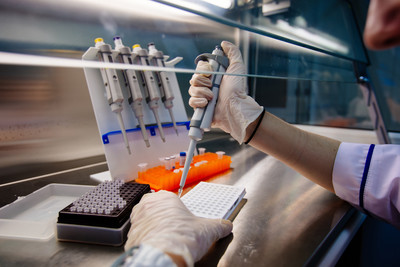
 Figure 1. A well-prepared project brief includes research question, sample details, assay preference, and bioinformatics needs.
Starting With the Research Question
The research question determines every subsequent decision in the project. Before listing samples or choosing an assay, define what you want to measure and why.
Write a concise statement that links biology to a measurable outcome:
- Are you comparing DNA methylation patterns between treated and untreated groups in a case-control study?
- Do you need to map chromatin accessibility changes across developmental stages in a time-course design?
- Are you profiling RNA modifications in response to a perturbation, and if so, what is the expected effect size?
The specificity of the question affects both the experimental design and the analysis strategy. A discovery-oriented question like "which loci differ between conditions" requires genome-wide coverage and a multiple-testing correction framework. A hypothesis-driven question like "does methylation at a specific promoter change" can be addressed with a targeted assay at lower cost.
Along with the question, specify the species and reference genome version. This matters because assay design, alignment parameters, and analysis tools differ between species. Human and mouse genomes have well-annotated references, while non-model organisms may require additional considerations during alignment and annotation. For plant species with large or polyploid genomes, for example, the provider may need to adjust the alignment strategy to handle multi-mapping reads and homeologous sequence divergence.
Also define your experimental groups and comparison design. A simple case-versus-control design needs fewer samples than a multi-condition time-course study, and the analysis pipeline differs accordingly. Common design structures include:
- Two-group comparison — treatment versus control with 3-5 biological replicates per group
- Paired or longitudinal design — same individuals sampled before and after intervention, requiring paired analysis
- Multi-factorial design — multiple variables such as treatment, time point, and tissue type, requiring interaction modeling
- Continuous or quantitative trait design — methylation correlated with a continuous phenotype, requiring regression-based analysis
The clearer the comparison structure, the more accurate the quote. If the study uses a less common design, such as a crossover or nested design, describe it explicitly so the provider can assess whether standard analysis pipelines support it.
Power and Replicate Planning
Statistical power in epigenomics studies depends on the number of biological replicates, the magnitude of the expected effect, and the variability of the measurement. While a formal power analysis is specific to each study, general guidelines help set expectations. For DNA methylation studies using WGBS or arrays, detecting a 10-20% methylation difference between groups typically requires at least 4-5 biological replicates per group for adequate power. For chromatin assays such as ChIP-seq, the ENCODE Consortium guidelines recommend at least 2 biological replicates with consistent signal patterns, with 3 or more preferred for differential analysis. Including these power considerations in the brief signals to the provider that the study design has been thought through and helps avoid underpowered projects.
Sample Information the Provider Needs
Sample details are the most practical part of the project brief. Providers need to know what you have, how much, and in what condition. The more precisely you describe your samples, the fewer follow-up questions the provider will need to ask.
Start with the sample type and format:
- Tissue samples — specify the tissue type, weight, and whether it is fresh-frozen or fixed. Fresh-frozen tissue is preferred for most epigenomics assays because fixation can introduce crosslinking artifacts that affect chromatin assays
- Cells — provide cell count, viability percentage, and whether they are fresh or cryopreserved. Cell viability above 85% is recommended for chromatin accessibility assays like ATAC-seq
- Purified DNA or RNA — include concentration (ng/µL), total amount (ng), A260/280 and A260/230 ratios, and storage buffer. High-molecular-weight DNA with A260/280 around 1.8 is the standard for methylation sequencing
- FFPE samples — note that these require specific library preparation protocols. Success rates vary by storage duration, fixation conditions, and DNA yield after extraction
- cfDNA from plasma or serum — specify the starting plasma volume, the cfDNA yield, and the fragment size distribution if measured. Low cfDNA yields may limit the number of library preparation attempts
Quality Metrics and Acceptance Criteria
Quality metrics determine whether a sample is suitable for a given assay. Including these in the brief helps the provider assess feasibility without requesting additional QC data.
| Assay Category | Key Quality Metrics | Minimum Requirement |
|---|---|---|
| DNA methylation (WGBS, EM-seq, RRBS) | A260/280, A260/230, molecular weight | A260/280 ≥ 1.7, A260/230 ≥ 1.8, HMW > 20 kb |
| DNA methylation (array) | A260/280, DNA quantity | ≥ 250 ng total DNA |
| ChIP-seq / CUT&Tag | Cell count, viability | ≥ 100,000 cells (ChIP), ≥ 10,000 cells (CUT&Tag) |
| ATAC-seq | Cell count, viability | ≥ 50,000 cells, viability > 85% |
| RNA-seq / MeRIP-seq | RIN/RQN, RNA quantity | RIN ≥ 7.0 (standard), RIN ≥ 7.5 (RNA modification) |
| Hi-C | Cell count, crosslinking condition | ≥ 1 million cells per sample |
The number of samples and biological replicates directly affects both cost and statistical power. Most providers recommend at least three to four biological replicates per group for epigenomics studies. Fewer replicates may still be feasible for pilot experiments, but the statistical limitations should be acknowledged upfront. Technical replicates are rarely necessary for well-established sequencing assays and add cost without proportional benefit.
Sample Storage and Shipping
Storage conditions and shipping logistics affect sample integrity and assay outcome. Include the storage buffer, temperature, and freeze-thaw history in the brief. Samples that have undergone multiple freeze-thaw cycles may show reduced DNA integrity, which is especially relevant for assays requiring high-molecular-weight DNA. For shipping, dry ice is the standard for most epigenomics samples. Providers need to know the expected arrival date to coordinate library preparation scheduling.
If you are working with challenging sample types — low input, degraded DNA, or precious clinical material — mention this explicitly in the brief. Assays differ in their tolerance to suboptimal samples. EM-seq, for example, preserves library complexity better than traditional bisulfite sequencing when starting from limited or damaged DNA because the enzymatic conversion step is gentler than bisulfite treatment.
 Figure 2. Sample type compatibility with common epigenomics assays — input requirements and quality considerations.
Choosing the Right Assay
The assay choice translates the biological question into a technical workflow. Selecting the right method early prevents costly rework and ensures the data generated can answer the question asked.
DNA Methylation Assays
DNA methylation assays fall into three categories by genomic coverage. Whole-genome bisulfite sequencing (WGBS) provides single-base resolution across the entire genome and is the method of choice for discovery studies in species with well-annotated genomes. It captures CpG, CHG, and CHH methylation contexts and enables differential methylation analysis at single-CpG or DMR resolution. The trade-off is cost — at standard 30× coverage, a human WGBS sample requires roughly 1.5 to 2 billion reads.
Reduced representation bisulfite sequencing (RRBS) targets CpG-dense regions by restriction enzyme digestion prior to bisulfite conversion and library preparation. It covers approximately 5-10% of CpG sites in the human genome, enriched in CpG islands and promoter regions at lower cost. RRBS is well suited for large cohort studies where genome-wide coverage is not required.
Enzymatic methyl-seq (EM-seq) uses enzymatic conversion instead of chemical bisulfite treatment. It preserves DNA integrity better than WGBS and produces more uniform coverage, particularly in GC-rich regions and at lower input amounts. EM-seq is increasingly the preferred choice for samples with limited or fragmented DNA.
Methylation arrays, such as the Illumina Infinium 935K platform, interrogate predefined CpG sites across the genome. They offer reproducible measurements, established analysis pipelines, and cost-efficient processing for large cohorts. Arrays are the dominant platform for human epigenome-wide association studies where the known regulatory regions are the primary focus.
| Method | Genomic Coverage | Typical Reads per Sample | Best For |
|---|---|---|---|
| WGBS | Whole genome | 1.5-2B (human, 30×) | Discovery, all contexts |
| EM-seq | Whole genome | 1.5-2B (human, 30×) | Low input, fragmented DNA |
| RRBS | CpG-dense regions (5-10%) | 10-20M | Promoter-focused studies |
| 935K Array | ~935K CpG sites | N/A (array-based) | Large cohorts, EWAS |
Chromatin Assays
Chromatin assays address different structural questions depending on the target. ChIP-seq maps protein-DNA interactions and histone modifications genome-wide, requiring antibodies validated for chromatin immunoprecipitation. The resolution and signal-to-noise ratio depend on fragment size selection, antibody quality, and sequencing depth. Histone marks with broad domains such as H3K27me3 or H3K9me3 typically require 20-30 million reads per sample, while transcription factors with narrow peaks such as CTCF or RNA Pol II require 40-50 million reads.
ATAC-seq profiles chromatin accessibility using Tn5 transposase to fragment and tag open chromatin regions. It requires fewer cells than ChIP-seq (50,000-100,000 per sample) and produces fragment distributions characteristic of nucleosome positioning. ATAC-seq is well suited for samples with limited cell numbers and for studies comparing chromatin states across conditions.
CUT&Tag offers a lower-input alternative to ChIP-seq, using a protein A-Tn5 fusion to target specific chromatin epitopes. It works with as few as 10,000 to 100,000 cells and produces low-background data with high signal-to-noise ratios. The lower sequencing depth requirement (5-10 million reads per sample) makes it cost-effective for large sample sets.
For 3D genome architecture, Hi-C captures chromatin interactions genome-wide by crosslinking, proximity ligation, and sequencing of interacting DNA fragments. The resolution of Hi-C data depends on sequencing depth. Low-resolution maps (1-5 million reads) support compartment assignment, while higher depths (100 million + reads) are required for TAD identification and loop detection.
RNA Modification Assays
RNA modification assays detect and quantify epitranscriptomic marks on RNA. MeRIP-seq uses antibody enrichment for m6A profiling and is the most widely adopted method for transcriptome-wide m6A mapping. It requires higher RNA input (typically 50-100 µg total RNA) and reports modification-enriched regions rather than single-nucleotide resolution.
ONT direct RNA sequencing reads native RNA molecules directly, detecting modifications through base-calling signal differences without antibody enrichment. It captures full-length transcript information and can detect multiple modification types simultaneously. The trade-offs include lower throughput than short-read methods and higher per-sample cost.
If your project spans multiple assay types — for example, integrating DNA methylation with chromatin accessibility and transcriptomic data — mention this in the brief. Multi-omics projects require coordinated data generation plans to ensure compatibility across data types. The provider can then design an analysis pipeline that handles cross-assay normalization and integrated interpretation.
Sequencing Depth and Bioinformatics
Sequencing depth determines how much data is generated per sample and directly affects the sensitivity of downstream analysis. Different assays have established depth standards based on community guidelines and provider experience.
| Assay | Recommended Depth | Typical Data per Sample |
|---|---|---|
| WGBS (human, 30×) | 1.5-2B reads | ~300 GB per sample |
| EM-seq (human, 30×) | 1.5-2B reads | ~300 GB per sample |
| RRBS | 10-20M reads | ~3-5 GB per sample |
| ChIP-seq (histone mark) | 20-30M reads | ~6-9 GB per sample |
| ChIP-seq (transcription factor) | 40-50M reads | ~12-15 GB per sample |
| ATAC-seq | 50M reads | ~15 GB per sample |
| CUT&Tag | 5-10M reads | ~2-3 GB per sample |
| Hi-C (TAD resolution) | 100-200M reads | ~30-60 GB per sample |
| MeRIP-seq | 40-60M reads | ~12-18 GB per sample |
Bioinformatics Scope
The analysis pipeline translates raw sequencing data into interpretable biological results. Standard deliverables typically include:
- Raw data QC — read quality assessment, adapter detection, and trimming
- Alignment — read mapping to the reference genome, duplicate marking, and quality filtering
- Feature detection — methylation calling, peak detection, or interaction binning depending on the assay
- Differential analysis — statistical testing between experimental groups with appropriate multiple-testing correction
- Annotation — feature annotation to genes, promoters, enhancers, and regulatory regions
- Visualization — coverage tracks, principal component plots, heatmaps, and volcano plots
Advanced analysis extends the pipeline to include multi-omics integration, motif and footprint analysis, pathway enrichment, or custom visualization tailored to the study's biological question. Some providers offer tiered bioinformatics packages, from basic alignment-only deliverables to fully customized analysis workflows.
Data storage is a practical consideration often overlooked in the initial quote request. Raw sequencing data can occupy substantial storage — a single human WGBS sample generates approximately 300 GB of raw FASTQ files. Clarifying data delivery format, storage duration, and long-term archiving plans during the quoting stage prevents unexpected costs later.
 Figure 3. Standard bioinformatics analysis pipeline for epigenomics sequencing data — from raw reads to interpretable results.
Timeline and Budget Considerations
Project timelines depend on sample complexity, assay type, and the scope of bioinformatics analysis. Library preparation and sequencing typically take four to eight weeks for most epigenomics assays, with chromatin assays often requiring more handling time than DNA methylation assays. Data analysis adds one to three weeks depending on complexity and provider workload.
Sample batching can reduce per-sample cost significantly. Most providers offer volume discounts for projects with 20 or more samples processed in a single batch. For large cohort studies, phased delivery — where samples are processed in multiple batches — allows interim data review before committing to the full set.
If your project has a fixed budget, mention the range in the brief. Providers can often recommend adjustments to sequencing depth, sample number, or analysis scope to match budget constraints. For example, reducing WGBS coverage from 30× to 15× may still suffice for detecting large methylation differences while halving the sequencing cost per sample.
Checklist for Your First Request
Before sending a project brief, confirm that the following items are included:
- Research question — a one-sentence biological question and study objective
- Species and reference genome — genome build and annotation version
- Experimental design — group structure, comparison design, and number of biological replicates
- Sample details — type, number, input amount, quality metrics, and storage conditions
- Preferred assay — WGBS, EM-seq, RRBS, ChIP-seq, ATAC-seq, Hi-C, MeRIP-seq, or other
- Sequencing requirements — read length, depth, and platform preference if applicable
- Bioinformatics scope — standard analysis, advanced analysis, or custom requirements
- Expected deliverables — FASTQ, BAM, methylation calls, peak files, and analysis reports
- Timeline and budget — target completion date, budget range, and any deadline constraints
Once the brief is complete, send it to the provider along with any existing QC data. Most providers will review the information within one to three business days and either provide a quote or request a consultation to refine the experimental design. Making the brief complete on the first attempt accelerates this process and ensures the quote reflects the full project scope.
FAQ
1) How much detail should I include in a project brief?
Include enough detail for the provider to assess feasibility and generate an accurate quote — research question, sample specifications, assay preference, and bioinformatics needs. One to two pages is typically sufficient.
2) Do I need to specify the assay type before requesting a quote?
Yes, specifying the assay type helps the provider tailor the quote to your needs. If you are unsure which assay is best, include your research question and sample details — the provider can recommend the most suitable method based on your biological question and sample constraints.
3) What if my samples have low quality or limited quantity?
Mention this in the brief. Some assays are more tolerant of challenging samples. EM-seq, for example, performs well with degraded or low-input DNA, and CUT&Tag can work with very low cell numbers. The provider may also recommend sample quality screening before committing to full library preparation.
4) Can I get a quote for bioinformatics analysis separately?
Yes. Most providers offer bioinformatics as a separate scope item. Including it in the initial brief ensures the quote covers the full workflow and avoids separate requests later. If you have in-house bioinformatics support, specify which analysis steps you will handle and which you need from the provider.
5) Does the provider need to know about downstream validation plans?
Including validation plans helps the provider design analysis that supports downstream steps. For example, if you plan to validate candidates by targeted bisulfite sequencing, the provider can ensure the differential methylation analysis uses appropriate thresholds and reporting formats compatible with assay design.
References
- Campagna MP, Xavier A, Lechner-Scott J, et al. "Epigenome-wide association studies: current knowledge, strategies and recommendations." Clinical Epigenetics. 2021; 13: 214.
- Arora I, Tollefsbol TO. "Computational methods and next-generation sequencing approaches to analyze epigenetics data: Profiling of methods and applications." Methods. 2021; 187: 92-103.
- ENCODE Consortium. "ENCODE Guidelines for ChIP-seq, ATAC-seq, and Related Assays." Updated 2023.
- Park K, Jeon MC, Kim B, Cha B, Kim JI. "Experimental development of the epigenomic library construction method to elucidate the epigenetic diversity and causal relationship between epigenome and transcriptome at a single-cell level." Genomics & Informatics. 2022; 20(1): e2.
Services mentioned in this article are provided for research use only and are not intended for clinical diagnosis, treatment, or personal health assessment.