m1A Mapping Methods Explained: m1A-MeRIP-seq vs m1A-quant-seq (How to Choose)
m1A (N1-methyladenosine) is an RNA methylation mark that can influence RNA structure and translation and shows up across multiple RNA classes (tRNA, rRNA, mRNA, and non-coding RNAs). In real projects, the tricky part isn't "Should we study m1A?"—it's picking a method that matches what you actually need to say in your Results section.
This guide compares two commonly used strategies—m1A-MeRIP-seq and m1A-quant-seq—in plain, decision-first language: what you get back (peaks vs single-base calls vs fractions), what can go wrong, and how to plan so you don't end up repeating the experiment.
The 30-Second Method Picker
In one line: m1A-MeRIP-seq tells you "where is m1A enriched," while m1A-quant-seq aims for "which base is modified, and what fraction of the RNA population carries it."
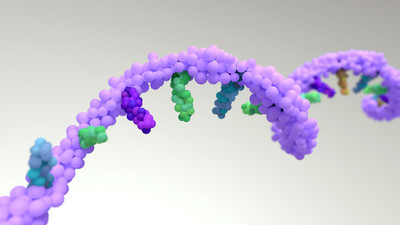
 Quick visual guide to m1A mapping readouts.
• Choose m1A-MeRIP-seq if you want a transcriptome-wide discovery scan that shows where m1A is enriched (peak/region-level signal).
• Choose m1A-quant-seq if you need single-nucleotide calls and want to estimate the modification fraction (stoichiometry) at specific sites.
• A practical workflow is often "wide → narrow": discovery first, then site-level confirmation/quantification on the few sites that matter.
If you want a broader warm-up before diving into method details, start here: What is RNA Methylation and How to Study
Start with the question you're trying to answer
Most method confusion disappears once you choose the smallest method that supports your end claim:
- "Where is m1A enriched across the transcriptome?"
You're looking for distribution patterns, candidate transcripts, and condition-level changes.
- "Which exact nucleotide is modified?"
You're doing mechanism work (or reviewer-proofing) and need site-level evidence.
- "Does the modification fraction change at a specific site?"
You care about stoichiometry (for example, a site shifting from low to high fraction), not just "a peak got taller."
- "What do my samples allow?"
Input amount and RNA integrity can decide faster than theory.
m1A-MeRIP-seq (antibody enrichment)
m1A-MeRIP-seq uses an m1A-specific antibody to pull down RNA fragments carrying m1A. You sequence both the IP (pulldown) and a matched Input control, then look for enriched regions along transcripts. In most projects, you interpret the output as peaks/regions rather than a definitive single-base call.
 m1A-MeRIP-seq principle workflow.
What you get back
- Peak lists (enriched regions) with transcript/gene annotations
- "Where it tends to show up" plots (metagene profiles, regional distribution)
- Differential peak analysis between conditions (when designed with replicates)
When it's a good fit
- You need a transcriptome-wide scan to prioritize candidates
- You're comparing conditions and want broad remodeling patterns
- You plan to follow up a shortlist of candidates with site-level methods
Common pitfalls (and how to avoid them)
- Antibody behavior matters. Batch differences and off-target binding can shift peaks, so controls and QC aren't optional. In the m1A field specifically, antibody cross-reactivity has been discussed as a real source of misleading signals—treat specificity as a planning constraint, not a footnote.
- Resolution is usually regional. Even if downstream analysis suggests candidate sites, enrichment happens on fragments, so avoid claiming "this exact base is modified" unless you have site-level confirmation.
Practical case example (traceable)
In an open-access Nucleic Acids Research paper, Gu and colleagues integrated m1A-MeRIP-seq with other assays to study m1A regulation in ocular melanoma. In their Materials and Methods, they report collecting 82 human ocular melanoma tissues and 28 normal nevus tissues, and they use multi-omics plus m1A-focused sequencing to connect m1A regulation to ALKBH3 and downstream targets.
(Reference listed below: Gu et al., Nucleic Acids Research, 2024.)
 Graphical abstract from Gu et al. (Nucleic Acids Research, 2024) illustrating a proposed m1A-related ALKBH3–SP100A–PML body regulatory model in ocular melanoma versus normal melanocytes.
If you want a MeRIP-style workflow refresher before designing a study, this is a helpful companion read: MeRIP-seq for Detecting RNA methylation: An Overview
m1A-quant-seq (reverse-transcription signature)
m1A-quant-seq is designed to call m1A at single-nucleotide resolution and estimate the modification fraction at each site, as long as you include appropriate controls and calibration.
m1A-quant-seq is built around a reverse-transcription signature: under defined conditions, m1A can cause characteristic RT behavior (such as mismatches and/or stops). By pairing the RT signal with appropriate controls (commonly including demethylase treatment and calibration strategies), the workflow is designed to identify m1A at single-nucleotide resolution and estimate the fraction of RNA molecules carrying m1A at that base.
 m1A-quant-seq principle workflow.
What you get back
- A site list (single-nucleotide positions)
- Site-level quantitative estimates (modification fraction), when supported by calibration/controls
- A cleaner claim path: "this base changes from X to Y," rather than "this region is enriched"
When it's a good fit
- You need a base-specific mechanism story
- You expect subtle changes that peaks might blur (or reviewers may question)
- You want stoichiometry (fraction) to be the biological variable you interpret
What to plan for (this is where projects succeed or fail)
- RNA integrity matters more. RT-signature methods are less forgiving of degraded RNA because the signal is read at base level.
- Your conclusions depend on calibration and filtering. Site-calling thresholds, background mutation rates, and control design should be decided up front, not after sequencing.
- Analysis is more specialized. Build in time for pipeline validation and clear reporting rules (what counts as a site, what counts as a change).
Practical case example (high-level only)
A Nature Methods study introduced a directed-evolution strategy to obtain a reverse transcriptase better suited to reading through m1A and producing an interpretable signal, enabling transcriptome-wide site-level mapping when paired with appropriate controls. For planning purposes, the key takeaway is the design logic: quant-seq-style workflows work when the modification is converted into a consistent sequencing signature, and controls define what portion of that signature is truly m1A.
Side-by-side comparison (decision-oriented)
What you're trying to learn
- "Where is m1A enriched?" → m1A-MeRIP-seq
- "Which base is modified?" → m1A-quant-seq
- "What fraction of the RNA is modified at that base?" → m1A-quant-seq (with calibration/controls)
Typical resolution
- m1A-MeRIP-seq: enriched regions/peaks (fragment/region level)
- m1A-quant-seq: single-nucleotide sites (site level)
Primary dependency
- m1A-MeRIP-seq: antibody specificity + enrichment consistency + Input control
- m1A-quant-seq: RT signature behavior + control design + calibration + calling thresholds
Cost and complexity (in practice)
- m1A-MeRIP-seq: generally simpler and faster to run as a discovery screen
- m1A-quant-seq: more moving parts; plan for additional QC and analysis time
A sane selection rule
- If your paper needs a sentence that contains an exact nucleotide position (or a fraction), don't rely on peaks alone.
Hands-on tips that prevent rework
- Don't treat controls as a checkbox
For enrichment methods, the Input library is the minimum. For site-level RT-signature methods, plan your demethylase and calibration strategy early—because "we'll fix it in analysis" rarely holds up.
- RNA quality is the silent deal-breaker
If you're pushing for site-level calls, protect RNA integrity end-to-end (collection → extraction → storage → fragmentation). If your RNA is borderline, a peak-level screen may be the safer first move.
- Replicates beat hero samples
Biological replicates make method-specific noise obvious. Without them, it's hard to tell whether you found biology or workflow variance—especially for antibody enrichment.
- Decide what "difference" means before sequencing
MeRIP differences are typically peak enrichment changes. Quant-seq differences are site-level fraction changes. Write your intended Results sentence now; it will tell you which workflow you actually need.
FAQ
- Can m1A-MeRIP-seq tell me the exact modified nucleotide?
Usually, treat it as peak/region-level evidence. If you need base-level claims, plan a site-level method (or targeted confirmation) for the shortlist of candidates.
- Why do people worry so much about antibody specificity?
Because enrichment is only as trustworthy as the antibody. Off-target binding and batch variability can shift peaks and inflate false positives, so validation and controls are part of the experiment—not an afterthought.
- What does "stoichiometry" mean in m1A-quant-seq?
It refers to the estimated fraction of RNA molecules methylated at a specific base. That's different from "signal is higher," and it's often closer to the biological question.
- Which method is better for low-input or difficult samples?
It depends on your RNA quality and your required readout. If you can't support site-level QC and calibration, a discovery-first enrichment plan can be more robust. If you must have site-level answers, prioritize RNA integrity and build in controls.
- Do I have to choose only one method?
Not at all. A common, efficient design is m1A-MeRIP-seq for discovery, followed by a site-level workflow (quant-seq-style or targeted validation) for the handful of sites you'll actually interpret mechanistically.
Conclusion
There isn't a single "best" m1A method—there's the method that supports your specific claim. If you need a transcriptome-wide discovery map, m1A-MeRIP-seq is often the most practical starting point. If your story depends on a specific nucleotide (and especially on a modification fraction), plan for an m1A-quant-seq-style, site-level workflow with controls and calibration designed up front.
CD Genomics supports m1A projects across the "discovery → validation" path, including experimental execution and bioinformatics reporting tailored to your question (research use only).
References
- Gu, X., et al. Histone lactylation-boosted ALKBH3 potentiates tumor progression and diminished promyelocytic leukemia protein nuclear condensates by m1A demethylation of SP100A. Nucleic Acids Research. 2024.
- Zhou, H., et al. Evolution of a reverse transcriptase to map N1-methyladenosine in human messenger RNA. Nature Methods. 2019.
- Grozhik, A. V., et al. (context for antibody specificity concerns) / Related discussion: Limited antibody specificity compromises epitranscriptomic analyses. Nature Communications. 2019.