PacBio Sequencing Empowers Mitochondrial Genome Research
At a glance:
- What are mitochondria? What are the characteristics of the mitochondrial genome?
- Workflow of Mitochondrial Genome Sequencing
- Applications of mitochondrial genome research
- What are the advantages of PacBio mitochondrial DNA sequencing?
What are mitochondria? What are the characteristics of the mitochondrial genome?
Mitochondria are the main site of aerobic respiration and the "energy factory" of the cell. Their main function is to produce ATP through respiration and provide universal molecular energy for cellular life activities.
A typical animal mitochondrion is a circular double-stranded DNA with a small genome, commonly around 15-16 kb, with small gene spacer regions, no introns, and overlapping genes. The human mitogenome is 16.5 kb, typically present at between 100 and 10,000 copies per cell on a cell type-specific basis.
In contrast to the compact animal mitochondrial genome, the plant mitochondrial genome is widely distributed in size, ranging from about 66 to 11,000 kb, with a complex structure, low gene density, and a large amount of editing at the RNA level.
In recent years, with the development and advancement of mtDNA sequencing technology, more and more mitochondrial genomes have been deciphered, and the importance of mitochondrial genomes has been gradually explored.
Workflow of Mitochondrial Genome Sequencing
- Extraction of genomic DNA using the CTAB method
- Fragmentation of DNA by mechanical interruption
- Fragmentation of fragmented DNA by fragment purification, end-repair, 3′-end addition, and sequencing junction ligation
- Sequencing of quality-checked libraries
- Sequencing data quality control
- Mitochondrial genome assembly
- Comparison of mitochondrial genomes of closely related species
- Complete mitochondrial genome sequence
- Genome annotation
Applications of mitochondrial genome research
Mitochondrial genomes are small, highly conserved, and relatively dense in gene content, while highly variable non-coding regions exist, making them an effective research tool for eukaryotic evolution, species identification, genetic diversity, and genetic breeding at present.
- In plant research, besides being involved in energy metabolism, mitochondrial genomes are often associated with plant fertility, and mitochondria also play an important role in plant development and stress resistance. Comparative analysis of mitochondrial genome sequence, structure and function can help reveal the complexity of plant mitochondrial genomes and provide a basis for resolving the classification and evolution of plant mitochondrial genomes and exploring the mechanism of cytoplasmic male sterility.
- In animal research, mitochondria play a key role in early embryonic development, and mitochondrial genomes are often used in studies related to animal population genetics and molecular phylogeny.
- In the medical field, the mitochondrial genome is an important source of cancer-driven mutations. Mitochondrial disease is a common genetic disorder and researchers often use the mitochondrial genome to study, diagnose and treat mitochondrial-related diseases.
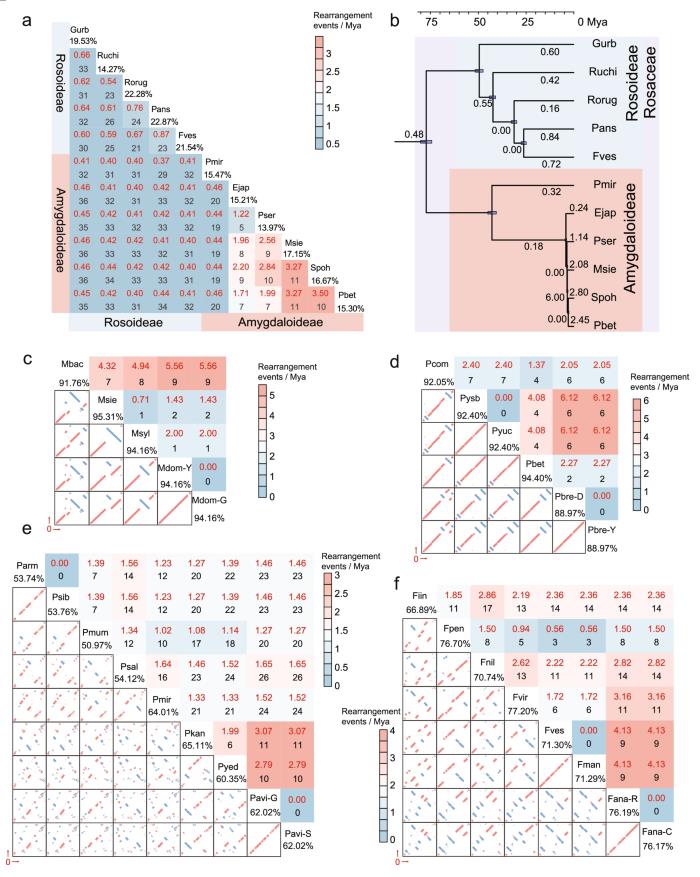 Rearrangement event and rate analysis of 38 Rosaceae mitogenomes (Sun M et al., 2021)
Although next-generation sequencing technology has been used for genome sequencing projects of cellular organelles such as mitochondria, long-read sequencing technology has propelled the mitochondrial genome to new heights with its undeniable advantages.
What are the advantages of PacBio mitochondrial DNA sequencing?
- PacBio library building without PCR amplification, non-preferential sequencing and uniform coverage, and the advantage of high accuracy of HiFi Reads (over 99.9% accuracy) can also effectively ensure the accuracy of mitochondrial assembly.
- HiFi Reads with long read length (up to 15 Kb or more) can effectively span long and complex regions, overcoming the challenge of highly repetitive and complex assembly of mitochondrial genomes and improving the continuity of assembly.
- Mitochondrial genomes are studied with low investment, and the triple sequencing data that have been done for nuclear genomes can also be utilized for secondary analysis studies, saving costs.
Genome assembly using PacBio HiFi Reads has become the first choice for high-quality genome mapping. HiFi Reads assembly can quickly obtain high-quality genome assembly results with many advantages such as high assembly efficiency, high accuracy and high continuity, and effectively solving nuclear genome. The assembly challenges including the difficulty of mitochondrial isolation, complex genome structure, many repetitive sequences and high heterogeneity have caused the study of mitogenomes to seriously lag behind that of nuclear genomes, especially the study of highly complex plant mitochondria, where the presence of highly enriched repetitive sequences and frequent recombination have seriously hindered the progress of accurate assembly.
Reference
- Sun M, Zhang M, Chen X, et al. Rearrangement and domestication as drivers of Rosaceae mitogenome plasticity. BMC Biology, 2022, 20(1):181.
For research purposes only, not intended for personal diagnosis, clinical testing, or health assessment