Long Read Sequencing for Human Research
Long-read sequencing technology makes it ideal for clinical applications in molecular diagnostics and therapeutic options due to its ability to assess large and complex regions of the genome. CD Genomics is a leading provider of customized solutions for long-read sequencing. Our third-generation sequencing platform provides an invaluable tool for precision medicine. Our ultimate goal is to advance human health.
Long-read sequencing is capable of generating sequence read lengths of tens of thousands of bases. Long-read sequencing is used to analyze both DNA and RNA, allowing researchers to explore the full scope of human genetic variation with a more comprehensive view of the genome, transcriptome, and epigenome than ever before. The accuracy, throughput, portability, and low cost of these methods make long-read sequencing an attractive tool for use in both basic research and clinical settings. Long-read sequencing technology is currently opening up new and exciting avenues for the diagnosis and treatment of intractable diseases such as genetic disorders, cancers, and infectious diseases. In order to integrate this technology into healthcare, funding is needed for sequencing equipment, technology development, workforce skill enhancement, and increased integration between academic centers of excellence, hospitals, and healthcare services.
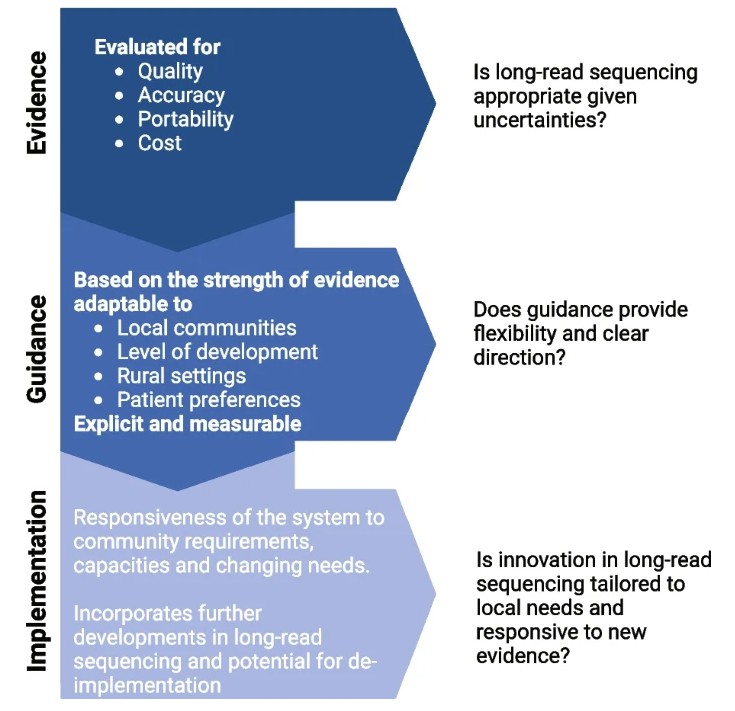 Fig. 1. Schematic pipeline for long-read sequencing implementation in evidence-based medicine. (Oehler et al., 2023)
Our Long Read Sequencing Solutions for Human Research
CD Genomics proudly offers long read sequencing solutions for human related research based on the PacBio SMRT sequencing and ONT Nanopore sequencing platforms. Our experts are committed to using long read sequencing to discover novel causative mutations in human diseases with previously unknown underlying genetic causes. The advantages of our long-read sequencing and its many applications in human genomics are ready to help you make the next great discovery.
We aim to help researchers with diagnosis, prognosis, and treatment selection for somatic diseases, tumors, transplants, and infectious diseases. Our long read sequencing can be used for the following human studies, including but not limited to:

Long Read Sequencing for Cancer Research
Structural variants in the cancer genome, similar to somatic mutations, can affect the function of oncogenes and oncogenes. Therefore, cancer patients need to be regularly screened for pathogenic structural variants. CD Genomics offers long-read sequencing technology to detect variants such as copy-balanced structural variants in cancer, providing you with the ability to detect many new structural variants that are missed when using short-read sequencing methods.

Long Read Sequencing for Infectious Disease Research
CD Genomics offers long-read sequencing technology for rapid detection of pathogens, including diagnosis of bacterial meningitis, bacterial lower respiratory tract infections, infective endocarditis, pneumonia, prosthetic joint infections, etc. Results are available in just a few hours, facilitating a potentially rapid response to the identification and management of disease sources and disease transmission.

Long Read Sequencing for Genetic Disease Research
CD Genomics can use long-read sequencing to characterize complex genomic rearrangements in individuals with inherited diseases. These disorders include autism spectrum disorders, Temple syndrome, congenital anomalies, glycogen storage disease type Ia, mental retardation and epilepsy, epilepsy, Parkinson's disease, Gaucher's disease, ataxia-telangiectasia, and severe immune disorders, etc.

Long Read Sequencing for Rare Disease Research
Methods such as microarrays, whole-exome, or short-read whole-genome sequencing can perform diagnostic tests for rare diseases, but they are not very effective. CD Genomics offers high-precision long-read sequencing to detect disease-causing variants and identify new disease-associated genes to help you better understand the genetic causes of rare diseases.

Long Read Sequencing for Neurological Disease Research
Neurological diseases have long affected human health. CD Genomics can use long-read sequencing to detect de novo and large copy number variants in protein coding to help scientists gain a more comprehensive understanding of the genetic basis of neurological diseases. These diseases include Huntington's disease, fragile X syndrome, cerebellar ataxia, and vestibular apraxia syndrome.

Long Read Sequencing for Transplantation
Long-read sequencing has become a valuable tool in the field of transplantation, especially in understanding the complex interactions between the donor and recipient immune systems. CD Genomics offers PacBio SMRT sequencing and ONT Nanopore sequencing to identify rare and complex human leukocyte antigen (HLA) alleles.

Long Read Sequencing for Gene Therapy
Our long-read sequencing can help you fully discover, design, and validate your gene therapy approach by designing full-length AAV sequencing-improved vectors, verifying that expression vectors express the desired transcripts, and confirming CRISPR-CAS9 gene editing results.

Long Read Sequencing for Pharmacogenomics
Pharmacogenomics (PGx) utilizes genomic information to assess an individual's response to certain medications.PGx can be used to predict adverse drug reactions or decreased efficacy, thereby improving health outcomes and reducing costs. Our long-read sequencing provides high-resolution insight into PGx loci, including pseudogenes, tandem repeats, and complex variants such as CNVs.

Long Read Sequencing for Population Genetics
Population genetics is the exploration of the distribution and variation of inherited traits within a population. It aims to understand the processes that shape the genetic composition of populations and allows examination of the impact of genetic variation on individual health, as well as the role of genetics in the development of complex traits, such as susceptibility to certain diseases.CD Genomics' long-read sequencing provides accurate and continuous DNA sequences, including structural variation and epigenetic insights, for population genetics studies.
Advantages of Long-Read Sequencing for Human Research
- Helps researchers and clinicians delve into molecular diagnostics and push the boundaries of precision medicine.
- Enables identification of large structural variants, stereotypic phasing of alleles, and differentiation of similar genomic regions to ensure accurate diagnostics and more personalized therapeutic approaches.
- Applications cover rare genetic diseases, oncology, infectious diseases, and more.
- Can facilitate early predictive testing, prediction, informed reproductive decision-making for at-risk family members, and the ability to provide timely and targeted treatment, leading to improved clinical outcomes.
CD Genomics is committed to exploiting the potential of long-read sequencing to ensure that our customers remain at the forefront of human related research. If you have any questions, please feel free to contact us. We look forward to working with you on projects of interest.
Reference
- Oehler, Josephine B., et al. "The application of long-read sequencing in clinical settings." Human genomics. 17.1 (2023): 73.
Related Services
PacBio SMRT Sequencing
Oxford Nanopore Sequencing
Human Genomics with Long-Read Sequencing
Population Evolution
For research purposes only, not intended for personal diagnosis, clinical testing, or health assessment