Applications of Human Mitochondrial DNA Sequencing
At a glance:
- Introduction
- Structure and Genetic Characteristics of Mitochondrial DNA
- Overview of Mitochondrial DNA Sequencing Technology
- Major Applications of Mitochondrial DNA Sequencing
- Conclusion
Introduction
Within nearly all eukaryotic organisms, cellular powerhouses known as mitochondria function as critical energy-generating structures. These specialized organelles convert biochemical substrates into usable cellular energy through a complex process called oxidative phosphorylation, synthesizing adenosine triphosphate (ATP) that fuels fundamental biological processes. Beyond their primary metabolic role, mitochondria possess a unique characteristic of harboring autonomous genetic material—specifically mitochondrial DNA (mtDNA). Scientific investigations into mitochondrial genetic components have illuminated sophisticated molecular mechanisms underlying cellular energetic transformations, simultaneously establishing foundational insights into the pathogenesis of mitochondrial-related genetic conditions and their potential therapeutic interpretations.
Structure and Genetic Characteristics of Mitochondrial DNA
Small Circular DNA Independent of Nuclear DNA
Unlike nuclear DNA, mtDNA is a small, circular DNA molecule, approximately 16,569 base pairs (bp) in length, much smaller than nuclear DNA. It contains 37 genes: 13 of these genes encode polypeptides involved in cellular energy metabolism, 22 encode transfer RNAs (tRNAs), and 2 encode ribosomal RNAs (rRNAs). These genes are responsible for synthesizing core proteins and RNAs within the cell, supporting mitochondrial energy conversion processes.
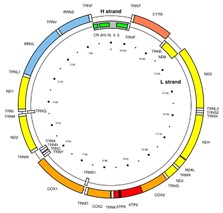 Figure 1.Structure of mtDNA.(Figure come from: https://en.wikipedia.org)
Maternal Inheritance and Lack of Recombination
mtDNA exhibits a distinct maternal inheritance pattern, meaning it is typically passed down from the mother to offspring, though in rare cases, paternal mtDNA may also be inherited. This maternal inheritance characteristic makes mtDNA highly valuable in family studies, especially when tracing ancestral genetic history. Moreover, mtDNA generally does not undergo recombination, with little to no exchange of genetic material during inheritance, which allows it to more stably retain its original genetic information.
High Mutation Rate and Association with Mitochondrial Diseases
Compared to nuclear DNA, mtDNA has a higher mutation rate. This is because mitochondria produce free radicals during energy generation, which can damage the DNA. The high mutation rate gives mtDNA unique value in genetic research but also links its mutations to various mitochondrial diseases. For instance, mitochondrial disorders such as Leigh syndrome and Kearns-Sayre syndrome are closely associated with mtDNA mutations.
Overview of Mitochondrial DNA Sequencing Technology
Development of Mitochondrial DNA Sequencing Technology
As an independent genetic material within cells, mtDNA's unique properties have made its study a critical topic in the fields of biology, medicine, and forensic science. With advancements in technology, mtDNA sequencing techniques have rapidly evolved from traditional methods to modern high-throughput technologies.
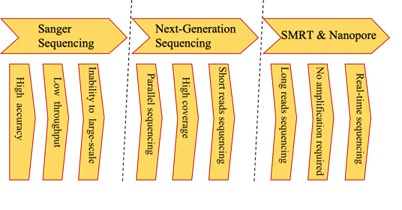 Figure2. Development of mitochondrial DNA sequencing technologies.
Technical Characteristics of mtDNA Sequencing
With the continuous advancement of mtDNA sequencing technology, researchers have become more efficient and precise in their work within this field. The technical characteristics of mtDNA sequencing are primarily reflected in the following aspects:
| Technical Feature | Description |
| High Coverage and Ability to Analyze Trace Samples | mtDNA sequencing can analyze trace amounts of samples with high coverage, particularly suitable for low-abundance clinical samples such as blood and saliva. High-throughput NGS technology ensures accurate genomic data. |
| Accuracy and High Resolution in Whole Genome Sequencing | Whole genome sequencing covers all 37 genes, providing high-resolution information that can identify low-frequency and heteroplasmic mutations, revealing the mechanisms of genetic diseases. |
| Deep Sequencing and Heteroplasmic Mutation Detection | Deep sequencing enables the detection of low-frequency heteroplasmic mutations, allowing for the assessment of mutation frequencies and providing a basis for disease diagnosis and clinical intervention. |
Major Applications of Mitochondrial DNA Sequencing
mtDNA sequencing is a powerful molecular biology tool with broad applications across multiple fields, particularly in disease research, genetics and population evolution, forensic identification, and reproductive medicine. Due to its high maternal inheritance, relatively independent genetic mechanisms, and frequent replication, mtDNA plays a crucial role in studies across various disciplines.
Disease Research and Diagnosis
Genetic Screening for Mitochondrial Disorders
Mitochondrial diseases are typically caused by mutations in mtDNA, which impair mitochondrial energy production and can lead to various systemic disorders. mtDNA sequencing can identify these genetic mutations, providing a basis for early diagnosis and prevention.
- Leber's Hereditary Optic Neuropathy (LHON): LHON is a vision-loss disease primarily inherited through the maternal line. LHON is often caused by specific mtDNA mutations (e.g., a mutation at the 14798 position). mtDNA screening, especially with next-generation sequencing (NGS) technology, can help with early diagnosis of LHON, allowing for appropriate treatment and management plans for patients.
- mtDNA Mutation Analysis in Cancer: In cancer research, mtDNA mutations are a key area of study. Cancer cells often exhibit abnormal mitochondrial function, including mtDNA mutations. Analyzing mtDNA mutations in cancerous tissues can reveal the mechanisms of cancer development and provide new biomarkers for cancer diagnosis and targeted therapy.
Neurodegenerative Disease Research
Neurodegenerative diseases such as Alzheimer's disease (AD) and Parkinson's disease (PD) are closely linked to mitochondrial dysfunction. Studies have shown that mutations in mtDNA and mitochondrial dysfunction may be early markers of these diseases. Sequencing mtDNA from patients can provide new insights into the disease mechanisms and assist in developing novel diagnostic methods and treatment strategies.
Mitochondrial Dysfunction and Metabolic Diseases
Metabolic diseases such as Type 2 diabetes and non-alcoholic fatty liver disease (NAFLD) are closely associated with mitochondrial dysfunction. Problems with mitochondrial energy metabolism can lead to insulin resistance and fat accumulation, worsening the progression of these diseases. By analyzing mtDNA, researchers can uncover the genetic background of these diseases, help predict individual disease risk, and provide a foundation for therapeutic strategies.
Genetics and Population Evolution Studies
Exploration of Maternal Inheritance
Mitochondrial DNA (mtDNA) exhibits maternal inheritance, making it a key tool in studying human migration and population origins.
- mtDNA Markers in Human Migration and Origins Studies :By analyzing mtDNA markers from different populations, researchers can trace human migration paths and origins. For instance, specific mtDNA haplogroups can reveal the routes through which human ancestors migrated from Africa to other continents. Through mtDNA analysis, scientists are able to reconstruct migration patterns in human history, enhancing our understanding of human evolution.
- Analysis of mtDNA Haplogroups in Different Populations :Differences in mtDNA among populations can help explore genetic diversity and population relationships. By analyzing mtDNA haplogroups across global populations, researchers can uncover migration and gene flow patterns in human history.
Applications in Ancient DNA Research
mtDNA also plays a crucial role in ancient DNA studies, particularly in archaeology and evolutionary biology.
- Extraction and Analysis of mtDNA from Archaeological Sites
In archaeology, mtDNA is commonly used to extract and analyze genetic information from ancient remains. For example, mtDNA analysis of remains discovered at ancient sites helps determine their ethnic background, population affiliation, and the lifestyles of ancient humans. The high variability of mtDNA makes it an ideal material for studying ancient DNA.
- Time-Scale Inferences in Evolutionary Biology
mtDNA variation can help scientists infer evolutionary relationships between species or human populations and construct evolutionary histories over time. By analyzing ancient DNA samples, researchers can more precisely map the evolutionary trajectories of species and trace human migration histories.
Forensic Identification and Individual Recognition
Application of mtDNA in Forensic Samples
In forensic science, mitochondrial DNA (mtDNA) sequencing plays a critical role, particularly in identity verification and sample identification.
- Identification of Ancient Remains:mtDNA is commonly used for identifying ancient remains. In both archaeology and forensic science, the uniqueness and higher stability of mtDNA make it an essential tool for identifying ancient remains. For example, by analyzing the mtDNA of ancient remains, forensic experts can determine the sex, ethnicity, and genetic relationship of these remains to modern humans.
- mtDNA Analysis of Hair, Bones, and Nails:In criminal cases, forensic samples such as hair, bones, and nails are often crucial for identification. Due to the high copy number of mtDNA, it can provide valuable genetic information even when the sample is highly degraded. This makes mtDNA a key tool for identifying individuals in criminal investigations.
Conclusion
Mitochondrial DNA (mtDNA) sequencing plays a crucial role across multiple fields, from disease research and evolutionary biology to forensic identification, providing a key tool for gaining deeper insights into human health, disease mechanisms, and biological evolution. In disease research, mtDNA sequencing has helped uncover the molecular mechanisms of mitochondrial genetic disorders, neurodegenerative diseases, cancer, and more, advancing early diagnosis and precision therapies. Additionally, the application of mtDNA in genetics, population evolution, and ancient DNA research has provided invaluable clues for tracing human migration and ancestral genetics. In forensic identification, mtDNA's maternal inheritance pattern has been successfully utilized for identity verification and criminal investigations. Furthermore, the potential applications of mtDNA in reproductive medicine, especially in preventing maternally inherited diseases, show great promise.
With ongoing technological advancements, particularly the development of PacBio SMRT sequencing technology, the accuracy and comprehensiveness of mtDNA sequencing have been significantly enhanced. CD Genomics offers PacBio SMRT technology, enabling high-accuracy full-length mtDNA sequencing, which greatly optimizes mutation detection and heterogeneity analysis, as well as improving sequencing depth and efficiency. Our comprehensive solutions, which include DNA extraction, library preparation, sequencing, and data analysis, are tailored to meet the needs of various research projects, helping accelerate the scientific progress of our clients.
References
- Luo, Shiyu et al. "Biparental Inheritance of Mitochondrial DNA in Humans." Proceedings of the National Academy of Sciences of the United States of America vol. 115,51 (2018): 13039-13044. https://doi.org/10.1073/pnas.1810946115
- Habbane, Mouna et al. "Human Mitochondrial DNA: Particularities and Diseases." Biomedicines vol. 9,10 1364. 1 Oct. 2021, https://doi.org/10.3390/biomedicines9101364
For research purposes only, not intended for personal diagnosis, clinical testing, or health assessment