
ESCAPE-seq for Neoantigen Research: How Exon-Skipping Events Expand Immunotherapy Target Discovery
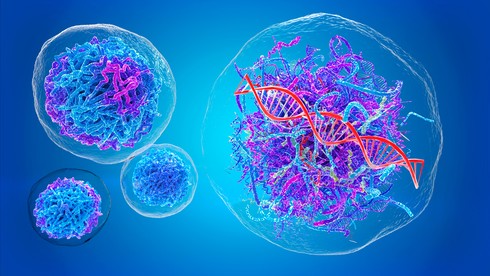
 Figure 1: Exon-skipping events in cancer cells generate frameshifted peptide sequences that can be presented on HLA molecules as tumor-specific neoantigens, expanding the targetable landscape for immunotherapy research.
Neoantigen discovery pipelines have historically centered on point mutations, but RNA splicing errors — particularly exon skipping — generate a largely untapped reservoir of tumor-specific peptides. ESCAPE-seq, a massively parallel antigen presentation screening platform, now enables experimental validation of these candidates at a scale that computational prediction alone cannot match. This article examines how ESCAPE-seq can be applied to exon-skipping neoantigen research and what the approach means for immunotherapy target discovery.
TL;DR
- Exon-skipping events produce frameshifted peptide sequences that are often tumor-specific and highly immunogenic, but most neoantigen pipelines lack the tools to validate them.
- ESCAPE-seq experimentally screens tens of thousands of peptide-HLA combinations in a single experiment, quantifying presentation efficiency through sequencing-based E-scores.
- A 2025 Nature Genetics study using ESCAPE-seq screened 75,000+ peptide-HLA combinations across 50 alleles covering 90% of the global population, revealing public neoantigens and HLA-C-restricted epitopes missed by prediction tools.
- Exon-skipping neoantigens are now being targeted in TCR-engineered T cell therapies, with functional proof-of-concept in AML and pediatric glioma models.
- Researchers can combine computational prediction (SPLICE-neo, splice2neo) with ESCAPE-seq validation to build a discovery pipeline for splicing-derived immunotherapy targets.
The Exon-Skipping Blind Spot
Most neoantigen discovery begins with whole-exome sequencing — an approach that, by design, captures only the protein-coding genome. Mutations in exonic sequences are identified, peptides are predicted to bind MHC molecules, and candidates are triaged for further testing. This pipeline has produced validated immunogenic targets, but it operates within a narrow frame: it assumes neoantigens come from single-nucleotide variants or small indels.
The blind spot is large. RNA splicing errors — particularly exon skipping — generate tumor-specific transcripts that never appear in genomic DNA sequencing data. When an exon is skipped, the resulting mRNA may undergo a frameshift, producing a peptide sequence entirely unrelated to the wild-type protein. These frameshifted peptides are genuinely foreign to the immune system and, in many cases, are shared across patients who harbor the same splicing lesion.
Researchers have known about splicing-derived neoantigens for years, but the field faced a practical bottleneck. Computational prediction tools struggled to distinguish which skipping events actually generate peptides that reach the cell surface. Without experimental validation, most candidates remained speculative. That bottleneck is now addressable with massively parallel screening platforms.
A growing body of evidence, reviewed comprehensively in a 2026 Biomarker Research article, has established that alternative splicing — and exon skipping in particular — represents one of the most prevalent sources of tumor-specific antigens, especially in cancers with low mutational burden such as glioblastoma and pediatric solid tumors.
Researchers studying tumor transcriptomes can leverage transcriptome sequencing to detect exon-skipping events, but identifying the event is only the first step. The second step — determining whether the resulting peptide is presented on HLA molecules — has traditionally been the harder half of the problem.
What ESCAPE-seq Measures
ESCAPE-seq (Enhanced Single-Chain Antigen Presentation Sequencing) addresses this validation gap directly. Instead of relying on computational algorithms to predict peptide-MHC binding, it measures physical peptide presentation on the cell surface using a sequencing-based readout.
The core design uses a single-chain trimer (SCT) in which the candidate peptide, β2-microglobulin, and the HLA heavy chain are linked as a single polypeptide. Only when the peptide binds stably within the HLA groove does the SCT fold correctly and reach the cell surface. Barcodes embedded in the construct allow every peptide-HLA combination to be tracked by high-throughput sequencing, and a quantitative E-score reflects presentation efficiency.
This approach generates several categories of biological information for each peptide-HLA pair:
| Category | Definition | Research Value |
|---|---|---|
| Mutation-only (WT⁻ / Mut⁺) | Peptide presented only in its mutated form | High-priority neoantigen — no central tolerance risk |
| Shared display (WT⁺ / Mut⁺) | Both wild-type and mutant peptides are presented | Potential for cross-reactive T cell responses |
| Disrupted binding (WT⁺ / Mut⁻) | Mutation abrogates presentation | May reflect immune evasion mechanism |
| No display (WT⁻ / Mut⁻) | Neither form is presented | Candidate excluded from further study |
For exon-skipping neoantigens, the analysis is analogous: the skipped-isoform peptide is the "mutant" form, and the wild-type full-length peptide serves as the comparator. A mutation-only result — where the skipped peptide is presented but the wild-type counterpart is not — would indicate a genuinely tumor-specific epitope.
CD Genomics provides a full ESCAPE-seq service that supports custom peptide library design, multiple HLA allele formats, and bioinformatics analysis including E-score calculation and comparative presentation profiling.
 Figure 2: ESCAPE-seq workflow — from peptide library design and single-chain trimer construction to sequencing-based quantification of peptide-HLA presentation efficiency via E-scores.
75,000 Combinations in One Experiment
The scale of ESCAPE-seq was demonstrated in a landmark 2025 study published in Nature Genetics by Shi, Simon, Satpathy, Yu, Chang and colleagues. The team constructed libraries covering 1,500 peptides — including 92 oncogenic hotspot mutations and 31 oncogenic fusions — and screened them across 50 HLA-A, HLA-B, and HLA-C alleles representing approximately 90% of the global population. In total, more than 75,000 peptide-HLA combinations were assessed in a single experimental run.
The results revealed several categories of immunologically relevant findings:
Public neoantigens. Several hotspot mutations, including EGFR(T790M) and MED12(G44V), were presented across 20 or more HLA alleles. These "public" neoantigens are attractive for off-the-shelf immunotherapeutic development because they are shared across large patient populations regardless of HLA type.
HLA-C epitopes missed by prediction. A notable finding was that computational tools such as NetMHC systematically underperform for HLA-C-restricted peptides. ESCAPE-seq identified presentation of KRAS G12V, G12C, and G12D by multiple HLA-C alleles that prediction algorithms had classified as non-binders. This suggests that the true neoantigen landscape is broader than what in silico methods currently capture.
Quantitative comparisons across alleles. The E-score metric allowed the authors to compare presentation efficiency across different HLA alleles for the same peptide, revealing that some mutations are presented strongly on certain alleles but weakly on others — information that could guide patient stratification in personalized vaccine trials.
 Figure 3: ESCAPE-seq screening of 1,500 peptides across 50 HLA alleles — over 75,000 peptide-HLA combinations — identifying public neoantigens and HLA-C-restricted epitopes from oncogenic hotspots.
Exon-Skipping Antigens That Make the Cut
While the original ESCAPE-seq study focused on point mutations and fusions, parallel work by several groups has established that exon-skipping events generate neoantigens with comparable — and in some cases superior — immunogenic properties.
TCR engineering against mis-spliced peptides
In a 2025 Cell paper, Kim, Crosse, Abdel-Wahab and colleagues identified neoantigens derived from recurrent mis-splicing events in splicing factor-mutant myeloid leukemias. Mutations in SRSF2 and ZRSR2 — common drivers of spliceosomal dysfunction in AML and MDS — produce consistent exon-skipping events in genes such as CLK3 and RHOT2. Using feature-barcoded peptide-MHC dextramers, the team isolated TCRs specific to these mis-splicing-derived neoantigens from healthy donors and from patients. T cells engineered with these TCRs showed specific recognition and cytotoxic activity against SRSF2-mutant leukemia cells in vivo.
This study provided experimental proof that exon-skipping neoantigens can serve as functional immunotherapy targets and are not merely bioinformatic predictions.
Microexon skipping in high-grade gliomas
A separate 2025 study in Cell Reports by Sehgal and colleagues examined pediatric high-grade gliomas (pHGG) — a cancer type with very low mutational burden and few conventional neoantigen candidates. The researchers found pervasive skipping of microexons (≤30 nucleotides) in L1-IgCAM family members, particularly NRCAM. The Δex5Δex19 NRCAM isoform, produced by skipping two microexons, was present in virtually every pHGG sample and was essential for tumor cell migration and invasion.
Crucially, the skipped isoform generates a tumor-specific cell surface proteoform. The team developed a monoclonal antibody selective for this isoform, enabling T-cell killing via an FcRI-based universal immune receptor. This demonstrates that exon-skipping events can yield highly tumor-specific, targetable surface molecules even in cancers with very few point mutations.
Computational tools feeding the pipeline
Several computational tools have been developed specifically for identifying splicing-derived neoantigens. Wickland and colleagues published SPLICE-neo in the Journal for ImmunoTherapy of Cancer (2024), a module that identifies neoantigens from splice-site DNA mutations and de novo RNA aberrant splicing, including multi-exon skipping events. In a pan-cancer analysis of 11,892 TCGA tumors, multiple splicing neoantigens showed stronger predicted HLA binding than influenza-derived positive controls. Lang and colleagues published splice2neo in Bioinformatics Advances (2024), which integrates predicted splice effects from somatic mutations with tumor RNA-seq data and predicted an average of 1.7 tumor-specific splice junctions per melanoma patient.
These tools generate candidate lists that can be fed directly into ESCAPE-seq for experimental validation — creating a pipeline that combines computational breadth with functional confirmation.
Researchers interested in the immune context of these neoantigens can use tumor microenvironment profiling to characterize the T cell landscape surrounding splicing-derived epitopes.
From Prediction to Validation
For research groups building a neoantigen discovery pipeline that includes exon-skipping candidates, the practical question is how to move from computational output to experimentally validated targets.
The workflow looks roughly like this:
- Step 1 — RNA-seq and splice event detection. Identify exon-skipping events using standard tools (rMATS-turbo, MAJIQ) from tumor RNA-seq data. Prioritize events that cause frameshifts and have high tumor specificity.
- Step 2 — Neoantigen prediction. Apply SPLICE-neo or splice2neo to generate peptide candidates from the skipping events. Filter by predicted MHC binding affinity (NetMHC, MHCflurry).
- Step 3 — ESCAPE-seq validation. Design SCT libraries encoding the top 100–500 candidate skipped-isoform peptides. Screen across relevant HLA alleles for the target population. Rank candidates by E-score and mutation-only classification.
- Step 4 — T cell functional testing. For validated candidates, generate peptide-MHC multimers to screen patient T cells or engineer TCRs for functional characterization.
The following table summarizes the main considerations when designing an ESCAPE-seq experiment for exon-skipping candidates:
| Parameter | Recommendation | Rationale |
|---|---|---|
| Library size | 100–1,000 peptides per HLA allele | Balances throughput with biological relevance |
| HLA allele selection | 8–15 alleles covering common haplotypes in target population | Broader coverage maximizes public neoantigen discovery |
| Controls | Wild-type full-length peptides for each skipped exon | Enables mutation-only (WT⁻/Mut⁺) classification |
| Replicates | 2–3 technical replicates | Improves E-score reliability |
| Validation tier | Top 10–20% of candidates by E-score | Focuses functional testing resources |
Researchers planning such a study can explore the cancer panel sequencing service for orthogonal genomic characterization alongside the immunological screening.
 Figure 4: Integrated pipeline for exon-skipping neoantigen discovery — from RNA-seq and computational prediction through ESCAPE-seq validation to T cell functional testing.
The Next Few Years
The convergence of three trends — broad availability of tumor RNA-seq data, maturing computational tools for splicing neoantigen prediction, and experimental validation platforms like ESCAPE-seq — is opening a new chapter in neoantigen research.
Off-the-shelf TCR-T therapies from shared neoantigens. The discovery that certain mis-splicing events recur across patients with the same splicing factor mutations raises the possibility of "public" TCR-T therapies that target shared neoantigens without requiring personalized manufacturing. The Kim et al. study demonstrated proof-of-concept in AML; extending this approach to other spliceosome-mutant cancers (MDS, CMML, uveal melanoma, some lung adenocarcinomas) is a natural next step.
Bridging computational prediction and functional validation. The gap between the hundreds of candidate neoantigens predicted by computational tools and the handful that are experimentally validated remains wide. ESCAPE-seq can help bridge this gap by providing a medium-throughput functional filter between in silico prediction and low-throughput T cell assays. As the cost of SCT library synthesis decreases, running validation screens for 1,000+ peptides per HLA allele will become standard practice in neoantigen discovery projects.
Splicing modulation as a complementary strategy. An emerging concept is the use of splicing-modulating agents — small molecules or antisense oligonucleotides — to induce specific exon-skipping events in tumors, thereby generating neoantigens de novo. Preclinical work published in Trends in Cancer (2025) has shown that CRISPR-mediated exon skipping can create immunogenic frameshift peptides and sensitize tumors to immune checkpoint blockade. If this approach translates, ESCAPE-seq could serve as the screening platform to identify which induced skipping events produce the most immunogenic peptides.
FAQ
How does ESCAPE-seq differ from mass spectrometry-based immunopeptidomics?
Mass spectrometry directly identifies peptides eluted from cell surface MHC molecules, providing an unbiased snapshot of the presented immunopeptidome. ESCAPE-seq takes a targeted approach — it screens predefined peptide libraries and quantifies presentation efficiency for each. The two methods are complementary: MS discovers what is naturally presented, while ESCAPE-seq systematically tests hypotheses about specific candidates.
Can ESCAPE-seq distinguish between exon-skipping and other types of alternative splicing?
ESCAPE-seq does not detect splicing events itself. It screens peptides that researchers design based on predicted splicing outcomes. If a skipped exon produces a novel peptide sequence, that peptide can be encoded in the SCT library and tested. The detection of the skipping event itself requires RNA-seq and splice-aware bioinformatics.
How many exon-skipping neoantigens typically pass validation in a screen?
This depends on the tumor type and the quality of computational pre-filtering. In melanoma cohorts using splice2neo, approximately 1–2 predicted splice junctions per patient are detected with high confidence. Of those that enter ESCAPE-seq validation, roughly 10–30% typically show detectable HLA presentation. Rates vary significantly between HLA alleles and peptide library designs.
What sample types and data are needed to start an ESCAPE-seq study?
The primary input is a list of candidate peptide sequences (derived from tumor RNA-seq or from public mutation databases). No tumor tissue is required for the ESCAPE-seq screen itself — the SCT constructs are expressed in cell lines. Tumor material is needed upstream for RNA-seq-based splicing analysis and downstream for T cell functional testing.
Is ESCAPE-seq compatible with neoantigen vaccine development?
Yes. ESCAPE-seq can identify peptides that are stably presented on HLA molecules and are mutation-only (not presented in wild-type form). These candidates are directly suitable for inclusion in mRNA or peptide-based vaccine formulations. The quantitative nature of the E-score also helps rank candidates by presentation efficiency.
References
- Shi Q, Simon EP, Cimen Bozkus C, et al. Massively parallel immunopeptidome by DNA sequencing provides insights into cancer antigen presentation. Nature Genetics. 2025;57:2062-2073. DOI: 10.1038/s41588-025-02268-1
- Kim WJ, Crosse EI, De Neef EJ, et al. Mis-splicing-derived neoantigens and cognate TCRs in splicing factor mutant leukemias. Cell. 2025;188(13):3422-3440. DOI: 10.1016/j.cell.2025.03.047
- Wickland DP, et al. Comprehensive profiling of cancer neoantigens from aberrant RNA splicing. Journal for ImmunoTherapy of Cancer. 2024;12:e008988. DOI: 10.1136/jitc-2024-008988
- Lang F, et al. Prediction of tumor-specific splicing from somatic mutations as a source of neoantigen candidates. Bioinformatics Advances. 2024;4(1):vbae080. DOI: 10.1093/bioadv/vbae080
- Sehgal P, et al. NRCAM variant defined by microexon skipping is a targetable cell surface proteoform in high-grade gliomas. Cell Reports. 2025;44(8):116099. DOI: 10.1016/j.celrep.2025.116099
- Lv Y-H, He Y-C, Dai X-Y, et al. Alternative splicing: from tumorigenesis to neoantigen-mediated cancer immunotherapy. Biomarker Research. 2026;14:4. DOI: 10.1186/s40364-025-00877-w
- Huang P, Wen F, Tuerhong N, et al. Neoantigens in cancer immunotherapy: focusing on alternative splicing. Frontiers in Immunology. 2024;15:1437774. DOI: 10.3389/fimmu.2024.1437774
- Rosenberg-Mogilevsky A, Siegfried Z, Karni R. Generation of tumor neoantigens by RNA splicing perturbation. Trends in Cancer. 2025;11(1):12-24. DOI: 10.1016/j.trecan.2024.10.008