eccDNA 101: Biogenesis, Classes, and Why It Matters for Human Disease
eccDNA, or extrachromosomal circular DNA in humans, is a form of circular DNA that is cut from chromosomes and re-joined as a loop. In this eccDNA 101 guide, we explain what eccDNA is, how eccDNA is formed in human cells, the main eccDNA classes (from microDNA to ecDNA), and why eccDNA in cancer has become a key read-out of genome instability and tumor evolution.
TL;DR – What is eccDNA in humans (in one minute)?
- eccDNA is circular DNA derived from chromosomes, but it lives outside them and lacks centromeres.
- It forms when DNA repair or replication goes wrong, creating circular fragments that can persist and sometimes amplify genes.
- Different eccDNA classes exist, including microDNA, telomeric circles, repeat-rich circles, and large oncogenic ecDNA.
- eccDNA in cancer and other diseases offers new ways to study gene amplification, therapy resistance, aging, and immune activation.
- Dedicated eccDNA sequencing (e.g., Circle-seq) and bioinformatics services can turn these small circles into actionable data for your project.

What is eccDNA (extrachromosomal circular DNA in humans)?
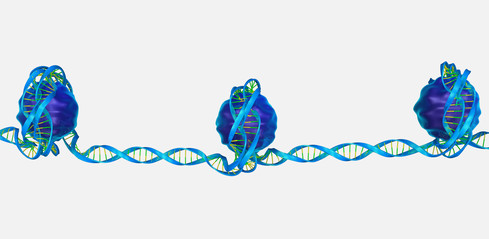
eccDNA, or extrachromosomal circular DNA, is any circular DNA molecule derived from the nuclear genome that exists outside the linear chromosomes. It is not a plasmid and not mitochondrial DNA, but circular DNA that originates from the cell's own chromosomes.
At a structural level, eccDNA has three key features:
- Closed circular topology – the ends of the DNA molecule are joined, forming a loop.
- Lack of centromere – eccDNA cannot segregate like chromosomes during mitosis.
- Variable size and gene content – eccDNA can be a few hundred base pairs or several megabases, with or without coding genes.
Because eccDNA lacks a centromere, it segregates randomly when cells divide. This randomness means:
- Different daughter cells can inherit different eccDNA copies.
- Copy number of a gene on eccDNA can change quickly under selective pressure.
For human disease research, this matters because eccDNA can:
- Carry oncogenes or drug-resistance genes in tumors.
- Contain regulatory elements that alter gene expression.
- Provide a dynamic layer of genome variability beyond classic mutations and copy-number changes.
As high-throughput sequencing matured, the field shifted from isolated case reports of "odd circles" to systematic profiling of eccDNA in humans, including normal tissues, cancer samples, and blood-derived cell-free DNA.
How is eccDNA formed in human cells? Biogenesis mechanisms
eccDNA is formed when fragments of chromosomal DNA are cut out and ligated into circles, often during routine DNA repair, replication stress, or recombination in repetitive regions.
 Schematic overview of eccDNA/ecDNA-derived genomic plasticity. Panels (a) and (b) illustrate how DNA breaks, repair pathways and R-loop formation can generate extrachromosomal circular DNA and amplify genomic segments. (Schmeer C. et al. (2020) International Journal of Molecular Sciences)
Several non-exclusive mechanisms likely contribute:
- Double-strand break mis-repair
When the DNA double helix breaks, repair pathways rejoin the ends. Inaccurate re-ligation, especially via microhomology-mediated end joining, can loop out small fragments and create circular DNA.
- Replication stress and broken forks
Collapsed replication forks and breakage–fusion–bridge cycles can generate large, rearranged DNA fragments. Some of these fragments can circularize and become stable eccDNA or ecDNA.
- Recombination in repetitive or tandem regions
Tandem repeats, satellite DNA, and copy-number variable loci are prone to unequal recombination. This process can excise repeat units that self-ligate into eccDNA.
- Transposon activity and mobile elements
Transposable elements can cut and reinsert themselves. In some contexts, their activity leaves behind circular intermediates or helps generate circles from flanking regions.
- Telomere dysfunction and recombination
At chromosome ends, telomere recombination events can produce telomeric circles (t-circles and C-circles), which are linked to alternative lengthening of telomeres (ALT).
From a practical point of view, biogenesis is context-dependent:
- Highly proliferative or stressed cells often show more eccDNA.
- Genotoxic treatments (e.g., some chemotherapies, radiation) can alter the eccDNA profile.
- Different tissues may favor distinct mechanisms, influencing which eccDNA classes dominate.
For experimental design, it is useful to record treatment history, passage number, and stress conditions of your samples, because these factors can strongly shape the eccDNA landscape you observe.
Main classes of eccDNA: from microDNA to oncogenic ecDNA
Researchers typically classify eccDNA by size and content. This helps distinguish by-products of normal DNA turnover from circles with clear functional impact, such as oncogene-amplifying ecDNA.
 Classification frameworks for extrachromosomal circular DNA (eccDNA), integrating size-based categories (e.g., microDNA, spcDNA, telomeric circles, ERCs, ecDNA) with gene-content and functional classes (incomplete-gene eccDNA, complete-gene eccDNA, and polygenic ecDNA, as well as naive vs acquired eccDNA). (Shi B. et al. (2025) Theranostics)
A simplified comparison looks like this:
| eccDNA class | Typical size | Content focus | Common context |
|---|---|---|---|
| microDNA / small eccDNA | < 1–2 kb | CpG islands, exons, UTRs | Normal tissues, plasma, cancer |
| Telomeric circles | few kb, telomeric | Telomere repeats (TTAGGG)n | ALT tumors, telomere maintenance |
| Repeat-rich eccDNA | variable | Satellites, transposons | Stress, genome instability |
| ecDNA (oncogenic) | 100 kb–Mb | Oncogenes, enhancers, repeats | Many solid tumors |
microDNA and small eccDNAs
microDNA refers to short eccDNAs, often a few hundred base pairs, enriched near:
- CpG islands
- Exons and untranslated regions (UTRs)
- Regions with active chromatin marks
They likely arise from routine DNA repair, chromatin remodeling, and transcription-associated DNA breaks. In many samples, microDNA is numerically the dominant eccDNA class.
Key practical note: microDNA can be strongly influenced by sample handling and nuclease activity. Rapid processing and consistent protocols help keep technical noise under control when comparing cohorts.
Telomeric circles and rDNA-derived eccDNA
- Telomeric circles (t-circles, C-circles) form when telomere repeats undergo recombination. They are closely linked with the ALT pathway in certain tumors.
- rDNA-derived eccDNA arises from the ribosomal DNA arrays in the nucleolus, which are among the most repetitive and recombination-prone regions of the genome.
These circles are important when your research focuses on:
- Telomere biology and replicative senescence
- ALT-positive cancers
- Nucleolar stress and ribosomal biogenesis
Small polydispersed DNA and repeat-rich circles
Historically, small polydispersed DNA (spcDNA) described heterogeneous small circular DNAs enriched in repetitive elements. With modern eccDNA sequencing, this category has expanded to include:
- Satellite-enriched eccDNA
- Transposon-derived eccDNA
- Mixed-repeat circles from complex genomic regions
For computational analysis, these repeat-rich circles are challenging because read mapping is ambiguous. Using repeat-aware pipelines in your eccDNA bioinformatics analysis is essential to avoid misclassification.
ecDNA oncogene amplicons
ecDNA represents large, gene-rich circles that frequently carry:
- Oncogenes (e.g., receptor tyrosine kinases, cell cycle regulators)
- Enhancers and super-enhancers
- Complex rearrangements and repetitive sequences
ecDNA can reach very high copy numbers in tumor cells and:
- Drive overexpression of cancer driver genes
- Contribute to intratumor heterogeneity
- Allow rapid adaptation under therapy (e.g., loss and re-gain of ecDNA copies)
In many solid tumors, oncogenic ecDNA is now recognized as a major mechanism of gene amplification, and a potential target for stratification in precision oncology.
Where do we find eccDNA in humans?
eccDNA in humans has been reported in many sample types, both in health and disease. Understanding this baseline is important when planning controls and interpreting disease-specific signals.
Common sources include:
- Normal tissues
eccDNA is detectable in various tissues, especially those with high turnover (e.g., blood, gut epithelium, skin). Here, eccDNA likely reflects routine DNA repair and chromatin remodeling.
- Germline and stem cell contexts
Evidence is more limited, but some studies suggest eccDNA accumulation during aging and stem cell differentiation. The functional impact remains an area of active research.
- Blood and other body fluids
Circular DNA can be recovered from cell-free DNA (cfDNA) in plasma and possibly other biofluids. This makes circulating eccDNA a candidate for non-invasive biomarker development.
- Cultured cells and organoids
Cell lines often harbor abundant eccDNA or ecDNA, particularly if they are derived from advanced tumors or have been under strong selective pressure.
For epigenomic sequencing and biomarker projects, it is useful to:
- Compare tumor tissue vs matched normal when possible.
- Consider plasma or serum eccDNA as a complementary readout, especially in longitudinal designs.
- Include technical controls (e.g., spike-in circles) to distinguish biological differences from protocol noise.
eccDNA and human disease: cancer, brain, immunity, and infection
eccDNA matters for human disease because it captures dynamic genome changes that are not always visible in standard copy-number or mutation analyses.
 Representative biological functions of eccDNA in human cells, highlighting its roles in transcriptional amplification of oncogenes (e.g., EGFR, MYC), generation of small regulatory RNAs, and activation of innate immune pathways such as cGAS–STING and type I interferon signaling. (Shi B. et al. (2025) Theranostics)
eccDNA in cancer
eccDNA in cancer appears at multiple levels:
- microDNA and small eccDNA reflect high DNA damage and repair activity.
- ecDNA amplicons carry oncogenes (and sometimes drug-resistance genes) at high copy numbers.
- Telomeric circles link to ALT mechanisms in specific tumor subtypes.
ecDNA in particular can:
- Drive strong oncogene expression without stable chromosomal amplification.
- Enable rapid gain or loss of gene copies in response to therapy.
- Create subclones with different growth or resistance profiles.
 Functional outcomes of eccDNA and ecDNA. Panels (c–f) depict how circular DNA can boost gene transcription, generate miRNA- or siRNA-like molecules, reintegrate into chromosomes, or form chimeric circles combining host and viral DNA, together shaping genome plasticity and cell phenotypes. (Schmeer C. et al. (2020) International Journal of Molecular Sciences)
For translational research, this means:
- eccDNA profiling can complement whole-genome sequencing in understanding tumor evolution.
- ecDNA status may help explain why some tumors relapse despite apparent target inhibition.
- eccDNA sequencing can support target discovery, resistance mechanism studies, and biomarker development.
eccDNA in neurological and age-related disorders
In the nervous system, eccDNA may accumulate as:
- Neurons age and experience oxidative stress.
- Glial cells respond to chronic inflammation or demyelination.
While evidence is still emerging, some studies report altered eccDNA signatures in:
- Neurodegenerative diseases
- Brain tumors
- Aging brain tissue
These findings suggest eccDNA could serve as a window into genome stress in post-mitotic cells, but much work remains to connect specific circles to function.
eccDNA in immunity, inflammation, and infection
eccDNA may interact with the immune system in several ways:
- DNA sensing pathways can respond to cytosolic DNA fragments, including circular DNA escaping the nucleus.
- During infection or chronic inflammation, eccDNA load and composition may shift in immune cells and infected tissues.
- Viral infections can contribute their own circular DNA species (e.g., viral episomes), which must be distinguished from host eccDNA during sequencing and analysis.
For immunology and infection studies, careful sample selection and virus-aware bioinformatics filters are important to interpret eccDNA data correctly.
How is eccDNA detected and quantified? eccDNA sequencing methods
Detecting eccDNA usually involves enriching circular DNA, then sequencing and analyzing it with dedicated pipelines. For many labs, partnering with an eccDNA sequencing service can accelerate this process.
A typical eccDNA workflow includes:
- Sample collection and DNA extraction
Extract total DNA from tissue, cells, or cfDNA, with protocols that preserve small DNA fragments.
- Linear DNA removal
Treat DNA with exonucleases that digest linear but not circular DNA. This step enriches eccDNA over the genomic background.
- Rolling circle amplification (RCA) (optional but common)
Use phi29 polymerase to amplify circular templates, boosting signal for low-abundance eccDNA.
- Library preparation and sequencing
Construct DNA libraries for short-read or long-read platforms. For discovery projects, whole-genome eccDNA sequencing (often called Circle-seq or eccDNA-seq) is common.
- Bioinformatics analysis
Detect read pairs and split reads that map to circular junctions. Reconstruct eccDNA breakpoints, annotate their genomic origin, and quantify their abundance.
- Validation and targeted assays
Confirm key circles with qPCR/ddPCR, targeted sequencing, or imaging (e.g., FISH for ecDNA in cells).
In practice, the most critical technical points are:
- Avoiding over-digestion of circular DNA during exonuclease treatment.
- Ensuring size selection does not unintentionally remove microDNA or larger ecDNA, depending on your focus.
- Using eccDNA-aware bioinformatics tools that can handle repetitive regions and complex breakpoints.
If your lab does not have in-house experience, an integrated eccDNA sequencing (Circle-seq) service with bioinformatics support can be a practical way to generate robust, interpretable data from the first project onwards.
Designing an eccDNA study: practical tips from the lab
Planning your first eccDNA project can feel abstract. A few practical decisions upfront will save time and budget downstream.
Clarify the biological question
Define the primary goal in one sentence:
- "I want to discover eccDNA associated with drug resistance in this cancer model."
- "I want to profile circulating eccDNA in plasma as a potential liquid biopsy marker."
- "I want to check whether ecDNA amplification explains unusual copy-number patterns in my tumor cohort."
Your question dictates:
- Sample types (tissue vs cfDNA vs cell lines)
- Required depth of eccDNA sequencing
- Whether you need individual-cell ecDNA analysis or bulk data is enough
Choose the right samples and controls
Based on experience with epigenomic sequencing projects, we recommend:
- Fresh-frozen over FFPE when possible, especially for discovery – cross-linking can bias fragmentation.
- Matched normal controls (adjacent normal tissue, blood, or cfDNA from healthy donors) for signal interpretation.
- Biological replicates (≥2–3 per condition) to distinguish real biology from sample-specific noise.
For cfDNA-based eccDNA projects, consistent pre-analytical handling (collection tubes, processing time, centrifugation steps) is crucial. Small differences here can noticeably change the microDNA profile.
Plan controls, spike-ins, and validation
To ensure data quality:
- Include negative controls (e.g., exonuclease-treated buffer) to monitor for environmental contamination.
- Consider circular DNA spike-ins of known size and sequence to benchmark recovery and amplification bias.
- Reserve material for orthogonal validation (qPCR/ddPCR or targeted resequencing) of key eccDNA candidates.
Practical experience suggests that adding even a simple spike-in panel early on significantly improves confidence in cross-cohort comparisons and helps troubleshoot unexpected results.
Avoid common pitfalls
Typical issues in early eccDNA projects include:
- Misinterpreting mitochondrial or viral DNA as nuclear eccDNA due to incomplete filtering.
- Over-relying on low-coverage circles without replication or validation.
- Ignoring coverage bias from rolling-circle amplification, which can distort apparent eccDNA abundance.
Working with an experienced eccDNA research solutions provider can help anticipate these pitfalls, optimize the lab protocol, and tailor the bioinformatics pipeline to your question rather than using a generic template.
Frequently asked questions about eccDNA
1. What is eccDNA (extrachromosomal circular DNA) in humans?
eccDNA in humans is circular DNA that originates from chromosomal sequences but exists outside the linear chromosomes. It is formed when a piece of genomic DNA is cut out and its ends are joined to make a loop, creating an independent, non-centromeric DNA circle inside the nucleus or released into the extracellular space.
2. How is eccDNA formed in human cells?
eccDNA is formed when DNA repair, replication, or recombination pathways process chromosomal breaks in a way that loops out and ligates a fragment as a circle. Double-strand break mis-repair, replication fork collapse, recombination in tandem repeats, and telomere recombination have all been implicated in eccDNA biogenesis in human cells.
3. What is the difference between eccDNA, ecDNA and microDNA in cancer?
eccDNA is the broad term for extrachromosomal circular DNA of many sizes. microDNA usually refers to small eccDNA (often less than 1–2 kb) enriched near CpG islands and exons, whereas ecDNA in cancer typically describes large, gene-rich circles that carry oncogenes or regulatory elements at high copy number. All ecDNA and microDNA are eccDNA, but not all eccDNA falls into these two subclasses.
4. How is eccDNA detected (Circle-seq, eccDNA-seq and other methods)?
Most studies detect eccDNA by enriching circular DNA with exonucleases that digest linear DNA, optionally combining this with rolling-circle amplification, and then performing high-throughput sequencing. Methods such as Circle-seq or eccDNA-seq use these principles and are followed by specialised eccDNA bioinformatics pipelines to map circular junctions and annotate eccDNA origin. Many labs now use integrated eccDNA sequencing (Circle-seq) services to handle both the wet lab workflow and downstream analysis.
5. Can eccDNA be used as a liquid biopsy biomarker, or is it only for research?
Circulating eccDNA in plasma is an active area of research for liquid biopsy applications, especially in cancer and other chronic diseases. Current evidence suggests that eccDNA patterns differ between healthy individuals and patients, but most eccDNA assays are still offered for research use only and are not yet established as routine clinical diagnostics. Well-controlled eccDNA sequencing and validation studies will be needed before broader clinical adoption.
From concept to data: moving your eccDNA project forward
eccDNA 101 comes down to three core ideas:
- Biogenesis: eccDNA is formed when chromosomal DNA is cut and re-joined into circles through repair, replication stress, or recombination events.
- Classes: microDNA, telomeric circles, repeat-rich eccDNA, and ecDNA represent distinct size and content categories with different biological roles.
- Disease relevance: eccDNA in humans, especially eccDNA in cancer, offers a powerful lens to study genome instability, gene amplification, aging, and immune activation.
If you are planning an eccDNA project, a good next step is to:
- Define the exact question you want to answer.
- Choose appropriate samples, controls, and validation strategies.
- Decide whether you need a discovery-focused eccDNA sequencing (Circle-seq) run, a targeted follow-up panel, or both.
An integrated eccDNA Research Solutions offering that combines library preparation, Circle-seq, and eccDNA bioinformatics analysis can help convert this conceptual roadmap into high-quality data and interpretable results. From there, you can iteratively refine your hypotheses, design follow-up assays, and connect eccDNA biology to functional and translational outcomes in your system of interest.
How CD Genomics supports your eccDNA project (research use only)
CD Genomics provides integrated eccDNA Research Solutions to help you move from concept to data with a reproducible workflow:
- Study design and consultation
Our technical team can discuss your biological question, recommend suitable sample types (tissue, cells, cfDNA), suggest control strategies, and help you decide between discovery eccDNA sequencing and targeted validation.
- eccDNA-specific library preparation and Circle-seq
We offer eccDNA enrichment workflows that combine linear DNA digestion, rolling-circle amplification (when appropriate), and library preparation optimized for small eccDNA and larger ecDNA. Sequencing is performed using validated eccDNA sequencing (Circle-seq) protocols.
- eccDNA bioinformatics analysis and reporting
Our bioinformatics pipeline detects circular junctions, reconstructs eccDNA coordinates, classifies eccDNA into size and content categories, and annotates their genomic origin. You receive raw data, processed files, summary tables, and visualizations that are ready for downstream interpretation.
- Integration with broader NGS and epigenomic services
For multi-omic projects, eccDNA data can be integrated with whole-genome sequencing, RNA-seq, or epigenomic sequencing datasets to connect eccDNA profiles with gene expression, chromatin states, or mutation patterns.
- Flexible engagement and data support
Whether you need a one-time pilot study or a larger cohort project, CD Genomics can support phased study designs, provide guidance on QC metrics, and assist with result interpretation from an eccDNA and genome-instability perspective.
All eccDNA sequencing (Circle-seq) and eccDNA bioinformatics analysis services from CD Genomics are provided for research use only and are not intended for diagnostic or therapeutic applications. To discuss your project, you can explore our eccDNA Research Solutions hub or contact our team to design an eccDNA workflow tailored to your samples and research goals.
References
- Ain, Q., Schmeer, C., Wengerodt, D. et al. Extrachromosomal Circular DNA: Current Knowledge and Implications for CNS Aging and Neurodegeneration. Int J Mol Sci 21, 2477 (2020).
- Møller, H.D., Mohiyuddin, M., Prada-Luengo, I. et al. Circular DNA elements of chromosomal origin are common in healthy human somatic tissue. Nat Commun 9, 1069 (2018).
- Wang, Z., Yu, J., Zhu, W. et al. Unveiling the mysteries of extrachromosomal circular DNA: from generation to clinical relevance in human cancers and health. Mol Cancer 23, 276 (2024).
- Tsiakanikas, P., Athanasopoulou, K., Darioti, I.A. et al. Beyond the Chromosome: Recent Developments in Decoding the Significance of Extrachromosomal Circular DNA (eccDNA) in Human Malignancies. Life 14, 922 (2024).
- Shi, B., Yang, P., Qiao, H. et al. Extrachromosomal circular DNA drives dynamic genome plasticity: emerging roles in disease progression and clinical potential. Theranostics 15, 6387–6411 (2025).
- Koche, R.P., Rodriguez-Fos, E., Helmsauer, K. et al. Extrachromosomal circular DNA drives oncogenic genome remodeling in neuroblastoma. Nat Genet 52, 29–34 (2020).
- Wu, S., Turner, K.M., Nguyen, N. et al. Circular ecDNA promotes accessible chromatin and high oncogene expression. Nature 575, 699–703 (2019).